I haven’t featured the festival since 2014 having forgotten all about it but I received (via email) an April 30, 2018 news release announcing the latest iteration,
ANNOUNCING WORLD SCIENCE FESTIVAL NEW YORK CITY
MAY 29 THROUGH JUNE 3, 2018
OVER 70 INSPIRING SCIENCE-THEMED EVENTS EXPLORE THE VERY EDGE OF
KNOWLEDGEOver six extraordinary days in New York City, from May 29 through June
3, 2018; the world’s leading scientists will explore the very edge of
knowledge and share their insights with the public. Festival goers of
all ages can experience vibrant discussions and debates, evocative
performances and films, world-changing research updates,
thought-provoking town hall gatherings and fireside chats, hands-on
experiments and interactive outdoor explorations. It’s an action
adventure for your mind!See the full list of programs here:
https://www.worldsciencefestival.com/festival/world-science-festival-2018/This year will highlight some of the incredible achievements of Women in
Science, celebrating and exploring their impact on the history and
future of scientific discovery. Perennial favorites will also return in
full force, including WSF main stage Big Ideas programs, the Flame
Challenge, Cool Jobs, and FREE outdoor events.The World Science Festival makes the esoteric understandable and the
familiar fascinating. It has drawn more than 2.5 million participants
since its launch in 2008, with millions more experiencing the programs
online.THE 2018 WORLD SCIENCE FESTIVAL IS NOT TO BE MISSED, SO MARK YOUR
CALENDAR AND SAVE THE DATES!
Here are a few items from the 2018 Festival’s program page,
…Thursday, May 31, 2018
6:00 pm – 9:00 pm
Host: Faith Salie
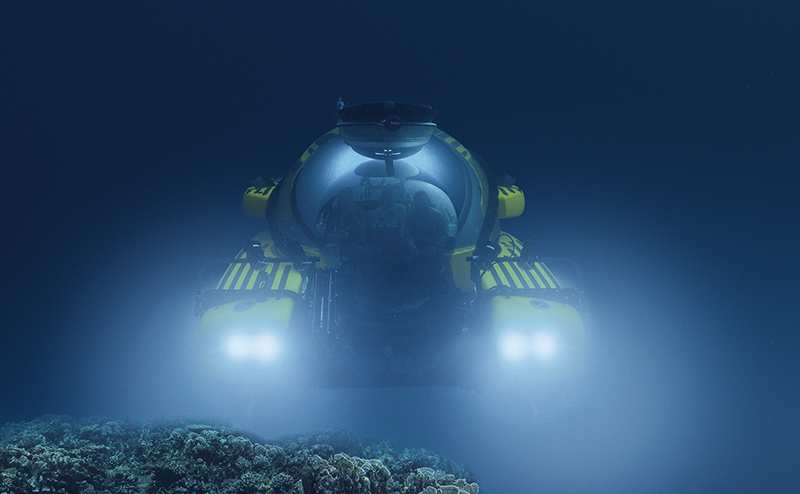
How deep is the ocean? Why do whales sing? How far is 20,000 leagues—and what is a league anyway? Raise a glass and take a deep dive into the foamy waters of oceanic arcana under the blue whale in the Museum’s Hall of Ocean Life. Comedian and journalist Faith Salie will regale you with a pub-style night of trivia questions, physical challenges, and hilarity to celebrate the Museum’s newest temporary exhibition, Unseen Oceans. Don’t worry. When the going gets tough, we won’t let you drown. Teams of top scientists—and even a surprise guest or two—will be standing by to assist you. Program includes one free drink and private access to the special exhibition Unseen Oceans. Special exhibition access is available to ticket holders beginning one hour before the program, from 6–7pm.
Thursday, May 31, 2018
8:00 pm – 9:30 pm
Participants: Alvaro Pascual-Leone, Nim Tottenham, Carla Shatz, And Others
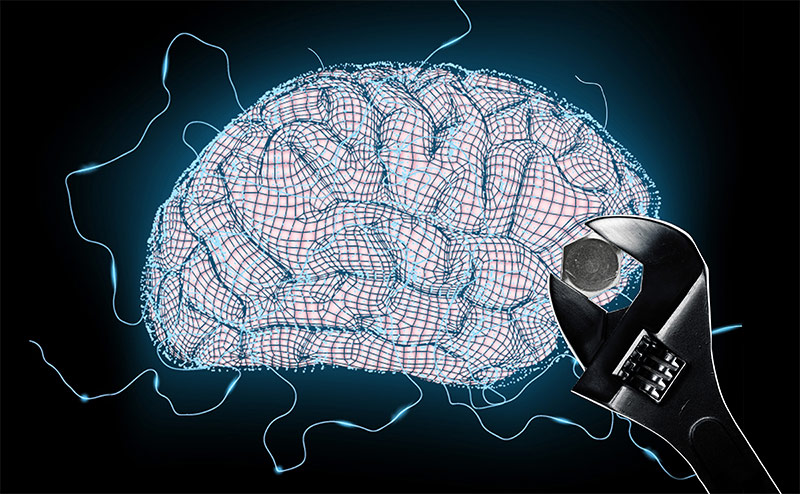
What if your brain at 77 were as plastic as it was at 7? What if you could learn Mandarin with the ease of a toddler or play Rachmaninoff without breaking a sweat? A growing understanding of neuroplasticity suggests these fantasies could one day become reality. Neuroplasticity may also be the key to solving diseases like Alzheimer’s, depression, and autism. This program will guide you through the intricate neural pathways inside our skulls, as leading neuroscientists discuss their most recent findings and both the tantalizing possibilities and pitfalls for our future cognitive selves.
The Big Ideas Series is supported in part by the John Templeton Foundation.
Friday, June 1, 2018
8:00 pm – 9:30 pm
Participants: Yann LeCun, Susan Schneider, Max Tegmark, And Others
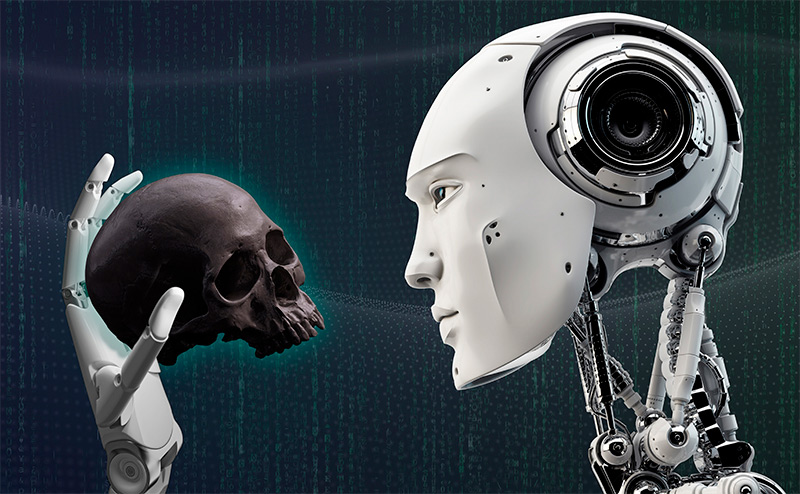
“Success in creating effective A.I.,” said the late Stephen Hawking, “could be the biggest event in the history of our civilization. Or the worst. We just don’t know.” Elon Musk called A.I. “a fundamental risk to the existence of civilization.” Are we creating the instruments of our own destruction or exciting tools for our future survival? Once we teach a machine to learn on its own—as the programmers behind AlphaGo have done, to wondrous results—where do we draw moral and computational lines? Leading specialists in A.I, neuroscience, and philosophy will tackle the very questions that may define the future of humanity.
The Big Ideas Series is supported in part by the John Templeton Foundation.
Friday, June 1, 2018
8:00 pm – 9:30 pm
Participants Marcela Carena, Janet Conrad, Michael Doser, Hitoshi Murayama, Neil Turok
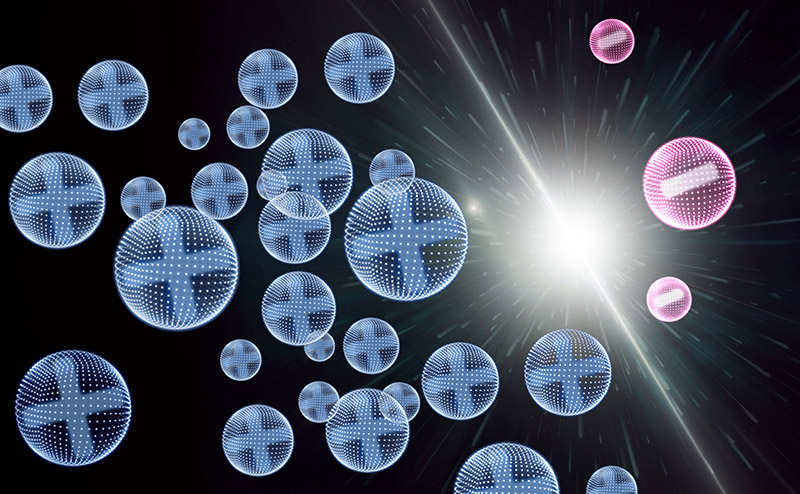
“If I had a world of my own,” said the Mad Hatter, “nothing would be what it is, because everything would be what it isn’t. And contrary wise, what is, it wouldn’t be.” Nonsensical as this may sound, it comes close to describing an interesting paradox: You exist. You shouldn’t. Stars and galaxies and planets exist. They shouldn’t. The nascent universe contained equal parts matter and antimatter that should have instantly obliterated each other, turning the Big Bang into the Big Fizzle. And yet, here we are: flesh, blood, stars, moons, sky. Why? Come join us as we dive deep down the rabbit hole of solving the mystery of the missing antimatter.
The Big Ideas Series is supported in part by the John Templeton Foundation.
…
Saturday, June 2, 2018
10:00 am – 11:00 am
ParticipantsKubi Ackerman
What makes a city a city? How do you build buildings, plan streets, and design parks with humans and their needs in mind? Join architect and Future Lab Project Director, Kubi Ackerman, on an exploration in which you’ll venture outside to examine New York City anew, seeing it through the eyes of a visionary museum architect, and then head to the Future City Lab’s awesome interactive space where you will design your own park. This is a student-only program for kids currently enrolled in the 4th grade – 8th grade. Parents/Guardians should drop off their children for this event.
Supported by the Bezos Family Foundation.
Saturday, June 2, 2018
11:00 am – 12:30 pm
Kerouac called it “the only truth.” Shakespeare called it “the food of love.” Maya Angelou called it “my refuge.” And now scientists are finally discovering what these thinkers, musicians, or even any of us with a Spotify account and a set of headphones could have told you on instinct: music lights up multiple corners of the brain, strengthening our neural networks, firing up memory and emotion, and showing us what it means to be human. In fact, music is as essential to being human as language and may even predate it. Can music also repair broken networks, restore memory, and strengthen the brain? Join us as we speak with neuroscientists and other experts in the fields of music and the brain as we pluck the notes of these fascinating phenomenon.
The Big Ideas Series is supported in part by the John Templeton Foundation.
…
Saturday, June 2, 2018
3:00 pm – 4:00 pm
Moderator“Science Bob” Pflugfelder
Participants William Clark, Matt Lanier, Michael Meacham, Casie Parish Fisher, Mike Ressler
Most people think of scientists as people who work in funny-smelling labs filled with strange equipment. But there are lots of scientists whose jobs often take them out of the lab, into the world, and beyond. Come join some of the coolest of them in Cool Jobs. You’ll get to meet a forensic scientist, a venomous snake-loving herpetologist, a NASA engineer who lands spacecrafts on Mars, and inventors who are changing the future of sports.
Saturday, June 2, 2018
4:00 pm – 5:30 pm
“We can rebuild him. We have the technology,” began the opening sequence of the hugely popular 70’s TV show, “The Six Million Dollar Man.” Forty-five years later, how close are we, in reality, to that sci-fi fantasy? More thornily, now that artificial intelligence may soon pass human intelligence, and the merging of human with machine is potentially on the table, what will it then mean to “be human”? Join us for an important discussion with scientists, technologists and ethicists about the path toward superhumanism and the quest for immortality.
The Big Ideas Series is supported in part by the John Templeton Foundation.
Saturday, June 2, 2018
4:00 pm – 5:30 pm
Participants Brett Frischmann, Tim Hwang, Aviv Ovadya, Meredith Whittaker
“Move fast and break things,” went the Silicon Valley rallying cry, and for a long time we cheered along. Born in dorm rooms and garages, implemented by iconoclasts in hoodies, Big Tech, in its infancy, spouted noble goals of bringing us closer. But now, in its adolescence, it threatens to tear us apart. Some worry about an “Infocalypse”: a dystopian disruption so deep and dire we will no longer trust anything we see, hear, or read. Is this pessimistic vision of the future real or hyperbole? Is it time for tech to slow down, grow up, and stop breaking things? Big names in Big Tech will offer big thoughts on this massive societal shift, its terrifying pitfalls, and practical solutions both for ourselves and for future generations.
The Big Ideas Series is supported in part by the John Templeton Foundation.
…
This looks like an exciting lineup and there’s a lot more for you to see on the 2018 Festival’s program page. You may also want to take a look at the list of participants which features some expected specialty speakers, an architect, a mathematician, a neuroscientist and some unexpected names such Kareem Abdul-Jabbar who I know as a basketball player and currently, a contestant on Dancing with the Stars. Bringing to mind that Walt Whitman quote, “I am large, I contain multitudes.” (from Whitman’s Song of Myself Wikipedia entry).
If you’re going, there are free events and note a few of the event are already sold out.