Tag Archives: Masdar Institute

Memristors at Masdar

The Masdar Institute of Science and Technology (Abu Dhabi, United Arab Emirates; Masdar Institute Wikipedia entry) featured its work with memristors in an Oct. 1, 2017 Masdar Institute press release by Erica Solomon (for anyone who’s interested, I have a simple description of memristors and links to more posts about them after the press release),

Researchers Develop New Memristor Prototype Capable of Performing Complex Operations at High-Speed and Low Power, Could Lead to Advancements in Internet of Things, Portable Healthcare Sensing and other Embedded Technologies

Computer circuits in development at the Khalifa University of Science and Technology could make future computers much more compact, efficient and powerful thanks to advancements being made in memory technologies that combine processing and memory storage functions into one densely packed “memristor.”

Enabling faster, smaller and ultra-low-power computers with memristors could have a big impact on embedded technologies, which enable Internet of Things (IoT), artificial intelligence, and portable healthcare sensing systems, says Dr. Baker Mohammad, Associate Professor of Electrical and Computer Engineering. Dr. Mohammad co-authored a book on memristor technologies, which has just been released by Springer, a leading global scientific publisher of books and journals, with Class of 2017 PhD graduate Heba Abunahla. The book, titled Memristor Technology: Synthesis and Modeling for Sensing and Security Applications, provides readers with a single-source guide to fabricate, characterize and model memristor devices for sensing applications.

The pair also contributed to a paper on memristor research that was published in IEEE Transactions on Circuits and Systems I: Regular Papers earlier this month with Class of 2017 MSc graduate Muath Abu Lebdeh and Dr. Mahmoud Al-Qutayri, Professor of Electrical and Computer Engineering.PhD student Yasmin Halawani is also an active member of Dr. Mohammad’s research team.

Conventional computers rely on energy and time-consuming processes to move information back and forth between the computer central processing unit (CPU) and the memory, which are separately located. A memristor, which is an electrical resistor that remembers how much current flows through it, can bridge the gap between computation and storage. Instead of fetching data from the memory and sending that data to the CPU where it is then processed, memristors have the potential to store and process data simultaneously.

“Memristors allow computers to perform many operations at the same time without having to move data around, thereby reducing latency, energy requirements, costs and chip size,” Dr. Mohammad explained. “We are focused on extending the logic gate design of the current memristor architecture with one that leads to even greater reduction of latency, energy dissipation and size.”

Logic gates control an electronics logical operation on one or more binary inputs and typically produce a single binary output. That is why they are at the heart of what makes a computer work, allowing a CPU to carry out a given set of instructions, which are received as electrical signals, using one or a combination of the seven basic logical operations: AND, OR, NOT, XOR, XNOR, NAND and NOR.

The team’s latest work is aimed at advancing a memristor’s ability to perform a complex logic operation, known as the XNOR (Exclusive NOR) logic gate function, which is the most complex logic gate operation among the seven basic logic gates types.

Designing memristive logic gates is difficult, as they require that each electrical input and output be in the form of electrical resistance rather than electrical voltage.

“However, we were able to successfully design an XNOR logic gate prototype with a novel structure, by layering bipolar and unipolar memristor types in a novel heterogeneous structure, which led to a reduction in latency and energy consumption for a memristive XNOR logic circuit gate by 50% compared to state-of the art state full logic proposed by leading research institutes,” Dr. Mohammad revealed.

The team’s current work builds on five years of research in the field of memristors, which is expected to reach a market value of US$384 million by 2025, according to a recent report from Research and Markets. Up to now, the team has fabricated and characterized several memristor prototypes, assessing how different design structures influence efficiency and inform potential applications. Some innovative memristor technology applications the team discovered include machine vision, radiation sensing and diabetes detection. Two patents have already been issued by the US Patents and Trademark Office (USPTO) for novel memristor designs invented by the team, with two additional patents pending.

Their robust research efforts have also led to the publication of several papers on the technology in high impact journals, including The Journal of Physical Chemistry, Materials Chemistry and Physics, and IEEE TCAS. This strong technology base paved the way for undergraduate senior students Reem Aldahmani, Amani Alshkeili, and Reem Jassem Jaffar to build novel and efficient memristive sensing prototypes.

The memristor research is also set to get an additional boost thanks to the new University merger, which Dr. Mohammad believes could help expedite the team’s research and development efforts through convenient and continuous access to the wider range of specialized facilities and tools the new university has on offer.

The team’s prototype memristors are now in the laboratory prototype stage, and Dr. Mohammad plans to initiate discussions for internal partnership opportunities with the Khalifa University Robotics Institute, followed by external collaboration with leading semiconductor companies such as Abu Dhabi-owned GlobalFoundries, to accelerate the transfer of his team’s technology to the market.

With initial positive findings and the promise of further development through the University’s enhanced portfolio of research facilities, this project is a perfect demonstration of how the Khalifa University of Science and Technology is pushing the envelope of electronics and semiconductor technologies to help transform Abu Dhabi into a high-tech hub for research and entrepreneurship.

h/t Oct. 4, 2017 Nanowerk news item

Slightly restating it from the press release, a memristor is a nanoscale electrical component which mimics neural plasticity. Memristor combines the word ‘memory’ with ‘resistor’.

For those who’d like a little more, there are three components: capacitors, inductors, and resistors which make up an electrical circuit. The resistor is the circuit element which represents the resistance to the flow of electric current.  As for how this relates to the memristor (from the Memristor Wikipedia entry; Note: Links have been removed),

The memristor’s electrical resistance is not constant but depends on the history of current that had previously flowed through the device, i.e., its present resistance depends on how much electric charge has flowed in what direction through it in the past; the device remembers its history — the so-called non-volatility property.[2] When the electric power supply is turned off, the memristor remembers its most recent resistance until it is turned on again

The memristor could lead to more energy-saving devices but much of the current (pun noted) interest lies in its similarity to neural plasticity and its potential application on neuromorphic engineering (brainlike computing).

Here’s a sampling of some of the more recent memristor postings on this blog:

August 24, 2017: Neuristors and brainlike computing

June 28, 2017: Dr. Wei Lu and bio-inspired ‘memristor’ chips

May 2, 2017: Predicting how a memristor functions

December 30, 2016: Changing synaptic connectivity with a memristor

December 5, 2016: The memristor as computing device

November 1, 2016: The memristor as the ‘missing link’ in bioelectronic medicine?

You can find more by using ‘memristor’ as the search term in the blog search function or on the search engine of your choice.

Carbon nanotubes for water desalination

In discussions about water desalination and carbon nanomaterials,  it’s graphene that’s usually mentioned these days. By contrast, scientists from the US Department of Energy’s Lawrence Livermore National Laboratory (LLNL) have turned to carbon nanotubes,

There are two news items about the work at LLNL on ScienceDaily, this first one originated by the American Association for the Advancement of Science (AAAS) offers a succinct summary of the work (from an August 24, 2017 news item on ScienceDaily,

At just the right size, carbon nanotubes can filter water with better efficiency than biological proteins, a new study reveals. The results could pave the way to new water filtration systems, at a time when demands for fresh water pose a global threat to sustainable development.

A class of biological proteins, called aquaporins, is able to effectively filter water, yet scientists have not been able to manufacture scalable systems that mimic this ability. Aquaporins usually exhibit channels for filtering water molecules at a narrow width of 0.3 nanometers, which forces the water molecules into a single-file chain.

Here, Ramya H. Tunuguntla and colleagues experimented with nanotubes of different widths to see which ones are best for filtering water. Intriguingly, they found that carbon nanotubes with a width of 0.8 nanometers outperformed aquaporins in filtering efficiency by a factor of six.

These narrow carbon nanotube porins (nCNTPs) were still slim enough to force the water molecules into a single-file chain. The researchers attribute the differences between aquaporins and nCNTPS to differences in hydrogen bonding — whereas pore-lining residues in aquaporins can donate or accept H bonds to incoming water molecules, the walls of CNTPs cannot form H bonds, permitting unimpeded water flow.

The nCNTPs in this study maintained permeability exceeding that of typical saltwater, only diminishing at very high salt concentrations. Lastly, the team found that by changing the charges at the mouth of the nanotube, they can alter the ion selectivity. This advancement is highlighted in a Perspective [in Science magazine] by Zuzanna Siwy and Francesco Fornasiero.

The second Aug. 24, 2017 news item on ScienceDaily offers a more technical  perspective,

Lawrence Livermore scientists, in collaboration with researchers at Northeastern University, have developed carbon nanotube pores that can exclude salt from seawater. The team also found that water permeability in carbon nanotubes (CNTs) with diameters smaller than a nanometer (0.8 nm) exceeds that of wider carbon nanotubes by an order of magnitude.

The nanotubes, hollow structures made of carbon atoms in a unique arrangement, are more than 50,000 times thinner than a human hair. The super smooth inner surface of the nanotube is responsible for their remarkably high water permeability, while the tiny pore size blocks larger salt ions.

There’s a rather lovely illustration for this work,

An artist’s depiction of the promise of carbon nanotube porins for desalination. The image depicts a stylized carbon nanotube pipe that delivers clean desalinated water from the ocean to a kitchen tap. Image by Ryan Chen/LLNL

An Aug. 24, 2017 LLNL news release (also on EurekAlert), which originated the second news item, proceeds

Increasing demands for fresh water pose a global threat to sustainable development, resulting in water scarcity for 4 billion people. Current water purification technologies can benefit from the development of membranes with specialized pores that mimic highly efficient and water selective biological proteins.

“We found that carbon nanotubes with diameters smaller than a nanometer bear a key structural feature that enables enhanced transport. The narrow hydrophobic channel forces water to translocate in a single-file arrangement, a phenomenon similar to that found in the most efficient biological water transporters,” said Ramya Tunuguntla, an LLNL postdoctoral researcher and co-author of the manuscript appearing in the Aug. 24 [2017]edition of Science.

Computer simulations and experimental studies of water transport through CNTs with diameters larger than 1 nm showed enhanced water flow, but did not match the transport efficiency of biological proteins and did not separate salt efficiently, especially at higher salinities. The key breakthrough achieved by the LLNL team was to use smaller-diameter nanotubes that delivered the required boost in performance.

“These studies revealed the details of the water transport mechanism and showed that rational manipulation of these parameters can enhance pore efficiency,” said Meni Wanunu, a physics professor at Northeastern University and co-author on the study.

“Carbon nanotubes are a unique platform for studying molecular transport and nanofluidics,” said Alex Noy, LLNL principal investigator on the CNT project and a senior author on the paper. “Their sub-nanometer size, atomically smooth surfaces and similarity to cellular water transport channels make them exceptionally suited for this purpose, and it is very exciting to make a synthetic water channel that performs better than nature’s own.”

This discovery by the LLNL scientists and their colleagues has clear implications for the next generation of water purification technologies and will spur a renewed interest in development of the next generation of high-flux membranes.

Here’s a link to and a citation for the paper,

Enhanced water permeability and tunable ion selectivity in subnanometer carbon nanotube porins by Ramya H. Tunuguntla, Robert Y. Henley, Yun-Chiao Yao, Tuan Anh Pham, Meni Wanunu, Aleksandr Noy. Science 25 Aug 2017: Vol. 357, Issue 6353, pp. 792-796 DOI: 10.1126/science.aan2438

This paper is behind a paywall.

And, Northeastern University issued an August 25, 2017 news release (also on EurekAlert) by Allie Nicodemo,

Earth is 70 percent water, but only a tiny portion—0.007 percent—is available to drink.

As potable water sources dwindle, global population increases every year. One potential solution to quenching the planet’s thirst is through desalinization—the process of removing salt from seawater. While tantalizing, this approach has always been too expensive and energy intensive for large-scale feasibility.

Now, researchers from Northeastern have made a discovery that could change that, making desalinization easier, faster and cheaper than ever before. In a paper published Thursday [August 24, 2017] in Science, the group describes how carbon nanotubes of a certain size act as the perfect filter for salt—the smallest and most abundant water contaminant.

Filtering water is tricky because water molecules want to stick together. The “H” in H2O is hydrogen, and hydrogen bonds are strong, requiring a lot of energy to separate. Water tends to bulk up and resist being filtered. But nanotubes do it rapidly, with ease.

A carbon nanotube is like an impossibly small rolled up sheet of paper, about a nanometer in diameter. For comparison, the diameter of a human hair is 50 to 70 micrometers—50,000 times wider. The tube’s miniscule size, exactly 0.8 nm, only allows one water molecule to pass through at a time. This single-file lineup disrupts the hydrogen bonds, so water can be pushed through the tubes at an accelerated pace, with no bulking.

“You can imagine if you’re a group of people trying to run through the hallway holding hands, it’s going to be a lot slower than running through the hallway single-file,” said co-author Meni Wanunu, associate professor of physics at Northeastern. Wanunu and post doctoral student Robert Henley collaborated with scientists at the Lawrence Livermore National Laboratory in California to conduct the research.

Scientists led by Aleksandr Noy at Lawrence Livermore discovered last year [2016] that carbon nanotubes were an ideal channel for proton transport. For this new study, Henley brought expertise and technology from Wanunu’s Nanoscale Biophysics Lab to Noy’s lab, and together they took the research one step further.

In addition to being precisely the right size for passing single water molecules, carbon nanotubes have a negative electric charge. This causes them to reject anything with the same charge, like the negative ions in salt, as well as other unwanted particles.

“While salt has a hard time passing through because of the charge, water is a neutral molecule and passes through easily,” Wanunu said. Scientists in Noy’s lab had theorized that carbon nanotubes could be designed for specific ion selectivity, but they didn’t have a reliable system of measurement. Luckily, “That’s the bread and butter of what we do in Meni’s lab,” Henley said. “It created a nice symbiotic relationship.”

“Robert brought the cutting-edge measurement and design capabilities of Wanunu’s group to my lab, and he was indispensable in developing a new platform that we used to measure the ion selectivity of the nanotubes,” Noy said.

The result is a novel system that could have major implications for the future of water security. The study showed that carbon nanotubes are better at desalinization than any other existing method— natural or man-made.

To keep their momentum going, the two labs have partnered with a leading water purification organization based in Israel. And the group was recently awarded a National Science Foundation/Binational Science Foundation grant to conduct further studies and develop water filtration platforms based on their new method. As they continue the research, the researchers hope to start programs where students can learn the latest on water filtration technology—with the goal of increasing that 0.007 percent.

As is usual in these cases there’s a fair degree of repetition but there’s always at least one nugget of new information, in this case, a link to Israel. As I noted many times, the Middle East is experiencing serious water issues. My most recent ‘water and the Middle East’ piece is an August 21, 2017 post about rainmaking at the Masdar Institute in United Arab Emirates. Approximately 50% of the way down the posting, I mention Israel and Palestine’s conflict over water.

Sustainable water desalination with self-cleaning membranes

This desalination technology comes from the United Arab Emirates (UAE). from an April 13, 2017 news item on Nanowerk,

An advanced water treatment membrane made of electrically conductive nanofibers developed at Masdar Institute was highlighted by Dr. Raed Hashaikeh, Professor of Mechanical and Materials Engineering at Masdar Institute, in his keynote speech during the 3rd International Conference on Desalination using Membrane Technology held last week in Spain.

An April 13, 2017 Masdar Institute press release by Erica Solomon, which originated the news item, expands on the theme,

Self-cleaning membranes offer a critically needed solution to the problem of fouling, which is the unwanted build-up of organic and inorganic deposits on a membrane’s surface that reduces the membrane’s ability to filter impurities. Water treatment and purification membranes that can easily clean themselves when fouled could make pressure-driven membrane filtration systems used to treat and desalinate water more energy-efficient.

“Keeping membranes clean, permeable and functional is a great challenge to membrane desalination technologies. When a membrane becomes fouled, its pores get blocked and its flux is severely reduced, which means that much less water can pass through the membrane at a constant pressure,” Dr. Hashaikeh explained.

Conventional methods for cleaning fouled membranes involve expensive and harsh chemical treatments, and often lead to water treatment plant shut-downs, which can cost millions of dollars in lost operational hours. In the UAE, annual spending on desalination is already estimated to cost AED12 billion, indicating a pressing need for solutions that avoid costly shut-downs and treatments.

In addition to posing a heavy financial burden, fouled membranes are also a sustainability issue, as once a membrane becomes fouled, the higher pressure needed to push water through clogged pores significantly increases the plant’s energy consumption. The harsh chemicals used to clean a fouled membrane are also bad for the environment and require neutralizing. Thus, finding a way to easily and quickly clean fouled membranes not only makes financial sense, but environmental sense.

In a country like the UAE, where natural gas-powered thermal desalination produces over 80% of the country’s domestic water, innovative technologies like self-cleaning membranes to support a shift toward lower-energy and lower-cost membrane-based desalination are essential for achieving economic and environmental balance while meeting the UAE’s water demands.

And now, Dr. Hashaikeh’s research group may have brought the UAE closer towards realizing a more sustainable and economic approach to membrane desalination through their research on the application of advanced nanofibers for enhanced, self-cleaning membranes.

The group has leveraged the electrically conductive nature of a special kind of nanofiber, called carbon nanotubes (CNT). CNTs are tiny cylindrical tubes made of tightly bonded carbon atoms, measuring just one atom thick. But the CNTs Dr. Hashaikeh’s team used, which were provided by global security, aerospace, and information technology company Lockheed Martin, are not ordinary CNTs.

“The carbon nanostructures supplied by Lockheed Martin are special; they are networked. This means that they are composed of many interconnecting channels that branch off in all directions. This interconnectivity is what enables the entire membrane to become completely cleaned when electricity is applied to it,” Dr. Hashaikeh said.

The networked CNTs, also known as carbon nanostructures (CNS), coupled with the team’s expert membrane fabrication know-how, resulted in the development of two different types of membranes that can clean themselves when a low-voltage electric current is run through them.

The first type is a microfiltration membrane, which has pores sizes ranging from 100 nanometers to 10 micrometers, where a nanometer is approximately one hundred thousand times smaller than the width of a human hair and a micrometer one thousand times larger than a nanometer. The second is a nanofiltration membrane with pore sizes ranging from one to ten nanometers. Both membranes demonstrated the ability to clean themselves in response to an electric shock, which resulted in the immediate restoration of the membranes’ flux.

Dr. Hashaikeh’s investigation of a self-cleaning membrane began four years ago, when he realized that electrolytic cleaning – which is the process of removing soil, scale or corrosion from a metal’s surface by subjecting it to an electric current – could also be used to clean membranes. To prove his theory, he coated a membrane with ordinary CNTs. When a voltage was applied to the membrane, the parts of the membranes that were coated with CNTs were successfully cleaned. Dr. Hashaikeh filed a patent for this in-situ electrolytic cleaning process with the United States Patent and Trademark Office (USPTO) in 2014.

However, there were limitations to this discovery, namely that only specific areas in the coated CNTs were cleaned, not the entire membrane. Thus, to develop an efficient, self-cleaning membrane with commercial potential, Dr. Hashaikeh required a material that would easily allow electric shockwaves to penetrate through the entire membrane’s surface area.

The unique, interconnected structure of Lockheed Martin’s carbon nanostructures proved to be just the right type of electrically conductive, nano-fibrous material required.

“We immediately recognized that Lockheed Martin’s CNTs might enable electricity to pass through the entire surface, but we had to modify the nanostructures to transform the material into a membrane. To do this, we controlled certain properties, such as wettability and pore size, and improved its mechanical strength by incorporating polymer materials,” he explained.

Dr. Haishaikeh’s team successfully developed a self-cleaning microfiltration membrane in 2014 and a paper describing the research was published in the Journal of Membrane Science. But they did not stop there; they wanted to take their research a step further and find a way to develop a self-cleaning nanofiltration membrane. While microfiltration membranes are useful for removing larger particles, including sand, silt, clays, algae and some forms of bacteria, nanofiltration membranes can go a step further, removing most organic molecules, nearly all viruses, most of the natural organic matter and a range of salts. Nanofiltration membranes also remove divalent ions, which make water hard, making nanofiltration a popular and eco-friendly option to soften hard water.

To create self-cleaning nanofiltration membranes out of Lockheed Martin’s networked CNTs, the team needed to overcome the problem of the CNTs’ large pore sizes, which prevented the material from functioning as a nanofiltration membrane.

To achieve this they looked to a second advanced nanofiber material previously developed by Dr. Hashaikeh’s research group, known as networked cellulose. Networked cellulose is a modified type of cellulose made from wood pulp. When dried, the networked cellulose gel shrinks in volume, but maintains its integrity and shape, becoming harder as it shrinks. The research team asserted that the networked cellulose gel could reduce the membrane’s pore sizes while maintaining its structural integrity.

The researchers then mixed the carbon nanostructures with the networked cellulose gel and as the mixture dried, the networked cellulose shrank. The shrinking of the network cellulose in turn pressurized the nanostructures in the membrane. The resulting membrane is strong with much smaller pore sizes. Dr. Hashaikeh reports that the pore size dropped from 60 nanometers to just three nanometers with the addition of the networked cellulose in a paper describing the study, which was published in the journal Desalination last month. Co-authors from Masdar Institute include PhD student Farah Ahmad and postdoctoral researcher Boor Lalia, along with Dr. Nidal Hilal of Swansea University.

Dr. Hashaikeh’s prolific scientific contribution to the field of membrane desalination has led to his recent appointment as an associate editor for the journal Desalination; a position that is essential to the quality of the international journal and its peer review process.

The innovative research conducted by Dr. Hashaikeh and the team will help position Abu Dhabi as a leader in membrane desalination research and technology development. This project has already yielded a patent filing, and is hoped to provide the emirate with novel intellectual property in the critical industry of desalination.

Here are the links and citations for the 2014 and 2017 papers,

A novel in situ membrane cleaning method using periodic electrolysis by Raed Hashaikeh, Boor Singh Lalia, Victor Kochkodan, Nidal Hilal. Journal of Membrane Science Volume 471, 1 December 2014, Pages 149–154 https://doi.org/10.1016/j.memsci.2014.08.017

Electrically conducting nanofiltration membranes based on networked cellulose and carbon nanostructures by Farah Ejaz Ahmed, Boor Singh Lalia, Nidal Hilal, Raed Hashaikeh. Desalination Volume 406, 16 March 2017, Pages 60–66 https://doi.org/10.1016/j.desal.2016.09.005

Both papers a behind a paywall.

Next generation of power lines could be carbon nanotube-coated

This research was done at the Masdar Institute in Abu Dhabi of the United Arab Emirates. From a Sept. 1, 2016 news item on Nanowerk,

A Masdar Institute Assistant Professor may have brought engineers one step closer to developing the type of next-generation power lines needed to achieve sustainable and resilient electrical power grids.

Dr. Kumar Shanmugam, Assistant Professor of Materials and Mechanical Engineering, helped develop a novel coating made from carbon nanotubes that, when layered around an aluminum-conductor composite core (ACCC) transmission line, reduces the line’s operating temperature and significantly improves its overall transmission efficiency.

An Aug. 29, 2016 Masdar Institute news release by Erica Solomon, which originated the news item, provides more detail,

The coating is made from carbon nanostructures (CNS) – which are bundles of aligned carbon nanotubes that have exceptional mechanical and electrical properties – provided by the project’s sponsor, Lockheed Martin. The second component of the coating is an epoxy resin, which is the thick material used to protect things like appliances and electronics from damage.  Together, the CNS and epoxy resin help prevent power lines from overheating, increases their current carrying capacity (the amount of current that can flow through a transmission line), while also protecting them from damages associated with lightning strikes, ice and other environmental impacts.

The researchers found that by replacing traditional steel-core transmission lines with ACCC cables layered with a CNS-epoxy coating (referred to in the study as ACCC-CNS lines), the amount of aluminum used in an ACCC cable can be reduced by 25%, making the cable significantly lighter and cheaper to produce. The span length of a transmission line can also increase by 30%, which will make it easier to transmit electricity across longer distances while the amount of current the line can carry can increase by 40%.

“The coating helps to dissipate the heat generated in the conductor more efficiently through radiation and convection, thereby preventing the cable from overheating and enabling it to carry more current farther distances,” Dr. Kumar explained.

Ultimately, the purpose of the coating is to effectively eliminate the transmission line losses. Each year, anywhere from 5% to over 10% of the overall power generated in a power plant is lost in transmission and distribution lines. Most of this electrical energy is lost in the form of heat; as current runs through a conductor (the transmission line), the conductor heats up because it resists the flow of electrons to some extent – a phenomenon known as resistive Joule heating. Resistive Joule heating causes the energy that was moving the electrons forward to change into heat energy, which means some of the generated power gets converted into heat and lost to the surrounding environment instead of getting to its intended destination (like our homes and offices).

In addition to wasting energy, resistive Joule heating can lead to overheating, which can trigger a transmission line to “sag”, or physically droop low to the ground. Sagging power lines in turn can have catastrophic effects, including short circuits and power outages.

Efforts to reduce the problem of resistive heating and energy loss in power lines have led to significant improvements in transmission line technologies. For example, in 2002 ACCC transmission cables – which feature a carbon and glass-fiber reinforced composite core wrapped in aluminum conductor wires – were invented. The ACCC conductors are lighter and more heat-resistant than traditional steel-core cables, which means they can carry more current without overheating or sagging. Today, it is estimated that over 200 power and distribution networks use ACCC transmission cables.

While the advent of composite core cables marks the first major turning point in the development of energy-efficient transmission lines, Dr. Kumar’s CNS-epoxy coating may be the second significant advancement in the evolution of sustainable power lines.

The CNS-epoxy coating works by keeping the cable’s operating temperatures low. It does this by dissipating, any generated heat away from the conductor efficiently, thereby preventing further increase in temperature of the line and avoiding the trickle-effect that often leads to overheating.

The coating is layered twice in the ACCC cable – an outer layer, which dissipates the heat and protects the cable from environmental factors like lightning strikes and foreign object impact; and an inner layer, which protects the composite core from damage caused by stray radio frequency radiation generated by the electromagnetic pulse emanating from high electric current carrying aluminum conductor

The research team utilized a multi-physics modeling framework to analyze how the CNS-epoxy coating would influence the performance of ACCC transmission line. After fabricating the coating, they characterized it, which is a critical step to determine its mechanical, thermal and electrical properties. These properties were then used in the computational and theoretical models to evaluate and predict the coating’s performance. Finally, a design tool was developed and used to find the optimal combination of parameters (core diameter, span distance and sag) needed to reduce the cable’s weight, sag, and operating temperature while increasing its span distance and current carrying capacity.

Dr. Kumar’s innovative transmission line technology research comes at a pivotal time, when countries all over the world, including the UAE, are seeking ways to reduce their carbon footprint in a concerted effort to mitigate global climate change. Turning to energy-efficient power lines that waste less power and in turn produce less carbon dioxide emissions will be an obvious choice for nations devoted to greater sustainability.

Here’s a link to and a citation for the paper,

High-Ampacity Overhead Power Lines With Carbon Nanostructure–Epoxy Composites by V. S. N. Ranjith Kumar, S. Kumar, G. Pal, and Tushar Shah. J. Eng. Mater. Technol 138(4), 041018 (Aug 09, 2016) (9 pages) Paper No: MATS-15-1217; doi: 10.1115/1.4034095

This paper is behind a paywall.

Self-shading electrochromic windows from the Massachusetts Institute of Technology

It’s been a while since I’ve had a story about electrochromic windows and I’ve begun to despair that they will ever reach the marketplace. Happily, the Massachusetts Institute of Technology (MIT) has supplied a ray of light (intentional wordplay). An Aug. 11, 2016 news item on Nanowerk makes the announcement,

A team of researchers at MIT has developed a new way of making windows that can switch from transparent to opaque, potentially saving energy by blocking sunlight on hot days and thus reducing air-conditioning costs. While other systems for causing glass to darken do exist, the new method offers significant advantages by combining rapid response times and low power needs.

Once the glass is switched from clear to dark, or vice versa, the new system requires little to no power to maintain its new state; unlike other materials, it only needs electricity when it’s time to switch back again.

An Aug. 11, 2016 MIT news release (also on EurekAlert), which originated the news item, explains the technology in more detail,

The new discovery uses electrochromic materials, which change their color and transparency in response to an applied voltage, Dinca [MIT professor of chemistry Mircea Dinca] explains. These are quite different from photochromic materials, such as those found in some eyeglasses that become darker when the light gets brighter. Such materials tend to have much slower response times and to undergo a smaller change in their levels of opacity.

Existing electrochromic materials suffer from similar limitations and have found only niche applications. For example, Boeing 787 aircraft have electrochromic windows that get darker to prevent bright sunlight from glaring through the cabin. The windows can be darkened by turning on the voltage, Dinca says, but “when you flip the switch, it actually takes a few minutes for the window to turn dark. Obviously, you want that to be faster.”

The reason for that slowness is that the changes within the material rely on a movement of electrons — an electric current — that gives the whole window a negative charge. Positive ions then move through the material to restore the electrical balance, creating the color-changing effect. But while electrons flow rapidly through materials, ions move much more slowly, limiting the overall reaction speed.

The MIT team overcame that by using sponge-like materials called metal-organic frameworks (MOFs), which can conduct both electrons and ions at very high speeds. Such materials have been used for about 20 years for their ability to store gases within their structure, but the MIT team was the first to harness them for their electrical and optical properties.

The other problem with existing versions of self-shading materials, Dinca says, is that “it’s hard to get a material that changes from completely transparent to, let’s say, completely black.” Even the windows in the 787 can only change to a dark shade of green, rather than becoming opaque.

In previous research on MOFs, Dinca and his students had made material that could turn from clear to shades of blue or green, but in this newly reported work they have achieved the long-sought goal of producing a coating that can go all the way from perfectly clear to nearly black (achieved by blending two complementary colors, green and red). The new material is made by combining two chemical compounds, an organic material and a metal salt. Once mixed, these self-assemble into a thin film of the switchable material.

“It’s this combination of these two, of a relatively fast switching time and a nearly black color, that has really got people excited,” Dinca says.

The new windows have the potential, he says, to do much more than just preventing glare. “These could lead to pretty significant energy savings,” he says, by drastically reducing the need for air conditioning in buildings with many windows in hot climates. “You could just flip a switch when the sun shines through the window, and turn it dark,” or even automatically make that whole side of the building go dark all at once, he says.

While the properties of the material have now been demonstrated in a laboratory setting, the team’s next step is to make a small-scale device for further testing: a 1-inch-square sample, to demonstrate the principle in action for potential investors in the technology, and to help determine what the manufacturing costs for such windows would be.

Further testing is also needed, Dinca says, to demonstrate what they have determined from preliminary testing: that once the switch is flipped and the material changes color, it requires no further power to maintain its new state. No extra power is needed until the switch is flipped to turn the material back to its former state, whether clear or opaque. Many existing electrochromic materials, by contrast, require a continuous voltage input.

In addition to smart windows, Dinca says, the material could also be used for some kinds of low-power displays, similar to displays like electronic ink (used in devices such as the Kindle and based on MIT-developed technology) but based on a completely different approach.

Not surprisingly perhaps, the research was partly funded by an organization in a region where such light-blocking windows would be particularly useful: The Masdar Institute, based in the United Arab Emirates, through a cooperative agreement with MIT. The research also received support from the U.S. Department of Energy, through the Center for Excitonics, an Energy Frontier Center.

Here’s a link to and a citation for the paper,

Transparent-to-Dark Electrochromic Behavior in Naphthalene-Diimide-Based Mesoporous MOF-74 Analogs by Khalid AlKaabi, Casey R. Wade, Mircea Dincă. Chem, Volume 1, Issue 2, 11 August 2016, Pages 264–272 doi:10.1016/j.chempr.2016.06.013

This paper is behind a paywall.

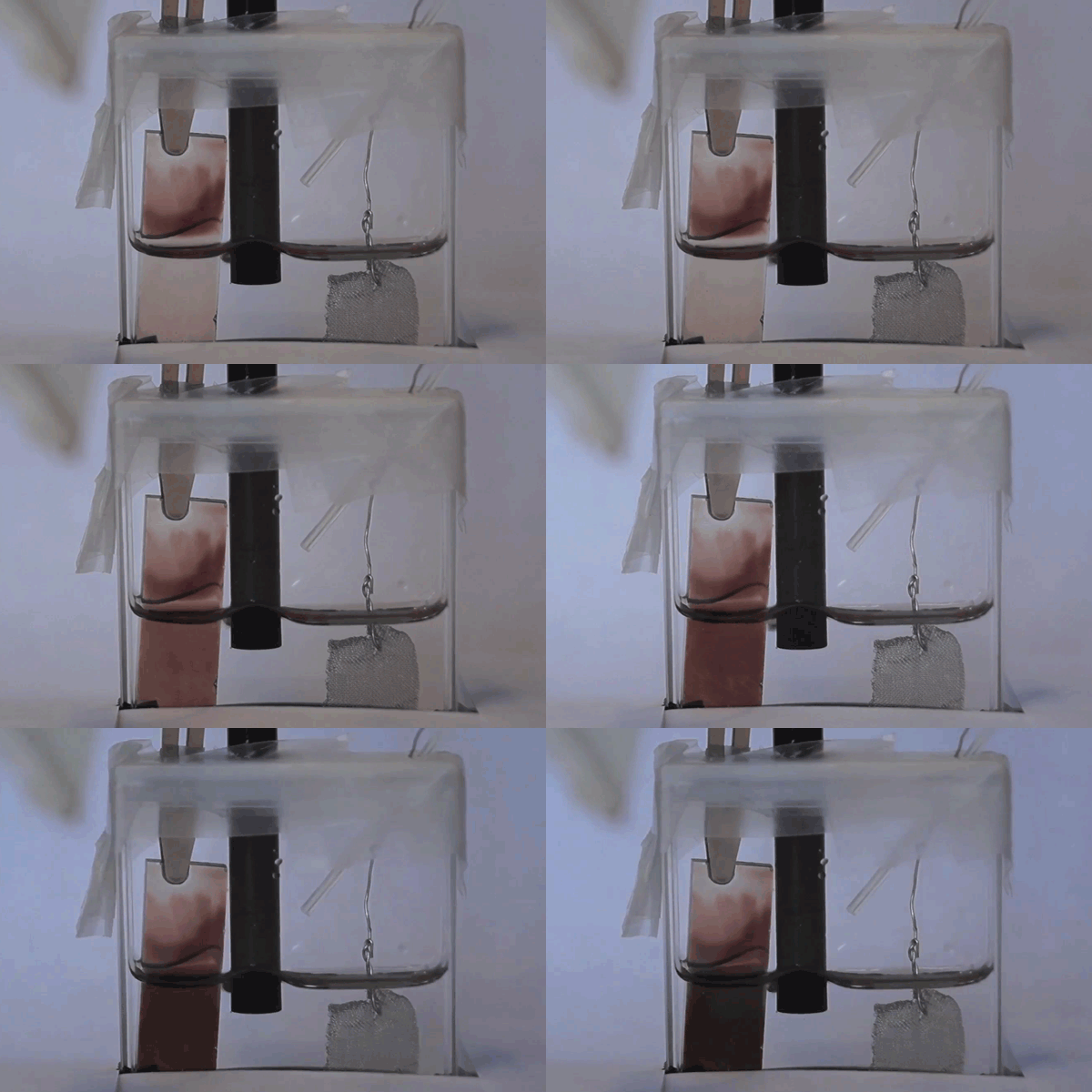
For those curious about the windows, there’s this .gif from MIT,

MIT_ElectrochromicWindows