Tag Archives: Max Planck Institute

Hybrid human–AI collectives make the most accurate medical diagnoses

It almost seems as if researchers at the Max Planck Institute have been reading N. Katherine Hayles’ 2025 book, “Bacteria to AI: Human Futures with our Nonhuman Symbionts” mentioned in my October 21, 2025 posting and in my October 23, 2025 posting.

Caption: Hybrid diagnostic collectives consisting of humans and AI make significantly more accurate diagnoses than either medical professionals or AI systems alone. CreditMPI for Human Development

A June 20, 2025 Max Planck Institute for Human Development press release (also on EurekAlert) focuses on research that explores a collaborative/cooperative relationship between human and AI systems,

Diagnostic errors are among the most serious problems in everyday medical practice. AI systems—especially large language models (LLMs) like ChatGPT-4, Gemini, or Claude 3—offer new ways to efficiently support medical diagnoses. Yet these systems also entail considerable risks—for example, they can “hallucinate” and generate false information. In addition, they reproduce existing social or medical biases and make mistakes that are often perplexing to humans.  

An international research team, led by the Max Planck Institute for Human Development and in collaboration with partners from the Human Diagnosis Project (San Francisco) and the Institute of Cognitive Sciences and Technologies of the Italian National Research Council (CNR-ISTC Rome), investigated how humans and AI can best collaborate. The result: hybrid diagnostic collectives—groups consisting of human experts and AI systems—are significantly more accurate than collectives consisting solely of humans or AI. This holds particularly for complex, open-ended diagnostic questions with numerous possible solutions, rather than simple yes/no decisions. “Our results show that cooperation between humans and AI models has great potential to improve patient safety,” says lead author Nikolas Zöller, postdoctoral researcher at the Center for Adaptive Rationality of the Max Planck Institute for Human Development. 

Realistic simulations using more than 2,100 clinical vignettes 

The researchers used data from the Human Diagnosis Project, which provides clinical vignettes—short descriptions of medical case studies—along with the correct diagnoses. Using more than 2,100 of these vignettes, the study compared the diagnoses made by medical professionals with those of five leading AI models. In the central experiment, various diagnostic collectives were simulated: individuals, human collectives, AI models, and mixed human–AI collectives. In total, the researchers analyzed more than 40,000 diagnoses. Each was classified and evaluated according to international medical standards (SNOMED CT). 

Humans and machines complement each other—even in their errors 

The study shows that combining multiple AI models improved diagnostic quality. On average, the AI collectives outperformed 85% of human diagnosticians. However, there were numerous cases in which humans performed better. Interestingly, when AI failed, humans often knew the correct diagnosis. 
 
The biggest surprise was that combining both worlds led to a significant increase in accuracy. Even adding a single AI model to a group of human diagnosticians—or vice versa—substantially improved the result. The most reliable outcomes came from collective decisions involving multiple humans and multiple AIs. The explanation is that humans and AI make systematically different errors. When AI failed, a human professional could compensate for the mistake—and vice versa. This so-called error complementarity makes hybrid collectives so powerful. “It’s not about replacing humans with machines. Rather, we should view artificial intelligence as a complementary tool that unfolds its full potential in collective decision-making,” says co-author Stefan Herzog, Senior Research Scientist at the Max Planck Institute for Human Development.  

However, the researchers also emphasize the limitations of their work. The study only considered text-based case vignettes—not actual patients in real clinical settings. Whether the results can be transferred directly to practice remains a questions for future studies to address.  Likewise, the study focused solely on diagnosis, not treatment, and a correct diagnosis does not necessarily guarantee an optimal treatment. 

It also remains uncertain how AI-based support systems will be accepted in practice by medical staff and patients. The potential risks of bias and discrimination by both AI and humans, particularly in relation to ethnic, social, or gender differences, likewise require further research. 


Wide range of applications for hybrid human–AI collectives 

The study is part of the Hybrid Human Artificial Collective Intelligence in Open-Ended Decision Making (HACID) project, funded under Horizon Europe, which aims to promote the development of future clinical decision-support systems through the smart integration of human and machine intelligence. The researchers see particular potential in regions where access to medical care is limited. Hybrid human–AI collectives could make a crucial contribution to greater healthcare equity in such areas. 

“The approach can also be transferred to other critical areas—such as the legal system, disaster response, or climate policy—anywhere that complex, high-risk decisions are needed. For example, the HACID project is also developing tools to enhance decision-making in climate adaptation” says Vito Trianni, co-author and coordinator of the HACID project. 

In brief: 

  • Hybrid diagnostic collectives consisting of humans and AI make significantly more accurate diagnoses than either medical professionals or AI systems alone—because they make systematically different errors that cancel each other out. 
  • The study analyzed over 40,000 diagnoses made by humans and machines in response to more than 2,100 realistic clinical vignettes. 
  • Adding an AI model to a human collective—or vice versa—noticeably improved diagnostic quality; hybrid collective decisions made by several humans and machines achieved the best results. 
  • These findings highlight the potential for greater patient safety and more equitable healthcare, especially in underserved regions. However, further research is needed on practical implementation and ethical considerations. 

Here’s a link to and a citation for the paper,

Human–AI collectives most accurately diagnose clinical vignettes by Nikolas Zöller, Julian Berger, Irving Lin, Nathan Fu, Jayanth Komarneni, Gioele Barabucci, Kyle Laskowski, Victor Shia, Benjamin Harack, Eugene A. Chu, Vito Trianni, Ralf H. J. M. Kurvers, and Stefan M. Herzog. PNAS June 13, 2025 122 (24) e2426153122 DOI: https://doi.org/10.1073/pnas.2426153122

This paper is open access.

I have links to a couple of the projects mentioned in the press release, (1) Human Diagnosis Project (Human Dx) and (2) HACID: Hybrid Human Artificial Collective Int elligence in Open-Ended Domains or Hybrid Human Artificial Collective Intelligence in Open-Ended Decision Making (HACID). I’m not sure why there’s a difference in the name.

Additionally, more information about HACID can be inferred from its webpage on the AI-on-Demand (AIoD) website, according to these FAQs (Frequently Asked Questions),

What is the AI-on-Demand (AIoD) platform?

The AIoD platform is a collaborative, community-driven digital space that supports European research and innovation in Artificial Intelligence (AI), while promoting the European values of quality, trustworthiness, and explainability.

Is AIoD only for academic researchers?

Not at all. While it has a strong research foundation, AIoD also serves industry professionals, startups, students, and public organizations interested in leveraging or contributing to AI.

Interesting, eh?

Natural nanoparticles can form clouds and encourage precipitation over the Amazon rainforest

I don’t usually stumble across stories about natural nanoparticles; almost all the stories here are about engineered nanoparticles. Nice to get a change of pace. Plus, I love rain. as I sit here composing this post, the rain is pelting against my windows.

This November 8, 2024 news item on ScienceDaily announces a natural nanoparticle story that is centered on the Amazon rainforest,

Atmospheric aerosol particles are essential for the formation of clouds and precipitation, thereby influencing the Earth’s energy budget, water cycle, and climate. However, the origin of aerosol particles in pristine air over the Amazon rainforest during the wet season is poorly understood. A new study, led by the Max Planck Institute for Chemistry in Mainz, reveals that rainfall regularly induces bursts of newly formed nanoparticles in the air above the forest canopy.

Caption: A rain front approaches the ATTO research station in the Amazon rainforest. Credit: Sebastian Brill, Max Planck Institute for Chemistry

A November 8, 2024 Max Planck Institute for Chemistry press release (also on EurekAlert), which originated the news item, provides more details,

An international research team from Germany, Brazil, Sweden, and China now showed that rainfall regularly induces bursts of nanoparticles that can grow to form cloud condensation nuclei. The scientists analyzed comprehensive long-term measurements of aerosol particles, trace gases, and meteorological data from the Amazon Tall Tower Observatory, ATTO, which is equipped with sophisticated instrumentation and measurement towers that are up to 325 m high. The observatory is located in the middle of the Amazon rainforest in northern Brazil, about 150 kilometers north-east of Manaus, and jointly operated by scientists from Germany and Brazil.

Luiz Machado, first author of the study now published in the journal Nature Geoscience, explains: “Rainfall removes aerosol particles and introduces ozone from the atmosphere into the forest canopy. Ozone can oxidize plant-emitted volatile organic compounds, especially terpenes, and the oxidation products can enhance the formation of new particles, leading to temporary bursts of nanoparticles.”

Nanoparticle concentrations are highest just above the forest canopy

The researchers discovered that nanoparticle concentrations are highest just above the forest canopy and decrease with increasing altitude. “This gradient persists throughout the wet season, indicating continuous particle formation in the canopy and an upward flux of newly formed particles that can grow by further uptake of low volatile molecules and serve as cloud condensation nuclei”, adds Christopher Pöhlker, co-author and research group leader at the Max Planck Institute for Chemistry. Among the low volatile molecules involved in the formation and growth of natural nanoparticles in the atmosphere are oxygen- and nitrogen-containing organic compounds that are formed upon oxidation of isoprene, terpenes, and other volatile organic compounds, which are naturally emitted by plants and oxidized by ozone and hydroxyl radicals in the air.

Earlier studies had detected new particle formation in the outflow of convective clouds in the upper troposphere and suggested a downward flux rather than an upward flux of newly formed nanoparticles.

“Our findings imply a paradigm shift in the scientific understanding of interactions between the rainforest, aerosols, clouds, and precipitation in the Amazon, which are important for regional and global climate”, concludes Ulrich Pöschl, co-author and director at the Max Planck Institute for Chemistry.

About ATTO:
The Amazon Tall Tower Observatory (ATTO) is an internationally collaborative research site in the central Amazon, dedicated to studying atmospheric processes and the exchange of energy, water, and gases between the biosphere and atmosphere. It is one of the world’s most critical observatories for understanding the impacts of climate change on tropical forests.

Here’s a link to and a citation for the paper,

Frequent rainfall-induced new particle formation within the canopy in the Amazon rainforest by Luiz A. T. Machado, Gabriela R. Unfer, Sebastian Brill, Stefanie Hildmann, Christopher Pöhlker, Yafang Cheng, Jonathan Williams, Harder Hartwig, Meinrat O. Andreae, Paulo Artaxo, Joachim Curtius, Marco A. Franco, Micael A. Cecchini, Achim Edtbauer, Thorsten Hoffmann, Bruna Holanda, Théodore Khadir, Radovan Krejci, Leslie A. Kremper, Yunfan Liu, Bruno B. Meller, Mira L. Pöhlker, Carlos A. Quesada, Akima Ringsdorf, Ilona Riipinen, Susan Trumbore, Stefan Wolff, Jos Lelieveld & Ulrich Pöschl. Nature Geoscience volume 17, pages 1225–1232 (2024) DOI: https://doi.org/10.1038/s41561-024-01585-0 Published online: 08 November 2024 Issue Date: December 2024

This paper is open access.

Physicists study Bach, Mozart, and jazz

This November 5, 2024 news item on phys.org takes a while before revealing how science is involved in the research,

Physicists at the Max Planck Institute for Dynamics and Self-Organization (MPI-DS) have investigated to which extent a piece of music can evoke expectations about its progression. They were able to determine differences in how far compositions of different composers can be anticipated. In total, the scientists quantitatively analyzed more than 550 pieces from classical and jazz music.

It is common knowledge that music can evoke emotions. But how do these emotions arise and how does meaning emerge in music? Almost 70 years ago, music philosopher Leonard Meyer suggested that both are due to an interplay between expectation and surprise.

In the course of evolution, it was crucial for humans to be able to make new predictions based on past experiences. This is how we can also form expectations and predictions about the progression of music based on what we have heard. According to Meyer, emotions and meaning in music arise from the interplay of expectations and their fulfillment or (temporary) non-fulfillment.

A team of scientists led by Theo Geisel at the MPI-DS and the University of Göttingen have asked themselves whether these philosophical concepts can be quantified empirically using modern methods of data science. …

Physicists at the MPI-DS have investigated the variability in music pieces by different composers. They found a high initial autocorrelation of pitches, which ends relatively abruptly after a certain time, thus making further anticipation impossible. (image generated with AI) [less] © MPI-DS [downloaded from https://phys.org/news/2024-11-bach-mozart-jazz-scientists-quantitative.html]

A November 5, 2024 Max Planck Institute for Dynamics and Self-Organization press release (also on EurekAlert), which originated the news item, offers technical details about the work,

… In a paper published recently in Nature Communications, they used time series analysis to infer the autocorrelation function of musical pitch sequences; it measures how similar a tone sequence is to previous sequences. This results in a kind of “memory” of the piece of music. If this memory decreases only slowly with time difference, the time series is easier to anticipate; if it vanishes rapidly, the time series offers more variation and surprises. 

In total, the researchers Theo Geisel and Corentin Nelias analyzed more than 450 jazz improvisations and 99 classical compositions in this way, including multi-movement symphonies and sonatas. They found that the autocorrelation function of pitches initially decreases very slowly with the time difference. This expresses a high similarity and possibility to anticipate musical sequences. However, they found that there is a time limit, after which this similarity and predictability ends relatively abruptly. For larger time differences, the autocorrelation function and memory are both negligible.

Of particular interest here are the values of the transition times of the pieces where the more predictable behavior changes into a completely unpredictable and uncorrelated behavior. Depending on the composition or improvisation, the scientists found transition times ranging from a few quarter notes to about 100 quarter notes. Jazz improvisations typically had shorter transition times than many classical compositions, and therefore were usually less predictable. Differences could also be observed between different composers. For example, the researchers found transition times between five and twelve quarter notes in various compositions by Johann Sebastian Bach, while the transition times in various compositions by Mozart ranged from eight to 22 quarter notes. This implies that the anticipation and expectation of the musical progression tends to last longer in Mozart’s compositions than in Bach’s compositions, which offer more variability and surprises.

For Theo Geisel, the initiator and head of this research project, this also explains a very personal observation from his high school days: “In my youth, I shocked my music teacher and conductor of our school orchestra by saying that I often couldn’t show much enthusiasm for Mozart’s compositions,” he says. “With the transition times between highly correlated and uncorrelated behavior, we have now found a quantitative measure for the variability of music pieces, which helps me to understand why I liked Bach more than Mozart.”

Here’s a link to and a citation for the paper,

Stochastic properties of musical time series by Corentin Nelias & Theo Geisel. Nature Communications volume 15, Article number: 9280 (2024) DOI: https://doi.org/10.1038/s41467-024-53155-y Published: 28 October 2024

This paper is open access.

There was a Theodor Geisel who in the US and Canada was better known as Dr. Seuss.

Fairy-like robot powered by wind and light

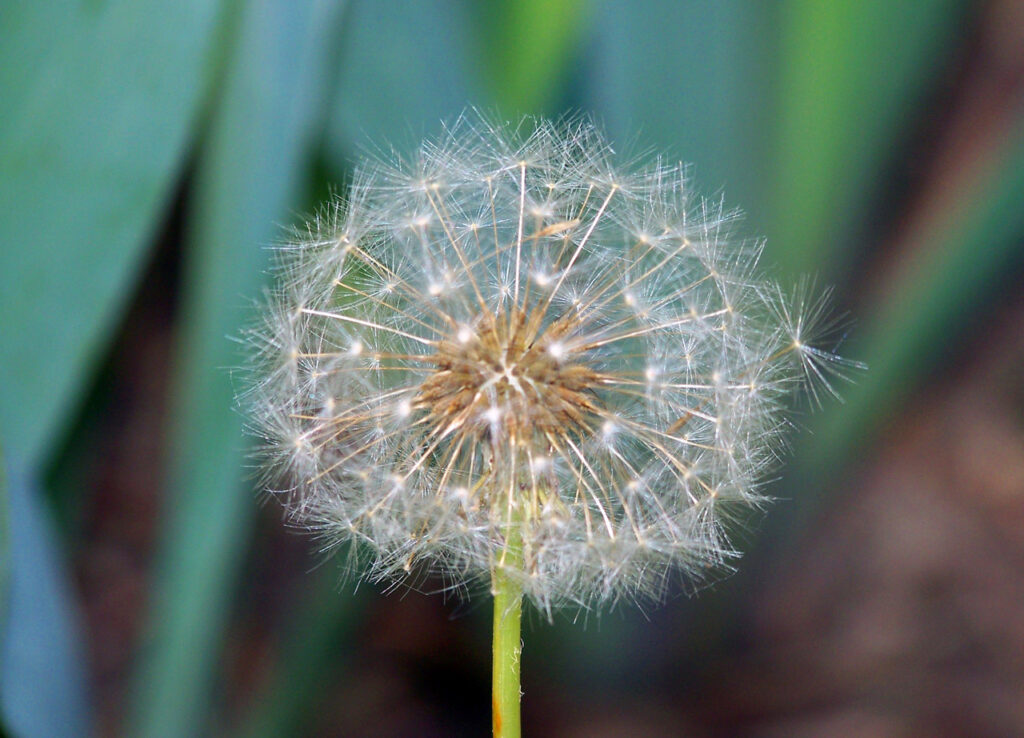
Caption: For their artificial fairy, Hao Zeng and Jianfeng Yang got inspired by dandelion seeds. Credit: Jianfeng Yang / Tampere University

That image makes me think of Tinker Bell (the fairy in the novel/play/movie with ‘Peter Pan’ in its titles) but I can also see how the researchers were inspired by dandelion seeds, which we used to call ‘wishes’.

Dandelion Seeds Free Stock Photo – Public Domain Pictures

A January 30, 2023 news item on ScienceDaily announces the fairy-like robot,

The development of stimuli-responsive polymers has brought about a wealth of material-related opportunities for next-generation small-scale, wirelessly controlled soft-bodied robots. For some time now, engineers have known how to use these materials to make small robots that can walk, swim and jump. So far, no one has been able to make them fly.

Researchers of the Light Robots group at Tampere University [Finland] are now researching how to make smart material fly. Hao Zeng, Academy Research Fellow and the group leader, and Jianfeng Yang, a doctoral researcher, have come up with a new design for their project called FAIRY — Flying Aero-robots based on Light Responsive Materials Assembly. They have developed a polymer-assembly robot that flies by wind and is controlled by light.

A January 26, 2023 Tampere University press release (also on EurekAlert but published January 30, 2023), which originated the news item, elucidates why the researchers are excited about their work,

Superior to its natural counterparts, this artificial seed is equipped with a soft actuator. The actuator is made of light-responsive liquid crystalline elastomer, which induces opening or closing actions of the bristles upon visible light excitation,” explains Hao Zeng.

The artificial fairy is controlled by light

The artificial fairy developed by Zeng and Yang has several biomimetic features. Because of its high porosity (0.95) and lightweight (1.2 mg) structure, it can easily float in the air directed by the wind. What is more, a stable separated vortex ring generation enables long-distance wind-assisted travelling.

“The fairy can be powered and controlled by a light source, such as a laser beam or LED,” Zeng says.

This means that light can be used to change the shape of the tiny dandelion seed-like structure. The fairy can adapt manually to wind direction and force by changing its shape. A light beam can also be used to control the take-off and landing actions of the polymer assembly.

Potential application opportunities in agriculture

Next, the researchers will focus on improving the material sensitivity to enable the operation of the device in sunlight. In addition, they will up-scale the structure so that it can carry micro-electronic devices such as GPS and sensors as well as biochemical compounds.

According to Zeng, there is potential for even more significant applications.

“It sounds like science fiction, but the proof-of-concept experiments included in our research show that the robot we have developed provides an important step towards realistic applications suitable for artificial pollination,” he reveals.

In the future, millions of artificial dandelion seeds carrying pollen could be dispersed freely by natural winds and then steered by light toward specific areas with trees awaiting pollination.

“This would have a huge impact on agriculture globally since the loss of pollinators due to global warming has become a serious threat to biodiversity and food production,” Zeng says.

Challenges remain to be solved

However, many problems need to be solved first. For example, how to control the landing spot in a precise way, and how to reuse the devices and make them biodegradable? These issues require close collaboration with materials scientists and people working on microrobotics.

The FAIRY project started in September 2021 and will last until August 2026. It is funded by the Academy of Finland. The flying robot is researched in cooperation with Dr. Wenqi Hu from Max Planck Institute for Intelligent Systems (Germany) and Dr. Hang Zhang from Aalto University.

Here’s a link to and a citation for the paper,

Dandelion-Inspired, Wind-Dispersed Polymer-Assembly Controlled by Light by Jianfeng Yang, Hang Zhang, Alex Berdin, Wenqi Hu, Hao Zeng. Advanced Science Volume 10, Issue 7 March 3, 2023 2206752 DOI: https://doi.org/10.1002/advs.202206752 First published online: 27 December 2022

This paper is open access.

SFU’s Philippe Pasquier speaks at “The rise of Creative AI and its ethics” online event on Tuesday, January 11, 2022 at 6 am PST

Simon Fraser University’s (SFU) Metacreation Lab for Creative AI (artificial intelligence) in Vancouver, Canada, has just sent me (via email) a January 2022 newsletter, which you can find here. There are a two items I found of special interest.

Max Planck Centre for Humans and Machines Seminars

From the January 2022 newsletter,

Max Planck Institute Seminar – The rise of Creative AI & its ethics
January 11, 2022 at 15:00 pm [sic] CET | 6:00 am PST

Next Monday [sic], Philippe Pasquier, director of the Metacreation Labn will
be providing a seminar titled “The rise of Creative AI & its ethics”
[Tuesday, January 11, 2022] at the Max Planck Institute’s Centre for Humans and
Machine [sic].

The Centre for Humans and Machines invites interested attendees to
our public seminars, which feature scientists from our institute and
experts from all over the world. Their seminars usually take 1 hour and
provide an opportunity to meet the speaker afterwards.

The seminar is openly accessible to the public via Webex Access, and
will be a great opportunity to connect with colleagues and friends of
the Lab on European and East Coast time. For more information and the
link, head to the Centre for Humans and Machines’ Seminars page linked
below.

Max Planck Institute – Upcoming Events

The Centre’s seminar description offers an abstract for the talk and a profile of Philippe Pasquier,

Creative AI is the subfield of artificial intelligence concerned with the partial or complete automation of creative tasks. In turn, creative tasks are those for which the notion of optimality is ill-defined. Unlike car driving, chess moves, jeopardy answers or literal translations, creative tasks are more subjective in nature. Creative AI approaches have been proposed and evaluated in virtually every creative domain: design, visual art, music, poetry, cooking, … These algorithms most often perform at human-competitive or superhuman levels for their precise task. Two main use of these algorithms have emerged that have implications on workflows reminiscent of the industrial revolution:

– Augmentation (a.k.a, computer-assisted creativity or co-creativity): a human operator interacts with the algorithm, often in the context of already existing creative software.

– Automation (computational creativity): the creative task is performed entirely by the algorithms without human intervention in the generation process.

Both usages will have deep implications for education and work in creative fields. Away from the fear of strong – sentient – AI, taking over the world: What are the implications of these ongoing developments for students, educators and professionals? How will Creative AI transform the way we create, as well as what we create?

Philippe Pasquier is a professor at Simon Fraser University’s School for Interactive Arts and Technology, where he directs the Metacreation Lab for Creative AI since 2008. Philippe leads a research-creation program centred around generative systems for creative tasks. As such, he is a scientist specialized in artificial intelligence, a multidisciplinary media artist, an educator, and a community builder. His contributions range from theoretical research on generative systems, computational creativity, multi-agent systems, machine learning, affective computing, and evaluation methodologies. This work is applied in the creative software industry as well as through artistic practice in computer music, interactive and generative art.

Interpreting soundscapes

Folks at the Metacreation Lab have made available an interactive search engine for sounds, from the January 2022 newsletter,

Audio Metaphor is an interactive search engine that transforms users’ queries into soundscapes interpreting them.  Using state of the art algorithms for sound retrieval, segmentation, background and foreground classification, AuMe offers a way to explore the vast open source library of sounds available on the  freesound.org online community through natural language and its semantic, symbolic, and metaphorical expressions. 

We’re excited to see Audio Metaphor included  among many other innovative projects on Freesound Labs, a directory of projects, hacks, apps, research and other initiatives that use content from Freesound or use the Freesound API. Take a minute to check out the variety of projects applying creative coding, machine learning, and many other techniques towards the exploration of sound and music creation, generative music, and soundscape composition in diverse forms an interfaces.

Explore AuMe and other FreeSound Labs projects    

The Audio Metaphor (AuMe) webpage on the Metacreation Lab website has a few more details about the search engine,

Audio Metaphor (AuMe) is a research project aimed at designing new methodologies and tools for sound design and composition practices in film, games, and sound art. Through this project, we have identified the processes involved in working with audio recordings in creative environments, addressing these in our research by implementing computational systems that can assist human operations.

We have successfully developed Audio Metaphor for the retrieval of audio file recommendations from natural language texts, and even used phrases generated automatically from Twitter to sonify the current state of Web 2.0. Another significant achievement of the project has been in the segmentation and classification of environmental audio with composition-specific categories, which were then applied in a generative system approach. This allows users to generate sound design simply by entering textual prompts.

As we direct Audio Metaphor further toward perception and cognition, we will continue to contribute to the music information retrieval field through environmental audio classification and segmentation. The project will continue to be instrumental in the design and implementation of new tools for sound designers and artists.

See more information on the website audiometaphor.ca.

As for Freesound Labs, you can find them here.

A little more Christmas: “Kitty Q” award-winning game app explains quantum physics

Caption: Kitty Q. Credit: Philipp Stollenmayer

It kind of reminds me of ‘Hello Kitty’. However, you can see in this larger version that 1/2 of this cat has a skeletal paw giving it kinship to Erwin Schrödinger’s cat.

The app was first announced in a September 28, 2021University of Würzburg press release on EurekAlert,

Cute but half-dead

Ding, dong. There is a box in front of the door. And inside there is … a cute but half-dead cat! The main character of the new game app “Kitty Q” of the Würzburg-Dresden Cluster of Excellence ct.qmat–Complexity and Topology in Quantum Matter of the Universities of Würzburg and Dresden accompanies children and teenagers aged 11 and older into the crazy quantum world. The adventure is intended to primarily get girls excited about the fascinating phenomena of quantum physics. The model for the lovingly designed “Kitty Q” is a popular thought experiment in quantum mechanics by Nobel Prize winner Erwin Schrödinger (1887 – 1961), known as Schrödinger’s cat–alive and dead at the same time.

But fun first

Those who embark on adventure with “Kitty Q” can tinker, try out, experiment on their smartphones and solve more than 20 attractive brainteasers along the way. Importantly, the kids don’t have to be math whizzes or physics geniuses. After all, “Kitty Q” is all about fun!

“The game is an Escape Game after all, even though it conveys quite serious scientific content. It is intended to awaken curiosity and encourage trying things out. Indeed, that’s what science is all about: discovering new things by thinking and experimenting,” says the app designer Philipp Stollenmayer, explaining the character of the game app he developed. “The gamers experience an exciting world, collect stickers and design their cat individually. Just like in real life, you need to work in the quantum world to acquire your knowledge. It was important to me to show how much fun this could be!” “Kitty Q” is the first commissioned project for Stollenmayer who otherwise works exclusively on his own and has won all the major prizes in game design since 2013–most recently the Apple Design Award 2020.

Donuts, randomness, cold chips

The focus of the game app is on the more than 20 puzzles based on scientific facts from quantum physics–the concept of chance, donuts as “symbol” of topological quantum physics, cold chips for revolutionary high-tech and quantum computers, to name a few examples. Those who like can access background knowledge, edited in a popular way, as “Kittypedia articles” as soon as a puzzle has been solved.

“The research field of our Cluster of Excellence ct.qmat–topological quantum physics–promises revolutionary insights and groundbreaking developments. But the subject is still so young that it will take quite a few years before it arrives in classroom. We are trying to bridge this gap with the app,” explains Matthias Vojta, Professor of Theoretical Solid State Physics at Technische Universität (TU) Dresden and spokesperson of the Dresden branch of the ct.qmat research alliance. Topological quantum physics uses topology–a branch of mathematics–as a tool to theoretically describe the interior of novel quantum materials. This is a Nobel Prize-winning research approach that ct.qmat applies.

Attracting female physicists

The game takes unusual approaches to attract children and teens to mathematics, computer science, natural and technical sciences (STEM)–and especially to quantum physics–at an early age. The focus is particularly on girls, since young women are underrepresented in physics degree programs in particular. The game targets at an age group in which interest in physics and the natural sciences is shaped.

“At least since the German government passed the economic stimulus package last year and more than two billion euros flow into German quantum research, our field of science has arrived in society. Unfortunately, there is already a significant shortage of skilled personnel in physics. With our mobile game, we want to make physics an experience, appeal to tomorrow’s researchers and Nobel Prize winners, and thus keep Germany’s high tech economy running,” comments the spokesperson of the Würzburg branch Ralph Claessen, Professor of Experimental Physics at Julius Maximilian University (JMU) Würzburg.

The latest about Kitty Q can be found in a December 21, 2021 Technische Universität Dresden press release on EurekAlert,

“We are thrilled that our app ‘Kitty Q’ was honored as a ‘Serious Game’ at the Games Innovation Award Saxony. The references to quantum physics are always there, but our game can also be played completely without math or physics know-how. Detailed background knowledge is optionally available in the ‘Kittypedia’. We invested a lot of work in compiling these generally understandable encyclopedia articles on quantum physics. We are immensely pleased that this award highlights the aspect of knowledge transfer in particular,” explains Prof. Matthias Vojta, Professor of Theoretical Solid State Physics at Technische Universität (TU) Dresden and spokesperson of the Dresden branch of ct.qmat.

The next round of ” Kitty Q” is now starting with the project “QUANTube–Science Break”: “From January 2022 on, our young researchers will be answering questions about quantum physics sent to us by players from all over the world in entertaining explanatory videos. We are challenging ourselves in terms of easy comprehensibility and language suitable for children and young people,” explains the spokesperson of the Würzburg branch of the Cluster Prof. Ralph Claessen, Professor of Experimental Physics at Julius Maximilian University (JMU) Würzburg. “The fact that the DFG has now awarded a Community Prize to ‘QUANTube’ is a special honor for us because it is awarded by marketing experts from the research community and not by a specialist jury. Perhaps there is even some curiosity about our implementation behind the vote.”

The game app “Kitty Q” has so far been downloaded 65,000 times worldwide. “It’s great to see how enthusiastically people are playing and how great the feedback and ratings are. That is anything but a matter of course for a game that imparts knowledge,” says app designer Philipp Stollenmayer, who developed the game for the Würzburg-Dresden Cluster of Excellence. So far, Stollenmayer has won all the major prizes in game design for the games he has developed on his own–most recently the Apple Design Award 2020.

Answering questions from the players using video

Whoever solves a certain puzzle in the mobile game “Kitty Q–a Quantum Adventure” earns a bonus app, which can be used to ask the researchers of the Cluster of Excellence ct.qmat a question. So far, more than 45 questions on physics and quantum physics have been sent via the in-game bonus app.

All questions will be answered by the doctoral and postdoctoral researchers of the Cluster of Excellence on a topic-related basis in YouTube explanatory videos starting as of January 2022–in school break length of about five minutes and in line with the Science Year 2022, which has the motto “Inquire into a matter”. For recruiting next generation of scientists, the cluster also relies on its strong network with five non-university partner institutes: Helmholtz-Zentrum Dresden Rossendorf, Leibniz Institute for Solid State and Materials Research Dresden, Max Planck Institute for Chemical Physics of Solids Dresden, Max Planck Institute for the Physics of Complex Systems Dresden and Bavarian Center for Applied Energy Research.

“QUANTube–Science Break” #1 Schrödinger’s Cat

The first QUANTube episode answers questions about “Schrödinger’s cat”. The video will be published on the YouTube channel of the Cluster of Excellence ct.qmat at the end of January: https://www.youtube.com/c/ClusterofExcellencectqmat

America, England, Vietnam, China, and Germany–questions about cats were sent in from all over the world: What does the Q in kitty Q stand for? Why is the cat half dead? How long do cats live when they are half dead? What do the cat’s atoms look like when it is dead and alive at the same time? Why did Schrödinger use a cat and not another animal in his thought experiment in the first place?

A little preview of the new QUANTube video series is provided by a teaser video that answers the question, “What do cats actually have to do with physics?”

Here’s the QUANTube–Science Break video series teaser/preview,

You can find out more about Kitty Q (English language version) here or you can access the Katze Q (German language version) here.

It’s a very ‘carbony’ time: graphene jacket, graphene-skinned airplane, and schwarzite

In August 2018, I been stumbled across several stories about graphene-based products and a new form of carbon.

Graphene jacket

The company producing this jacket has as its goal “… creating bionic clothing that is both bulletproof and intelligent.” Well, ‘bionic‘ means biologically-inspired engineering and ‘intelligent‘ usually means there’s some kind of computing capability in the product. This jacket, which is the first step towards the company’s goal, is not bionic, bulletproof, or intelligent. Nonetheless, it represents a very interesting science experiment in which you, the consumer, are part of step two in the company’s R&D (research and development).

Onto Vollebak’s graphene jacket,
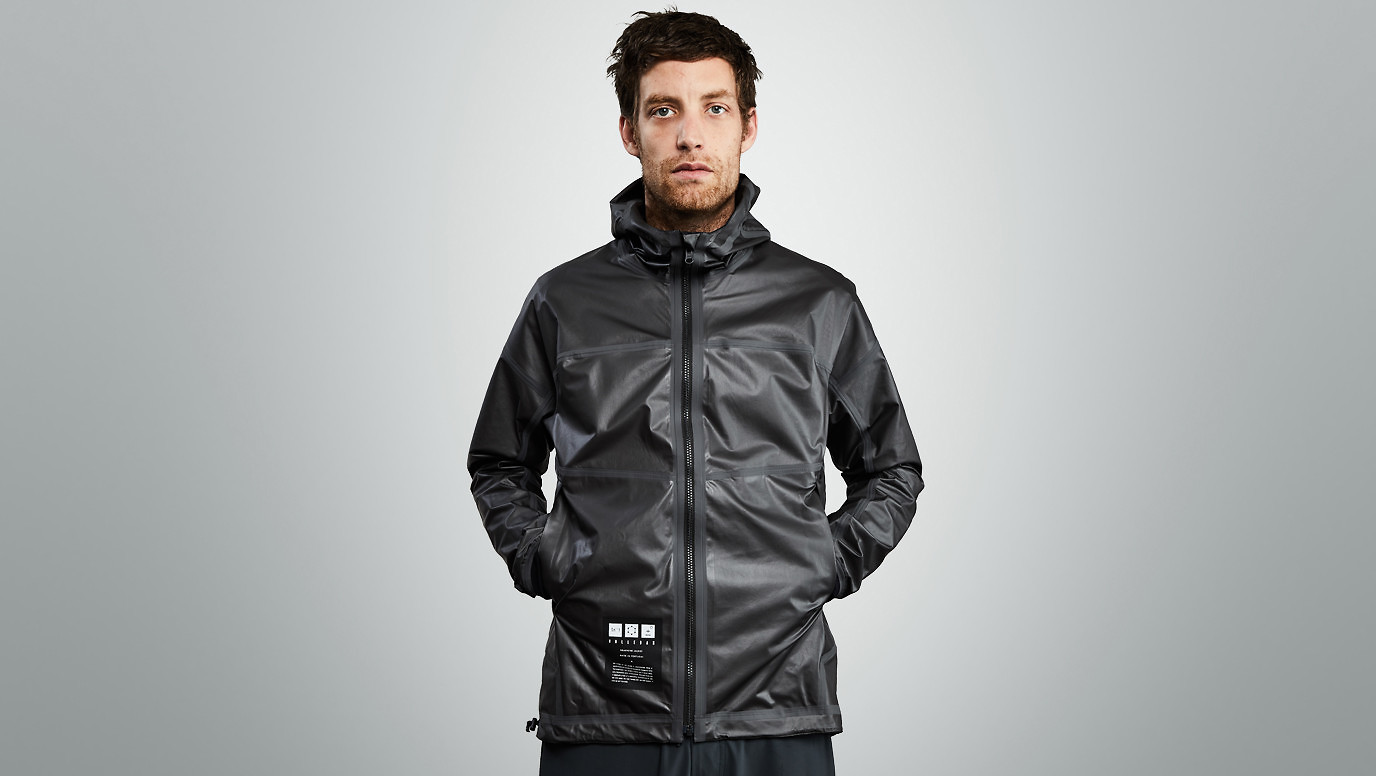
Courtesy: Vollebak

From an August 14, 2018 article by Jesus Diaz for Fast Company,

Graphene is the thinnest possible form of graphite, which you can find in your everyday pencil. It’s purely bi-dimensional, a single layer of carbon atoms that has unbelievable properties that have long threatened to revolutionize everything from aerospace engineering to medicine. …

Despite its immense promise, graphene still hasn’t found much use in consumer products, thanks to the fact that it’s hard to manipulate and manufacture in industrial quantities. The process of developing Vollebak’s jacket, according to the company’s cofounders, brothers Steve and Nick Tidball, took years of intensive research, during which the company worked with the same material scientists who built Michael Phelps’ 2008 Olympic Speedo swimsuit (which was famously banned for shattering records at the event).

The jacket is made out of a two-sided material, which the company invented during the extensive R&D process. The graphene side looks gunmetal gray, while the flipside appears matte black. To create it, the scientists turned raw graphite into something called graphene “nanoplatelets,” which are stacks of graphene that were then blended with polyurethane to create a membrane. That, in turn, is bonded to nylon to form the other side of the material, which Vollebak says alters the properties of the nylon itself. “Adding graphene to the nylon fundamentally changes its mechanical and chemical properties–a nylon fabric that couldn’t naturally conduct heat or energy, for instance, now can,” the company claims.

The company says that it’s reversible so you can enjoy graphene’s properties in different ways as the material interacts with either your skin or the world around you. “As physicists at the Max Planck Institute revealed, graphene challenges the fundamental laws of heat conduction, which means your jacket will not only conduct the heat from your body around itself to equalize your skin temperature and increase it, but the jacket can also theoretically store an unlimited amount of heat, which means it can work like a radiator,” Tidball explains.

He means it literally. You can leave the jacket out in the sun, or on another source of warmth, as it absorbs heat. Then, the company explains on its website, “If you then turn it inside out and wear the graphene next to your skin, it acts like a radiator, retaining its heat and spreading it around your body. The effect can be visibly demonstrated by placing your hand on the fabric, taking it away and then shooting the jacket with a thermal imaging camera. The heat of the handprint stays long after the hand has left.”

There’s a lot more to the article although it does feature some hype and I’m not sure I believe Diaz’s claim (August 14, 2018 article) that ‘graphene-based’ hair dye is perfectly safe ( Note: A link has been removed),

Graphene is the thinnest possible form of graphite, which you can find in your everyday pencil. It’s purely bi-dimensional, a single layer of carbon atoms that has unbelievable properties that will one day revolutionize everything from aerospace engineering to medicine. Its diverse uses are seemingly endless: It can stop a bullet if you add enough layers. It can change the color of your hair with no adverse effects. [emphasis mine] It can turn the walls of your home into a giant fire detector. “It’s so strong and so stretchy that the fibers of a spider web coated in graphene could catch a falling plane,” as Vollebak puts it in its marketing materials.

Not unless things have changed greatly since March 2018. My August 2, 2018 posting featured the graphene-based hair dye announcement from March 2018 and a cautionary note from Dr. Andrew Maynard (scroll down ab out 50% of the way for a longer excerpt of Maynard’s comments),

Northwestern University’s press release proudly announced, “Graphene finds new application as nontoxic, anti-static hair dye.” The announcement spawned headlines like “Enough with the toxic hair dyes. We could use graphene instead,” and “’Miracle material’ graphene used to create the ultimate hair dye.”

From these headlines, you might be forgiven for getting the idea that the safety of graphene-based hair dyes is a done deal. Yet having studied the potential health and environmental impacts of engineered nanomaterials for more years than I care to remember, I find such overly optimistic pronouncements worrying – especially when they’re not backed up by clear evidence.

These studies need to be approached with care, as the precise risks of graphene exposure will depend on how the material is used, how exposure occurs and how much of it is encountered. Yet there’s sufficient evidence to suggest that this substance should be used with caution – especially where there’s a high chance of exposure or that it could be released into the environment.

The full text of Dr. Maynard’s comments about graphene hair dyes and risk can be found here.

Bearing in mind  that graphene-based hair dye is an entirely different class of product from the jacket, I wouldn’t necessarily dismiss risks; I would like to know what kind of risk assessment and safety testing has been done. Due to their understandable enthusiasm, the brothers Tidball have focused all their marketing on the benefits and the opportunity for the consumer to test their product (from graphene jacket product webpage),

While it’s completely invisible and only a single atom thick, graphene is the lightest, strongest, most conductive material ever discovered, and has the same potential to change life on Earth as stone, bronze and iron once did. But it remains difficult to work with, extremely expensive to produce at scale, and lives mostly in pioneering research labs. So following in the footsteps of the scientists who discovered it through their own highly speculative experiments, we’re releasing graphene-coated jackets into the world as experimental prototypes. Our aim is to open up our R&D and accelerate discovery by getting graphene out of the lab and into the field so that we can harness the collective power of early adopters as a test group. No-one yet knows the true limits of what graphene can do, so the first edition of the Graphene Jacket is fully reversible with one side coated in graphene and the other side not. If you’d like to take part in the next stage of this supermaterial’s history, the experiment is now open. You can now buy it, test it and tell us about it. [emphasis mine]

How maverick experiments won the Nobel Prize

While graphene’s existence was first theorised in the 1940s, it wasn’t until 2004 that two maverick scientists, Andre Geim and Konstantin Novoselov, were able to isolate and test it. Through highly speculative and unfunded experimentation known as their ‘Friday night experiments,’ they peeled layer after layer off a shaving of graphite using Scotch tape until they produced a sample of graphene just one atom thick. After similarly leftfield thinking won Geim the 2000 Ig Nobel prize for levitating frogs using magnets, the pair won the Nobel prize in 2010 for the isolation of graphene.

Should you be interested, in beta-testing the jacket, it will cost you $695 (presumably USD); order here. One last thing, Vollebak is based in the UK.

Graphene skinned plane

An August 14, 2018 news item (also published as an August 1, 2018 Haydale press release) by Sue Keighley on Azonano heralds a new technology for airplans,

Haydale, (AIM: HAYD), the global advanced materials group, notes the announcement made yesterday from the University of Central Lancashire (UCLAN) about the recent unveiling of the world’s first graphene skinned plane at the internationally renowned Farnborough air show.

The prepreg material, developed by Haydale, has potential value for fuselage and wing surfaces in larger scale aero and space applications especially for the rapidly expanding drone market and, in the longer term, the commercial aerospace sector. By incorporating functionalised nanoparticles into epoxy resins, the electrical conductivity of fibre-reinforced composites has been significantly improved for lightning-strike protection, thereby achieving substantial weight saving and removing some manufacturing complexities.

Before getting to the photo, here’s a definition for pre-preg from its Wikipedia entry (Note: Links have been removed),

Pre-preg is “pre-impregnated” composite fibers where a thermoset polymer matrix material, such as epoxy, or a thermoplastic resin is already present. The fibers often take the form of a weave and the matrix is used to bond them together and to other components during manufacture.
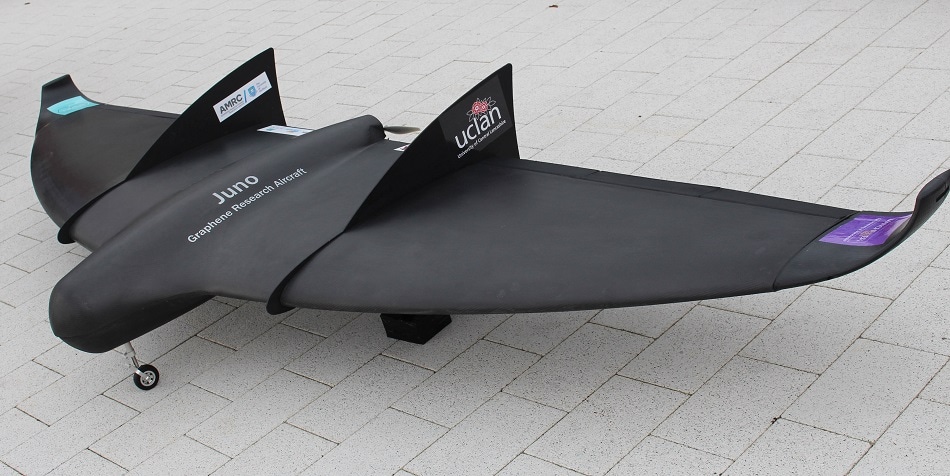
Haydale has supplied graphene enhanced prepreg material for Juno, a three-metre wide graphene-enhanced composite skinned aircraft, that was revealed as part of the ‘Futures Day’ at Farnborough Air Show 2018. [downloaded from https://www.azonano.com/news.aspx?newsID=36298]

A July 31, 2018 University of Central Lancashire (UCLan) press release provides a tiny bit more (pun intended) detail,

The University of Central Lancashire (UCLan) has unveiled the world’s first graphene skinned plane at an internationally renowned air show.

Juno, a three-and-a-half-metre wide graphene skinned aircraft, was revealed on the North West Aerospace Alliance (NWAA) stand as part of the ‘Futures Day’ at Farnborough Air Show 2018.

The University’s aerospace engineering team has worked in partnership with the Sheffield Advanced Manufacturing Research Centre (AMRC), the University of Manchester’s National Graphene Institute (NGI), Haydale Graphene Industries (Haydale) and a range of other businesses to develop the unmanned aerial vehicle (UAV), which also includes graphene batteries and 3D printed parts.

Billy Beggs, UCLan’s Engineering Innovation Manager, said: “The industry reaction to Juno at Farnborough was superb with many positive comments about the work we’re doing. Having Juno at one the world’s biggest air shows demonstrates the great strides we’re making in leading a programme to accelerate the uptake of graphene and other nano-materials into industry.

“The programme supports the objectives of the UK Industrial Strategy and the University’s Engineering Innovation Centre (EIC) to increase industry relevant research and applications linked to key local specialisms. Given that Lancashire represents the fourth largest aerospace cluster in the world, there is perhaps no better place to be developing next generation technologies for the UK aerospace industry.”

Previous graphene developments at UCLan have included the world’s first flight of a graphene skinned wing and the launch of a specially designed graphene-enhanced capsule into near space using high altitude balloons.

UCLan engineering students have been involved in the hands-on project, helping build Juno on the Preston Campus.

Haydale supplied much of the material and all the graphene used in the aircraft. Ray Gibbs, Chief Executive Officer, said: “We are delighted to be part of the project team. Juno has highlighted the capability and benefit of using graphene to meet key issues faced by the market, such as reducing weight to increase range and payload, defeating lightning strike and protecting aircraft skins against ice build-up.”

David Bailey Chief Executive of the North West Aerospace Alliance added: “The North West aerospace cluster contributes over £7 billion to the UK economy, accounting for one quarter of the UK aerospace turnover. It is essential that the sector continues to develop next generation technologies so that it can help the UK retain its competitive advantage. It has been a pleasure to support the Engineering Innovation Centre team at the University in developing the world’s first full graphene skinned aircraft.”

The Juno project team represents the latest phase in a long-term strategic partnership between the University and a range of organisations. The partnership is expected to go from strength to strength following the opening of the £32m EIC facility in February 2019.

The next step is to fly Juno and conduct further tests over the next two months.

Next item, a new carbon material.

Schwarzite

I love watching this gif of a schwarzite,
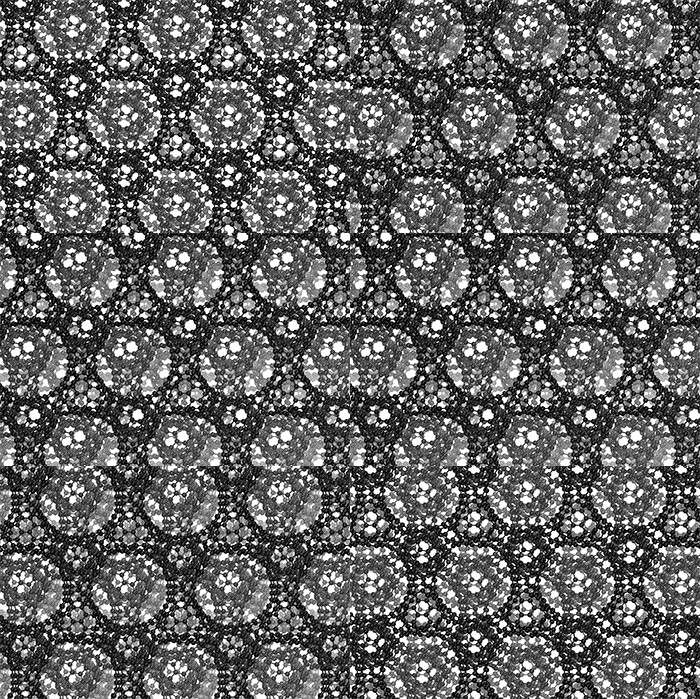
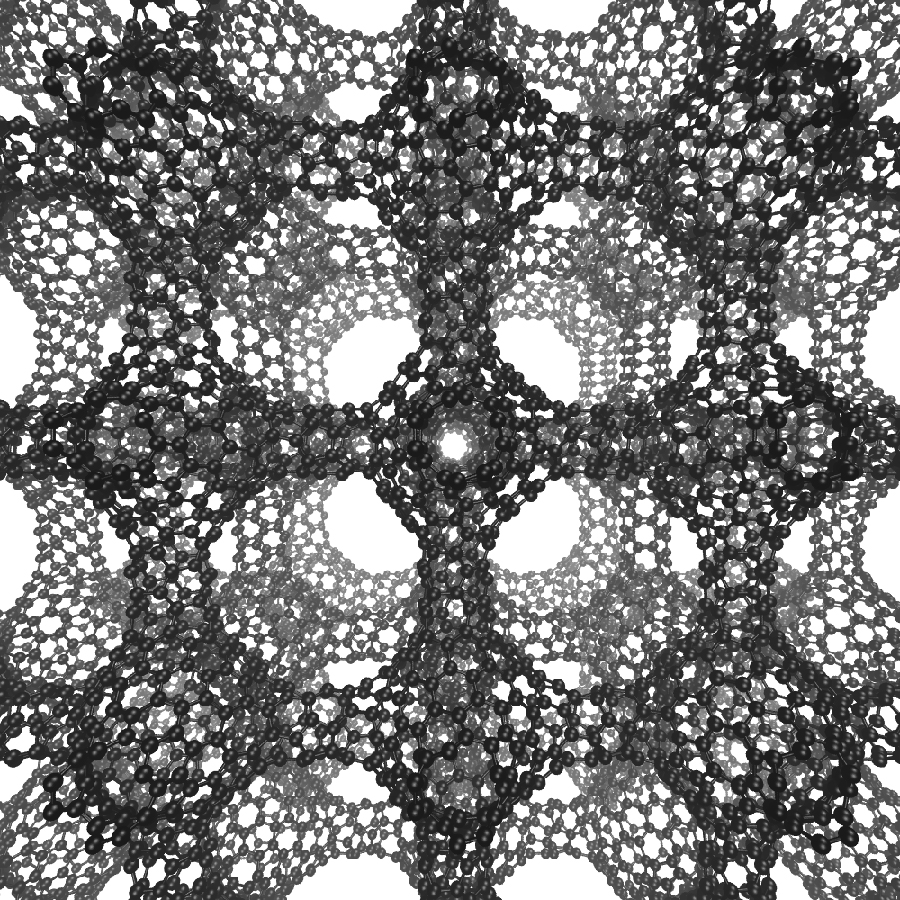
The three-dimensional cage structure of a schwarzite that was formed inside the pores of a zeolite. (Graphics by Yongjin Lee and Efrem Braun)

An August 13, 2018 news item on Nanowerk announces the new carbon structure,

The discovery of buckyballs [also known as fullerenes, C60, or buckminsterfullerenes] surprised and delighted chemists in the 1980s, nanotubes jazzed physicists in the 1990s, and graphene charged up materials scientists in the 2000s, but one nanoscale carbon structure – a negatively curved surface called a schwarzite – has eluded everyone. Until now.

University of California, Berkeley [UC Berkeley], chemists have proved that three carbon structures recently created by scientists in South Korea and Japan are in fact the long-sought schwarzites, which researchers predict will have unique electrical and storage properties like those now being discovered in buckminsterfullerenes (buckyballs or fullerenes for short), nanotubes and graphene.

An August 13, 2018 UC Berkeley news release by Robert Sanders, which originated the news item, describes how the Berkeley scientists and the members of their international  collaboration from Germany, Switzerland, Russia, and Italy, have contributed to the current state of schwarzite research,

The new structures were built inside the pores of zeolites, crystalline forms of silicon dioxide – sand – more commonly used as water softeners in laundry detergents and to catalytically crack petroleum into gasoline. Called zeolite-templated carbons (ZTC), the structures were being investigated for possible interesting properties, though the creators were unaware of their identity as schwarzites, which theoretical chemists have worked on for decades.

Based on this theoretical work, chemists predict that schwarzites will have unique electronic, magnetic and optical properties that would make them useful as supercapacitors, battery electrodes and catalysts, and with large internal spaces ideal for gas storage and separation.

UC Berkeley postdoctoral fellow Efrem Braun and his colleagues identified these ZTC materials as schwarzites based of their negative curvature, and developed a way to predict which zeolites can be used to make schwarzites and which can’t.

“We now have the recipe for how to make these structures, which is important because, if we can make them, we can explore their behavior, which we are working hard to do now,” said Berend Smit, an adjunct professor of chemical and biomolecular engineering at UC Berkeley and an expert on porous materials such as zeolites and metal-organic frameworks.

Smit, the paper’s corresponding author, Braun and their colleagues in Switzerland, China, Germany, Italy and Russia will report their discovery this week in the journal Proceedings of the National Academy of Sciences. Smit is also a faculty scientist at Lawrence Berkeley National Laboratory.

Playing with carbon

Diamond and graphite are well-known three-dimensional crystalline arrangements of pure carbon, but carbon atoms can also form two-dimensional “crystals” — hexagonal arrangements patterned like chicken wire. Graphene is one such arrangement: a flat sheet of carbon atoms that is not only the strongest material on Earth, but also has a high electrical conductivity that makes it a promising component of electronic devices.

schwarzite carbon cage

The cage structure of a schwarzite that was formed inside the pores of a zeolite. The zeolite is subsequently dissolved to release the new material. (Graphics by Yongjin Lee and Efrem Braun)

Graphene sheets can be wadded up to form soccer ball-shaped fullerenes – spherical carbon cages that can store molecules and are being used today to deliver drugs and genes into the body. Rolling graphene into a cylinder yields fullerenes called nanotubes, which are being explored today as highly conductive wires in electronics and storage vessels for gases like hydrogen and carbon dioxide. All of these are submicroscopic, 10,000 times smaller than the width of a human hair.

To date, however, only positively curved fullerenes and graphene, which has zero curvature, have been synthesized, feats rewarded by Nobel Prizes in 1996 and 2010, respectively.

In the 1880s, German physicist Hermann Schwarz investigated negatively curved structures that resemble soap-bubble surfaces, and when theoretical work on carbon cage molecules ramped up in the 1990s, Schwarz’s name became attached to the hypothetical negatively curved carbon sheets.

“The experimental validation of schwarzites thus completes the triumvirate of possible curvatures to graphene; positively curved, flat, and now negatively curved,” Braun added.

Minimize me

Like soap bubbles on wire frames, schwarzites are topologically minimal surfaces. When made inside a zeolite, a vapor of carbon-containing molecules is injected, allowing the carbon to assemble into a two-dimensional graphene-like sheet lining the walls of the pores in the zeolite. The surface is stretched tautly to minimize its area, which makes all the surfaces curve negatively, like a saddle. The zeolite is then dissolved, leaving behind the schwarzite.

soap bubble schwarzite structure

A computer-rendered negatively curved soap bubble that exhibits the geometry of a carbon schwarzite. (Felix Knöppel image)

“These negatively-curved carbons have been very hard to synthesize on their own, but it turns out that you can grow the carbon film catalytically at the surface of a zeolite,” Braun said. “But the schwarzites synthesized to date have been made by choosing zeolite templates through trial and error. We provide very simple instructions you can follow to rationally make schwarzites and we show that, by choosing the right zeolite, you can tune schwarzites to optimize the properties you want.”

Researchers should be able to pack unusually large amounts of electrical charge into schwarzites, which would make them better capacitors than conventional ones used today in electronics. Their large interior volume would also allow storage of atoms and molecules, which is also being explored with fullerenes and nanotubes. And their large surface area, equivalent to the surface areas of the zeolites they’re grown in, could make them as versatile as zeolites for catalyzing reactions in the petroleum and natural gas industries.

Braun modeled ZTC structures computationally using the known structures of zeolites, and worked with topological mathematician Senja Barthel of the École Polytechnique Fédérale de Lausanne in Sion, Switzerland, to determine which of the minimal surfaces the structures resembled.

The team determined that, of the approximately 200 zeolites created to date, only 15 can be used as a template to make schwarzites, and only three of them have been used to date to produce schwarzite ZTCs. Over a million zeolite structures have been predicted, however, so there could be many more possible schwarzite carbon structures made using the zeolite-templating method.

Other co-authors of the paper are Yongjin Lee, Seyed Mohamad Moosavi and Barthel of the École Polytechnique Fédérale de Lausanne, Rocio Mercado of UC Berkeley, Igor Baburin of the Technische Universität Dresden in Germany and Davide Proserpio of the Università degli Studi di Milano in Italy and Samara State Technical University in Russia.

Here’s a link to and a citation for the paper,

Generating carbon schwarzites via zeolite-templating by Efrem Braun, Yongjin Lee, Seyed Mohamad Moosavi, Senja Barthel, Rocio Mercado, Igor A. Baburin, Davide M. Proserpio, and Berend Smit. PNAS August 14, 2018. 201805062; published ahead of print August 14, 2018. https://doi.org/10.1073/pnas.1805062115

This paper appears to be open access.
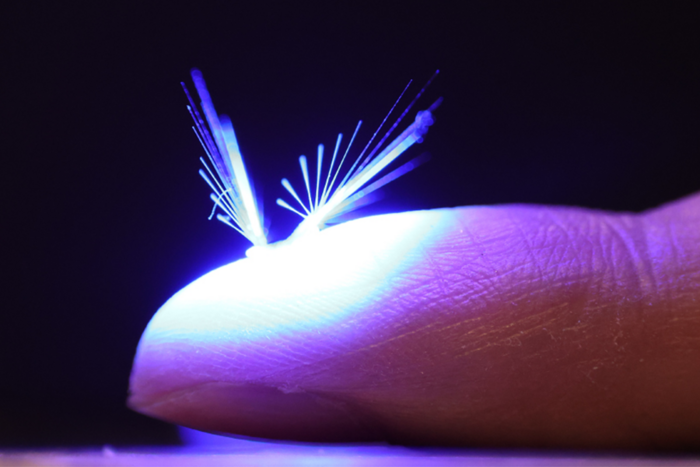
Magic nano ink

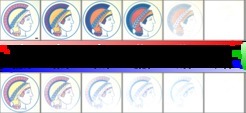
Colour changes © Nature Communications 2017 / MPI [Max Planck Institute] for Intelligent Systems

A March 1, 2017 news item on Nanowerk helps to explain the image seen above (Note: A link has been removed),

Plasmonic printing produces resolutions several times greater than conventional printing methods. In plasmonic printing, colours are formed on the surfaces of tiny metallic particles when light excites their electrons to oscillate. Researchers at the Max Planck Institute for Intelligent Systems in Stuttgart have now shown how the colours of such metallic particles can be altered with hydrogen (Nature Communications, “Dynamic plasmonic colour display”).

The technique could open the way for animating ultra-high-resolution images and for developing extremely sharp displays. At the same time, it provides new approaches for encrypting information and detecting counterfeits.

A March 1, 2017 Max Planck Institute press release, which originated the news item, provides more  history and more detail about the research,

Glass artisans in medieval times exploited the effect long before it was even known. They coloured the magnificent windows of gothic cathedrals with nanoparticles of gold, which glowed red in the light. It was not until the middle of the 20th century that the underlying physical phenomenon was given a name: plasmons. These collective oscillations of free electrons are stimulated by the absorption of incident electromagnetic radiation. The smaller the metallic particles, the shorter the wavelength of the absorbed radiation. In some cases, the resonance frequency, i.e., the absorption maximum, falls within the visible light spectrum. The unabsorbed part of the spectrum is then scattered or reflected, creating an impression of colour. The metallic particles, which usually appear silvery, copper-coloured or golden, then take on entirely new colours.

A resolution of 100,000 dots per inch

Researchers are also taking advantage of the effect to develop plasmonic printing, in which tailor-made square metal particles are arranged in specific patterns on a substrate. The edge length of the particles is in the order of less than 100 nanometres (100 billionths of a metre). This allows a resolution of 100,000 dots per inch – several times greater than what today’s printers and displays can achieve.

For metallic particles measuring several 100 nanometres across, the resonance frequency of the plasmons lies within the visible light spectrum. When white light falls on such particles, they appear in a specific colour, for example red or blue. The colour of the metal in question is determined by the size of the particles and their distance from each other. These adjustment parameters therefore serve the same purpose in plasmonic printing as the palette of colours in painting.

The trick with the chemical reaction

The Smart Nanoplasmonics Research Group at the Max Planck Institute for Intelligent Systems in Stuttgart also makes use of this colour variability. They are currently working on making dynamic plasmonic printing. They have now presented an approach that allows them to alter the colours of the pixels predictably – even after an image has been printed. “The trick is to use magnesium. It can undergo a reversible chemical reaction in which the metallic character of the element is lost,” explains Laura Na Liu, who leads the Stuttgart research group. “Magnesium can absorb up to 7.6% of hydrogen by weight to form magnesium hydride, or MgH2”, Liu continues. The researchers coat the magnesium with palladium, which acts as a catalyst in the reaction.

During the continuous transition of metallic magnesium into non-metallic MgH2, the colour of some of the pixels changes several times. The colour change and the speed of the rate at which it proceeds follow a clear pattern. This is determined both by the size of and the distance between the individual magnesium particles as well as by the amount of hydrogen present.

In the case of total hydrogen saturation, the colour disappears completely, and the pixels reflect all the white light that falls on them. This is because the magnesium is no longer present in metallic form but only as MgH2. Hence, there are also no free metal electrons that can be made to oscillate.

Minerva’s vanishing act

The scientists demonstrated the effect of such dynamic colour behaviour on a plasmonic print of Minerva, the Roman goddess of wisdom, which also bore the logo of the Max Planck Society. They chose the size of their magnesium particles so that Minerva’s hair first appeared reddish, the head covering yellow, the feather crest red and the laurel wreath and outline of her face blue. They then washed the micro-print with hydrogen. A time-lapse film shows how the individual colours change. Yellow turns red, red turns blue, and blue turns white. After a few minutes all the colours disappear, revealing a white surface instead of Minerva.

The scientists also showed that this process is reversible by replacing the hydrogen stream with a stream of oxygen. The oxygen reacts with the hydrogen in the magnesium hydride to form water, so that the magnesium particles become metallic again. The pixels then change back in reverse order, and in the end Minerva appears in her original colours.

In a similar manner the researchers first made the micro image of a famous Van Gogh painting disappear and then reappear. They also produced complex animations that give the impression of fireworks.

The principle of a new encryption technique

Laura Na Liu can imagine using this principle in a new encryption technology. To demonstrate this, the group formed various letters with magnesium pixels. The addition of hydrogen then caused some letters to disappear over time, like the image of Minerva. “As for the rest of the letters, a thin oxide layer formed on the magnesium particles after exposing the sample in air for a short time before palladium deposition,” Liu explains. This layer is impermeable to hydrogen. The magnesium lying under the oxide layer therefore remains metallic − and visible − because light is able to excite the plasmons in the magnesium.

In this way it is possible to conceal a message, for example by mixing real and nonsensical information. Only the intended recipient is able to make the nonsensical information disappear and filter out the real message. For example, after decoding the message “Hartford” with hydrogen, only the words “art or” would remain visible. To make it more difficult to crack such encrypted messages, the group is currently working on a process that would require a precisely adjusted hydrogen concentration for deciphering.

Liu believes that the technology could also be used some day in the fight against counterfeiting. “For example, plasmonic security features could be printed on banknotes or pharmaceutical packs, which could later be checked or read only under specific conditions unknown to counterfeiters.”

It doesn’t necessarily have to be hydrogen

Laura Na Liu knows that the use of hydrogen makes some applications difficult and impractical for everyday use such as in mobile displays. “We see our work as a starting shot for a new principle: the use of chemical reactions for dynamic printing,” the Stuttgart physicist says. It is certainly conceivable that the research will soon lead to the discovery of chemical reactions for colour changes other than the phase transition between magnesium and magnesium dihydride, for example, reactions that require no gaseous reactants.

Here’s a link to and a citation for the paper,

Dynamic plasmonic colour display by Xiaoyang Duan, Simon Kamin, & Na Liu. Nature Communications 8, Article number: 14606 (2017) doi:10.1038/ncomms14606 Published online: 24 February 2017

This paper is open access.

Unraveling carbyne (one-dimensional carbon)

An international group of researchers has developed a technique for producing a record-breaking length of one-dimensional carbon (carbon chain) according to an April 4, 2016 news item on Nanowerk,

Elemental carbon appears in many different modifications, including diamond, fullerenes and graphene. Their unique structural, electronic, mechanical, transport and optical properties have a broad range of applications in physics, chemistry and materials science, including composite materials, nanoscale light emitting devices and energy harvesting materials. Within the “carbon family”, only carbyne, the truly one-dimensional form of carbon, has not yet been synthesized despite having been studied for more than 50 years. Its extreme instability in ambient conditions rendered the final experimental proof of its existence elusive.

An international collaboration of researchers now succeeded in developing a novel route for the bulk production of carbon chains composed of more than 6,400 carbon atoms by using thin double-walled carbon nanotubes as protective hosts for the chains.

An April 4, 2016 University of Vienna press release (also on EurekAlert) provides another perspective on the research,

Even in its elemental form, the high bond versatility of carbon allows for many different well-known materials, including diamond and graphite. A single layer of graphite, termed graphene, can then be rolled or folded into carbon nanotubes or fullerenes, respectively. To date, Nobel prizes have been awarded for both graphene (2010) and fullerenes (1996). Although the existence of carbyne, an infinitely long carbon chain, was proposed in 1885 by Adolf von Baeyer (Nobel laureate for his overall contributions in organic chemistry, 1905), scientists have not yet been able to synthesize this material. Von Baeyer even suggested that carbyne would remain elusive as its high reactivity would always lead to its immediate destruction. Nevertheless, carbon chains of increasing length have been successfully synthesized over the last 50 years, with a record of around 100 carbon atoms (2003). This record has now been broken by more than one order of magnitude, with the demonstration of micrometer length-scale chains.

The new record

Researchers from the University of Vienna, led by Thomas Pichler, have presented a novel approach to grow and stabilize carbon chains with a record length of 6,000 carbon atoms, improving the previous record by more than one order of magnitude. They use the confined space inside a double-walled carbon nanotube as a nano-reactor to grow ultra-long carbon chains on a bulk scale. In collaboration with the groups of Kazu Suenaga at the AIST Tsukuba [National Institute of Advanced Industrial Science and Technology] in Japan, Lukas Novotny at the ETH Zürich [Swiss Federal Institute of Technology] in Switzerland and Angel Rubio at the MPI [Max Planck Institute] Hamburg in Germany and UPV/EHU [University of the Basque Country] San Sebastian in Spain, the existence of the chains has been unambiguously confirmed by using a multitude of sophisticated, complementary methods. These are temperature dependent near- and far-field Raman spectroscopy with different lasers (for the investigation of electronic and vibrational properties), high resolution transmission electron spectroscopy (for the direct observation of carbyne inside the carbon nanotubes) and x-ray scattering (for the confirmation of bulk chain growth).

The researchers present their study in the latest edition of Nature Materials. “The direct experimental proof of confined ultra-long linear carbon chains, which are more than an order of magnitude longer than the longest proven chains so far, can be seen as a promising step towards the final goal of unraveling the “holy grail” of carbon allotropes, carbyne”, explains the lead author, Lei Shi.

Application potential

Carbyne is very stable inside double-walled carbon nanotubes. This property is crucial for its eventual application in future materials and devices. According to theoretical models, carbyne’s mechanical properties exceed all known materials, outperforming both graphene and diamond. Carbyne’s electrical properties suggest novel nanoelectronic applications in quantum spin transport and magnetic semiconductors.

Here’s a link to and a citation for the paper,

Confined linear carbon chains as a route to bulk carbyne by Lei Shi, Philip Rohringer, Kazu Suenaga, Yoshiko Niimi, Jani Kotakoski, Jannik C. Meyer, Herwig Peterlik, Marius Wanko, Seymur Cahangirov, Angel Rubio, Zachary J. Lapin, Lukas Novotny, Paola Ayala, & Thomas Pichler. Nature Materials (2016) doi:10.1038/nmat4617 Published online 04 April 2016

This paper is behind a paywall.

But, there is this earlier and open access version on arXiv.org,

Confined linear carbon chains: A route to bulk carbyne
Lei Shi, Philip Rohringer, Kazu Suenaga, Yoshiko Niimi, Jani Kotakoski, Jannik C. Meyer, Herwig Peterlik, Paola Ayala, Thomas Pichler (Submitted on 17 Jul 2015 (v1), last revised 20 Jul 2015 (this version, v2))

Soccer balls with no resistance (superconductivity)

Known as a fullerene (also buckminsterfullerene, buckyballs, and/or C60), the soccer ball in question is helping scientists to better understand how to develop materials that are superconductive at room temperature. A Feb. 9, 2016 news item on Nanotechnology Now describes the latest in ‘soccer ball’ research,

Superconductors have long been confined to niche applications, due to the fact that the highest temperature at which even the best of these materials becomes resistance-free is minus 70 degrees Celsius. Nowadays they are mainly used in magnets for nuclear magnetic resonance tomographs, fusion devices and particle accelerators. Physicists from the Max Planck Institute for the Structure and Dynamics of Matter at the Center for Free-Electron Laser Science (CFEL) in Hamburg shone laser pulses at a material made up from potassium atoms and carbon atoms arranged in bucky ball structures. For a small fraction of a second, they found it to become superconducting at more than 100 degrees Kelvin – around minus 170 degrees Celsius. A similar effect was already discovered in 2013 by scientists of the same group in a different material, a ceramic oxide belonging to the family of so-called “cuprates”. As fullerenes have a relatively simple chemical structure, the researchers hope to be able to gain a better understanding of the phenomenon of light-induced superconductivity at high temperatures through their new experiments. Such insights could help in the development of a material which conducts electricity at room temperature without losses, and without optical excitation.

A Feb. 8, 2016 Max Planck Institute press release (also on EurekAlert but dated Feb. 9, 2016), which originated the news item, expands on the theme of superconductivity at room temperature,

Andrea Cavalleri, Director at the Max Planck Institute for the Structure and Dynamics of Matter, and his colleagues aim at paving the way for the development of materials that lose their electrical resistance at room temperature. Their observation that fullerenes, when excited with laser pulses, can become superconductive at minus 170 degrees Celsius, takes them a step closer to achieving this goal. This discovery could contribute to establishing a more comprehensive understanding of light-induced superconductivity, because it is easier to formulate a theoretical explanation for fullerenes than for cuprates. A complete explanation of this effect could, in turn, help the scientists to gain a better understanding of the phenomenon of high-temperature superconductivity and provide a recipe for an artificial superconductor that conducts electricity without resistance losses at room temperature.

In 2013, researchers from Cavalleri’s group demostrated that under certain conditions it may be possible for a material to conduct electricity at room temperature without resistance loss. A ceramic oxide belonging to the family of cuprates was shown to become superconductive without any cooling for a few trillionths of a second when the scientists excited it using an infrared laser pulse. One year later, the Hamburg-based scientists presented a possible explanation for this effect.

They observed that, following excitation with the flash of light, the atoms in the crystal lattice change position. This shift in position persists as does the superconducting state of the material. Broadly speaking, the light-induced change in the structure clears the way for the electrons so that they can move through the ceramic without losses. However, the explanation is very dependent on the highly specific crystalline structure of cuprates. As the process was understood at the time, it could have involved a phenomenon that only arises in this kind of materials.

The researchers have included in the press release an image illustrating the latest work being described in the press release excerpt which follows this,

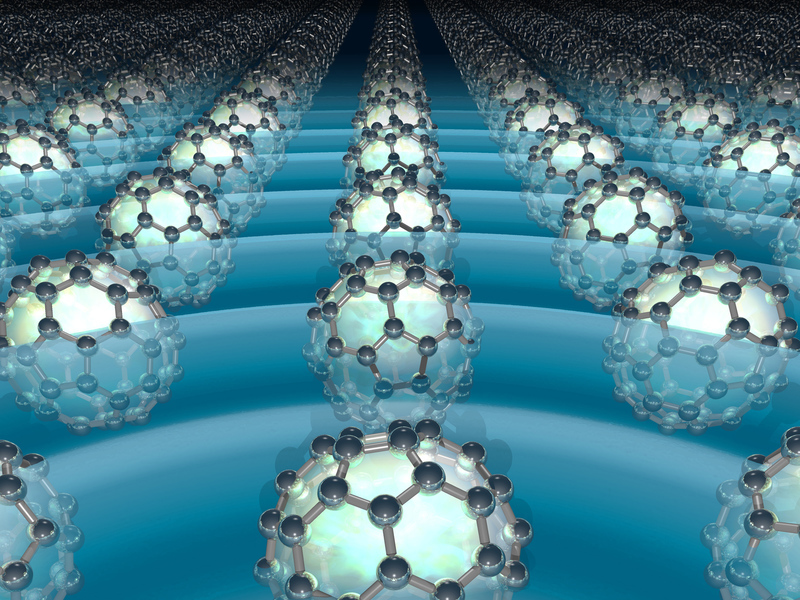
Intense laser flashes remove the electrical resistance of a crystal layer of the alkali fulleride K3C60, a football-like molecule containing 60 carbon atoms. This is observed at temperatures at least as high as minus 170 degrees Celsius. © J.M. Harms/MPI for the Structure and Dynamics of Matter

Intense laser flashes remove the electrical resistance of a crystal layer of the alkali fulleride K3C60, a football-like molecule containing 60 carbon atoms. This is observed at temperatures at least as high as minus 170 degrees Celsius.
© J.M. Harms/MPI for the Structure and Dynamics of Matter

The press release goes on to provide some technical details about the most recent research,

The team headed by Cavalleri therefore asked themselves whether light could also break the electrical resistance of more traditional superconductors, the physics of which is better understood. The researchers from the Max Planck Institute for the Structure and Dynamics of Matter, among which Daniele Nicoletti and Matteo Mitrano, have now hit the jackpot using a substance that is very different to cuprates: the fulleride K3C60, a metal composed of so-called Buckminster fullerenes. These hollow molecules consist of 60 carbon atoms which bond in the shape of a football: a sphere comprising pentagons and hexagons. With the help of intercalated positively charged potassium ions, which work like a kind of cement, the negatively charged fullerenes stick to each other to form a solid. This so-called alkali fulleride is a metal which becomes superconductive below a critical temperature of around minus 250 degrees Celsius.

The researchers then irradiated the alkali fulleride with infrared light pulses of just a few billionths of a microsecond and repeated their experiment for a range of temperatures between the critical temperature and room temperature. They set the frequency of the light source so that it excited the fullerenes to produce vibrations. This causes the carbon atoms to oscillate in such a way that the pentagons in the football expand and contract. It was hoped that this change in the structure could generate transient superconductivity at high temperatures in a similar way to the process in cuprates.

To test this, the scientists irradiated the sample with a second light pulse at the same time as the infrared pulse, albeit at a frequency in the terahertz range. The strength at which this pulse is reflected indicates the conductivity of the material to the researchers, meaning how easily electrons move through the alkali fulleride. The result here was an extremely high conductivity. “We are pretty confident that we have induced superconductivity at temperatures at least as high as minus 170 degrees Celsius,” says Daniele Nicoletti. This means that the experiment in Hamburg presents one of the highest ever-observed critical temperatures outside of the material class of cuprates.

“We are now planning to carry out other experiments which should enable us to reach a more detailed understanding of the processes at work here,” says Nicoletti. What they would like to do next is analyze the crystal structure during excitation with the infrared light. As was previously the case with the cuprate, this should help to explain the phenomenon. The researchers would then like to irradiate the material with light pulses that last much longer. “Although this is technically very complicated, it could extend the lifetime of superconductivity, making it potentially relevant for applications,” concludes Nicoletti.

Here’s a link to and a citation for the paper,

Possible light-induced superconductivity in K3C60 at high temperature by M. Mitrano, A. Cantaluppi, D. Nicoletti, S. Kaiser, A. Perucchi, S. Lupi, P. Di Pietro, D. Pontiroli, M. Riccò, S. R. Clark, D. Jaksch, & A. Cavalleri. Nature (2016) doi:10.1038/nature16522 Published online 08 February 2016

This paper is behind a paywall.