Tag Archives: Nancy Kanwisher

2024 Kavli Prize Laureates: in the fields of astrophysics, nanoscience and neuroscience

The Kavli Prize has yet to acquire the lustre of a Nobel Prize (first awarded in 1901 as per its Wikipedia entry). By comparison the Kavli Prize is relatively new (established in 2005 as per its Wikipedia entry) but it appears to be achieving big deal status in the US.

This year’s crop of prize winners was listed in a June 12, 2024 Kavli Foundation news release on EurekAlert,

Eight scientists from three countries are honored for their research that has broadened our understanding of the big, the small and the complex.

June 12, 2024 (Oslo, Norway) — The Norwegian Academy of Science and Letters today announced the 2024 Kavli Prize Laureates in the fields of astrophysics, nanoscience and neuroscience. Eight scientists from three countries are honored for their research that has broadened our understanding of the big, the small and the complex. The laureates in each field will share $1 million USD. 

The 2024 Kavli Prizes recognize groundbreaking science for the discovery and characterization of extra-solar planets and their atmospheres; foundational research integrating synthetic nanoscale materials for biomedical use; and the localization of areas in the brain specialized for face recognition and processing.  

The 2024 Kavli Prize Laureates are:  

  • Kavli Prize in Astrophysics: David Charbonneau (Canada/USA) and Sara Seager (Canada/USA) 
  • Kavli Prize in Nanoscience: Robert S. Langer (USA), Armand Paul Alivisatos (USA) and Chad A. Mirkin (USA) 
  • Kavli Prize in Neuroscience: Nancy Kanwisher (USA), Winrich Freiwald (Germany), and Doris Tsao (USA) 

“The Kavli Prize 2024 honors outstanding researchers doing fundamental science that moves the world forward. They are exploring planets outside our solar system; they have broadened the scientific field of nanoscience towards biomedicine; and they are adding to our understanding of the neurological basis of face recognition,” said Lise Øvreås, president at The Norwegian Academy of Science and Letters.  

Astrophysics: Searching for life beyond Earth  

The 2024 Kavli Prize in Astrophysics honors Sara Seager and David Charbonneau for discoveries of exoplanets and the characterization of their atmospheres. They pioneered methods for the detection of atomic species in planetary atmospheres and the measurement of their thermal infrared emission, setting the stage for finding the molecular fingerprints of atmospheres around both giant and rocky planets. Their contributions have been key to the enormous progress seen in the last 20 years in the exploration of myriad exo-planets.  

“Humans have always looked towards the stars for discoveries. The pivotal research conducted by Seager and Charbonneau has been an important first step towards finding new planets and strong evidence of life elsewhere in the universe,” remarked Viggo Hansteen, Chair of the Astrophysics Committee.  

David Charbonneau led the team that used the transit method to discover a giant exoplanet (HD 209458b). He pioneered the application of space-based observatories to perform the first studies of the atmosphere of giant extrasolar planets. This new method measures the tiny amount of light blocked by such a planet as it passes in front of its host star. Charbonneau has also used the transit method to study exoplanetary atmospheres, measuring molecular spectra using both filtered starlight and infrared emission from the planets themselves. He demonstrated these two approaches with observations from the Hubble Space Telescope in 2002 and the Spitzer Space Telescope three years later.  

Sara Seager pioneered the theoretical study of planetary atmospheres and predicted the presence of atomic and molecular species detectable by transit spectroscopy, most notably the alkali gases. She predicted how transits could be used to measure atomic and molecular characteristics in exoplanetary atmospheres, which is crucial for identifying biomarkers – signs of life. Seager made outstanding contributions to the understanding of planets with masses below that of Neptune. She also carried out extensive research on starshades – enormous petal-like structures designed to shield space observatories from the glare of a faraway Sun-like star – and was among the first to recognize their importance in detecting and characterizing the faint light from any Earth-like planet orbiting the star. 

Nanoscience: Integrating nanomaterials for biomedical advances 

The 2024 Kavli Prize in Nanoscience honors Robert S. Langer, Armand Paul Alivisatos and Chad A. Mirkin who each revolutionized the field of nanomedicine by demonstrating how engineering nanoscale materials can advance biomedical research and application. Their discoveries contributed foundationally to the development of therapeutics, vaccines, bioimaging and diagnostics.   

“The three scientists, Langer, Alivisatos and Mirkin, have broadened the scientific field of nanoscience, building from fundamental research. By scientific curiosity they have become inventors for the future of nanoscience and biomedicine,” stated Bodil Holst, Chair of the Nanoscience Committee.  

Robert S. Langer was the first to develop nano-engineered materials that enabled the controlled release, or regular flow, of drug molecules. This capability has had an immense impact for the treatment of a range of diseases, such as aggressive brain cancer, prostate cancer and schizophrenia. His work also showed that tiny particles, containing protein antigens, can be used in vaccination, and was instrumental in the development of the delivery of mRNA vaccines. 

Armand Paul Alivisatos demonstrated that semiconductor nanocrystals, or quantum dots (nanoparticles that possess bright, size-dependent light-emitting properties), can be used as multicolor probes in bioimaging. Essential to this achievement was the synthesis of biocompatible nanocrystals. Semiconductor nanocrystals became the basis for the widely used research and diagnostic tools such as live cell tracking, labelling and in vivo imaging. 

Chad A. Mirkin engineered spherical nucleic acids (SNA) using a gold nanoparticle as the core, and a cloud of radially distributed DNA or RNA strands as the shell. He was then able to show how SNAs can be combined to create larger structures and how they can be used in biodiagnostics. His discovery led to the development of fast, automated point-of-care medical diagnostic systems.  

Neuroscience: Understanding recognition of faces 

The 2024 Kavli Prize in Neuroscience honors Nancy Kanwisher, Doris Tsao and Winrich Freiwald for the discovery of a specialized system within the brain to recognize faces. Their discoveries have provided basic principles of neural organization and made the starting point for further research on how the processing of visual information is integrated with other cognitive functions.  

“Kanwisher, Freiwald and Tsao together discovered a localized and specialized neocortical system for face recognition. Their outstanding research will ultimately further our understanding of recognition not only of faces, but objects and scenes,” commented Kristine Walhovd, Chair of the Neuroscience Committee.  

Nancy Kanwisher was the first to prove that a specific area in the human neocortex is dedicated to recognizing faces, now called the fusiform face area. Using functional magnetic resonance imaging (fMRI) she found individual differences in the location of this area and devised an analysis technique to effectively localize specialized functional regions in the brain. This technique is now widely used and applied to domains beyond the face recognition system.  

Elaborating on Kanwisher’s findings, Winrich Freiwald and Doris Tsao studied macaques and mapped out six distinct brain regions, known as the face patch system, including these regions’ functional specialization and how they are connected. By recording the activity of individual brain cells, they revealed how cells in some face patches specialize in faces with particular views.  

Tsao proceeded to identify how the face patches work together to identify a face, through a specific code that enables single cells to identify faces by assembling information of facial features. For example, some cells respond to the presence of hair, others to the distance between the eyes. 

Freiwald uncovered that a separate brain region, called the temporal pole, accelerates our recognition of familiar faces, and that some cells are selectively responsive to familiar faces. 

There’s a video of the official 2024 Kavli Prize announcement which despite the Kavli Foundation being headquartered in California, US, was held (as noted in the news release) at the Norwegian Academy of Science and Letters where the organization’s president, Lise Øvreås, revealed the 2024 Kavli Prize laureates..(I’ll get back to that choice of location.)

The 2024 Kavli Prize in Nanoscience

There are many posts here featuring work from Robert S. Langer (or Robert Langer), Armand Paul Alivisatos (or Paul Alivisatos or A. Paul Alivisatos) and Chad A. Mirkin (or Chad Mirkin).

Northwestern University (Chicago, Illinois) issued a June 12, 2024 news release (also received via email) by Maria Paul that provides a few more details about the nanoscience winners (main focus: Chad Mirkin), the prize, and the Kavli Foundation. Note: A link has been removed,

Northwestern University nanoscientist Chad Mirkin has been awarded The 2024 Kavli Prize in Nanoscience by The Norwegian Academy of Science and Letters. Mirkin is the first Northwestern scientist to receive the prestigious award.

Mirkin is recognized for his discovery of spherical nucleic acids (SNAs), nanostructures comprised of a nanoparticle core and a shell of radially distributed DNA or RNA strands. These globular forms of nucleic acids have become the cornerstones of the burgeoning fields of nanomedicine and colloidal crystal engineering with DNA. They allow scientists to construct new forms of matter using particle “atoms” as the basic building blocks and DNA “bonds” as particle interconnects, and they are the basis for powerful tools that allow researchers and clinicians to track and treat disease in new ways. In particular, SNAs have led to the development of fast, automated point-of-care medical diagnostic systems and new experimental drugs for treating many forms of cancer, neurological disorders, and diseases of the skin.

Mirkin is one of three laureates in nanoscience recognized by The Norwegian Academy for revolutionizing the field of nanomedicine by demonstrating how engineering nanoscale structures can advance biomedical research and application. The other two are Robert Langer of the Massachusetts Institute of Technology and Paul Alivisatos of the University of Chicago [emphasis mine]. The scientists’ discoveries “contributed foundationally to the development of therapeutics, vaccines, bioimaging and diagnostics,” The Norwegian Academy said in a release. They will share the $1 million award.

“When I first found out I won The Kavli Prize, there was both excitement but also relief, because I consider Northwestern to be the ultimate center for nanotechnology research,” Mirkin said. “To be recognized with this award, along with my incredible co-awardees, was great validation of what we’ve been trying to do at Northwestern. While I’m proud of what we’ve accomplished, the best is yet to come.”

The laureates will be awarded the prize on Sept. 3 during a ceremony in Oslo, Norway, presided over the by The Royal Family. The Kavli Prizes thus far have honored 65 scientists from 13 countries. Ten laureates received the Nobel Prize after receiving The Kavli Prize. [emphasis mine]

“I am thrilled for Chad, for the International Institute for Nanotechnology and for Northwestern,” Northwestern President Michael Schill said. “Chad has earned this prestigious and influential award in a pathbreaking area of science that is aligned with two of the University’s key priorities — to lead in decarbonization, renewable energy and sustainability, and innovating in the biosciences to help prolong lives and make the world a healthier place.

“Through groundbreaking research and hard work, Chad and his team have made Northwestern a leading center for nanotechnology research and investment. The fact that he is sharing this award with President Alivisatos at U of C further emphasizes how the Chicago area has become an international hub for nano research.”

The vision for The Kavli Prize comes from Fred Kavli, a Norwegian-American entrepreneur and philanthropist [emphasis mine] who turned his lifelong fascination with science into a lasting legacy for recognizing scientific breakthroughs and supporting basic research.

Since the first awards in 2008, The Kavli Prize has recognized innovative scientific research — from the discovery of CRISPR-Cas9 to the detection of gravitational waves — transforming our understanding of the big, the small and the complex.

Mirkin’s discovery of SNAs has far-reaching implications for biology and medicine. SNAs, which have no known natural equivalents, interact uniquely with living systems compared to nucleic acids of other forms. Mirkin was the first to synthesize SNAs and elucidate the distinctive chemical and physical properties that underpin their use in transformative techniques and technologies in medicine and the life sciences. This work has led to the development of the first commercialized molecular medical diagnostic systems of the modern nanotechnology era, such as the Food and Drug Administration-cleared Verigene System, used in over half of the world’s top hospitals to detect diseases with high sensitivity and selectivity.

Illinois Gov. JB Pritzker praised Mirkin for his extraordinary contributions to the field of nanotechnology and how his innovations have helped find solutions to some of society’s biggest challenges.

“Academic institutions in Chicago and across Illinois have become the biggest drivers in nanoscience and technology over the last three decades,” Pritzker said. “Chad Mirkin and his Northwestern colleagues have made outstanding scientific discoveries that change how we view the world around us.”

In 1996, Mirkin created the first SNAs with DNA shells on gold nanoparticle cores. Over the years, he has developed numerous other types of SNAs with other shells and cores, including proteins, liposomes and FDA-approved materials, as well as core-less, hollow structures composed entirely of nucleic acids. These cores impart unique properties to the SNAs, such as optical and magnetic characteristics, while also serving as scaffolds to densely arrange the oligonucleotides, which participate in binding. This dense arrangement gives rise to the novel functional properties that differentiate SNAs from the natural linear and two-dimensional nucleic acids and make them particularly effective in interacting with certain biological structures within cells and tissues. SNAs, unlike conventional DNA and RNA, are naturally taken up by cells without the need for toxic, positively charged co-carriers, making them highly effective in RNA interference (RNAi), antisense gene regulation, and gene editing pathways.

Mirkin’s pioneering work on SNAs has also advanced the development of immunotherapeutics, structures capable of stimulating a patient’s immune response to fight both infectious diseases and certain forms of cancer. Using SNAs, Mirkin has pioneered the concept of rational vaccinology, where he demonstrated that the structure of a vaccine, rather than the components alone, is crucial for dictating its therapeutic effectiveness. This insight and these “structural nanomedicines” have opened new possibilities for developing curative treatments by rearranging known components into more effective structures at the nanoscale. Mirkin founded Flashpoint Therapeutics to commercialize these innovations, focusing on nucleic acid-based nanostructure cancer vaccines. Mirkin also invented the first SNA-based antiviral vaccine, using COVID-19 as a model. These SNAs, featuring the spike protein’s RBD subunit in the core, achieved a 100% survival rate in humanized mice challenged with the live virus. These structures and concepts for designing such vaccines are poised to move vaccine development beyond the current mRNA vaccines.

In addition, Mirkin invented dip-pen nanolithography, initially a technique for molecular writing with nanometer-scale precision that has evolved into a powerful platform for tip-based materials synthesis that, when combined with artificial intelligence, is revolutionizing how materials important for many sectors, especially clean energy, are discovered. Dip-pen nanolithography, which has spurred subsequent techniques that now use tens of millions of tiny tips to rapidly synthesize materials to be explored for such purposes, was recognized by National Geographic as one of the “top 100 scientific discoveries that changed the world.” These innovations are being commercialized by Mattiq, Inc., another venture-backed company Mirkin cofounded. Mirkin and his students also invented high-area rapid printing, an additive manufacturing technology, that is being commercialized by Azul 3D and being used to disrupt the microelectronics and optical lens industries.

Mirkin’s research has progressed SNA drugs through seven human clinical trials so far for treating various cancers, including glioblastoma multiforme and Merkel cell carcinoma. One SNA drug has shown remarkable potential in stimulating the immune system, proving effective in models of breast, colorectal and bladder cancers, lymphoma and melanoma. This drug has achieved complete tumor elimination in a subset of patients with Merkel cell carcinoma during Phase 1b/2 clinical trials, earning FDA fast-track and orphan drug status. It was recently licensed to Bluejay Therapeutics to treat hepatitis.

In 2000, Mirkin founded the International Institute for Nanotechnology (IIN) at Northwestern University, which he also directs. Research at the IIN has led to over 2,000 new commercial products sold globally and the creation of more than 40 startup companies. The IIN has collectively brought together over $1.2 billion to support research, education and infrastructure at Northwestern since its inception.

Mirkin is the George B. Rathmann Professor of Chemistry and a professor of medicine, chemical and biological engineering, biomedical engineering, and materials science and engineering at Northwestern. He is among an elite group of scientists elected to all three branches of the U.S. National Academies — the National Academy of Sciences, the National Academy of Engineering and the National Academy of Medicine. He is a member of the American Academy of Arts and Sciences. Mirkin served on President Obama’s Council of Advisors on Science and Technology for eight years.

Congratulations to all of the winners in all of the categories!

As for the Norway announcement, it makes a bit of sense given that Fred Kavli was a Norwegian American. However, it’s a little hard to avoid the suspicion that there might be some regional and prize rivalry between Norway with its Kavli and Sweden its Nobel..

We have math neurons and singing neurons?

According to the two items I have here, the answer is: yes, we have neurons that are specific to math and to the sound of singing.

Math neurons

A February 14, 2022 news item on ScienceDaily explains how specific the math neurons are,

The brain has neurons that fire specifically during certain mathematical operations. This is shown by a recent study conducted by the Universities of Tübingen and Bonn [both in Germany]. The findings indicate that some of the neurons detected are active exclusively during additions, while others are active during subtractions. They do not care whether the calculation instruction is written down as a word or a symbol. The results have now been published in the journal Current Biology.

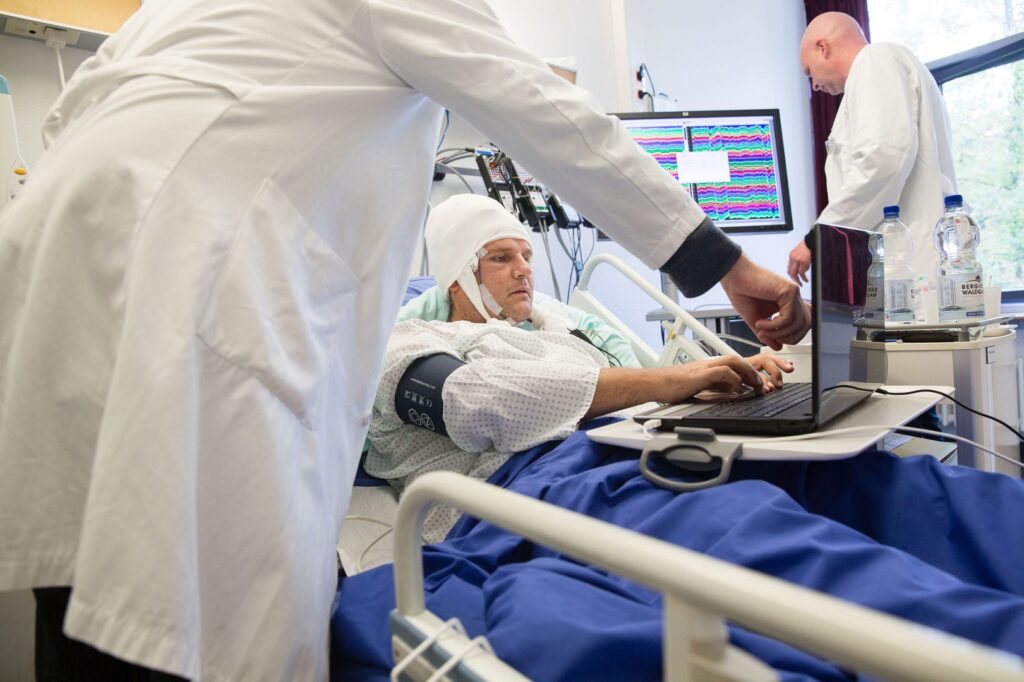
Using ultrafine electrodes – implanted in the temporal lobes of epilepsy patients, researchers can visualize the activity of brain regions. © Photo: Christian Burkert/Volkswagen-Stiftung/University of Bonn

A February 14, 2022 University of Bonn press release (also on EurekAlert), which originated the news item, delves further,

Most elementary school children probably already know that three apples plus two apples add up to five apples. However, what happens in the brain during such calculations is still largely unknown. The current study by the Universities of Bonn and Tübingen now sheds light on this issue.

The researchers benefited from a special feature of the Department of Epileptology at the University Hospital Bonn. It specializes in surgical procedures on the brains of people with epilepsy. In some patients, seizures always originate from the same area of the brain. In order to precisely localize this defective area, the doctors implant several electrodes into the patients. The probes can be used to precisely determine the origin of the spasm. In addition, the activity of individual neurons can be measured via the wiring.

Some neurons fire only when summing up

Five women and four men participated in the current study. They had electrodes implanted in the so-called temporal lobe of the brain to record the activity of nerve cells. Meanwhile, the participants had to perform simple arithmetic tasks. “We found that different neurons fired during additions than during subtractions,” explains Prof. Florian Mormann from the Department of Epileptology at the University Hospital Bonn.

It was not the case that some neurons responded only to a “+” sign and others only to a “-” sign: “Even when we replaced the mathematical symbols with words, the effect remained the same,” explains Esther Kutter, who is doing her doctorate in Prof. Mormann’s research group. “For example, when subjects were asked to calculate ‘5 and 3’, their addition neurons sprang back into action; whereas for ‘7 less 4,’ their subtraction neurons did.”

This shows that the cells discovered actually encode a mathematical instruction for action. The brain activity thus showed with great accuracy what kind of tasks the test subjects were currently calculating: The researchers fed the cells’ activity patterns into a self-learning computer program. At the same time, they told the software whether the subjects were currently calculating a sum or a difference. When the algorithm was confronted with new activity data after this training phase, it was able to accurately identify during which computational operation it had been recorded.

Prof. Andreas Nieder from the University of Tübingen supervised the study together with Prof. Mormann. “We know from experiments with monkeys that neurons specific to certain computational rules also exist in their brains,” he says. “In humans, however, there is hardly any data in this regard.” During their analysis, the two working groups came across an interesting phenomenon: One of the brain regions studied was the so-called parahippocampal cortex. There, too, the researchers found nerve cells that fired specifically during addition or subtraction. However, when summing up, different addition neurons became alternately active during one and the same arithmetic task. Figuratively speaking, it is as if the plus key on the calculator were constantly changing its location. It was the same with subtraction. Researchers also refer to this as “dynamic coding.”

“This study marks an important step towards a better understanding of one of our most important symbolic abilities, namely calculating with numbers,” stresses Mormann. The two teams from Bonn and Tübingen now want to investigate exactly what role the nerve cells found play in this.

Funding:

The study was funded by the German Research Foundation (DFG) and the Volkswagen Foundation.

Here’s a link to and a citation for the paper,

Neuronal codes for arithmetic rule processing in the human brain by Esther F. Kutter, Jan Boström, Christian E. Elger, Andreas Nieder, Florian Mormann. Current Biology, 2022; DOI: 10.1016/j.cub.2022.01.054 Published February 14, 2022

This paper appears to be open access.

Neurons for the sounds of singing

This work from the Massachusetts Institute of Technology (MIT) according to a February 22, 2022 news item on ScienceDaily,

For the first time, MIT neuroscientists have identified a population of neurons in the human brain that lights up when we hear singing, but not other types of music.

Pretty nifty, eh? As is the news release headline with its nod to a classic Hollywood musical and song, from a February 22, 2022 MIT news release (also on EurekAlert),

Singing in the brain

These neurons, found in the auditory cortex, appear to respond to the specific combination of voice and music, but not to either regular speech or instrumental music. Exactly what they are doing is unknown and will require more work to uncover, the researchers say.

“The work provides evidence for relatively fine-grained segregation of function within the auditory cortex, in a way that aligns with an intuitive distinction within music,” says Sam Norman-Haignere, a former MIT postdoc who is now an assistant professor of neuroscience at the University of Rochester Medical Center.

The work builds on a 2015 study in which the same research team used functional magnetic resonance imaging (fMRI) to identify a population of neurons in the brain’s auditory cortex that responds specifically to music. In the new work, the researchers used recordings of electrical activity taken at the surface of the brain, which gave them much more precise information than fMRI.

“There’s one population of neurons that responds to singing, and then very nearby is another population of neurons that responds broadly to lots of music. At the scale of fMRI, they’re so close that you can’t disentangle them, but with intracranial recordings, we get additional resolution, and that’s what we believe allowed us to pick them apart,” says Norman-Haignere.

Norman-Haignere is the lead author of the study, which appears today in the journal Current Biology. Josh McDermott, an associate professor of brain and cognitive sciences, and Nancy Kanwisher, the Walter A. Rosenblith Professor of Cognitive Neuroscience, both members of MIT’s McGovern Institute for Brain Research and Center for Brains, Minds and Machines (CBMM), are the senior authors of the study.

Neural recordings

In their 2015 study, the researchers used fMRI to scan the brains of participants as they listened to a collection of 165 sounds, including different types of speech and music, as well as everyday sounds such as finger tapping or a dog barking. For that study, the researchers devised a novel method of analyzing the fMRI data, which allowed them to identify six neural populations with different response patterns, including the music-selective population and another population that responds selectively to speech.

In the new study, the researchers hoped to obtain higher-resolution data using a technique known as electrocorticography (ECoG), which allows electrical activity to be recorded by electrodes placed inside the skull. This offers a much more precise picture of electrical activity in the brain compared to fMRI, which measures blood flow in the brain as a proxy of neuron activity.

“With most of the methods in human cognitive neuroscience, you can’t see the neural representations,” Kanwisher says. “Most of the kind of data we can collect can tell us that here’s a piece of brain that does something, but that’s pretty limited. We want to know what’s represented in there.”

Electrocorticography cannot be typically be performed in humans because it is an invasive procedure, but it is often used to monitor patients with epilepsy who are about to undergo surgery to treat their seizures. Patients are monitored over several days so that doctors can determine where their seizures are originating before operating. During that time, if patients agree, they can participate in studies that involve measuring their brain activity while performing certain tasks. For this study, the MIT team was able to gather data from 15 participants over several years.

For those participants, the researchers played the same set of 165 sounds that they used in the earlier fMRI study. The location of each patient’s electrodes was determined by their surgeons, so some did not pick up any responses to auditory input, but many did. Using a novel statistical analysis that they developed, the researchers were able to infer the types of neural populations that produced the data that were recorded by each electrode.

“When we applied this method to this data set, this neural response pattern popped out that only responded to singing,” Norman-Haignere says. “This was a finding we really didn’t expect, so it very much justifies the whole point of the approach, which is to reveal potentially novel things you might not think to look for.”

That song-specific population of neurons had very weak responses to either speech or instrumental music, and therefore is distinct from the music- and speech-selective populations identified in their 2015 study.

Music in the brain

In the second part of their study, the researchers devised a mathematical method to combine the data from the intracranial recordings with the fMRI data from their 2015 study. Because fMRI can cover a much larger portion of the brain, this allowed them to determine more precisely the locations of the neural populations that respond to singing.

“This way of combining ECoG and fMRI is a significant methodological advance,” McDermott says. “A lot of people have been doing ECoG over the past 10 or 15 years, but it’s always been limited by this issue of the sparsity of the recordings. Sam is really the first person who figured out how to combine the improved resolution of the electrode recordings with fMRI data to get better localization of the overall responses.”

The song-specific hotspot that they found is located at the top of the temporal lobe, near regions that are selective for language and music. That location suggests that the song-specific population may be responding to features such as the perceived pitch, or the interaction between words and perceived pitch, before sending information to other parts of the brain for further processing, the researchers say.

The researchers now hope to learn more about what aspects of singing drive the responses of these neurons. They are also working with MIT Professor Rebecca Saxe’s lab to study whether infants have music-selective areas, in hopes of learning more about when and how these brain regions develop.

Here’s a link to and a citation for the paper,

A neural population selective for song in human auditory cortex by Sam V. Norman-Haignere, Jenelle Feather, Dana Boebinger, Peter Brunner, Anthony Ritaccio, Josh H. Mcdermott, Gerwin Schalk, Nancy Kanwisher. Current Biology, 2022 DOI: 10.1016/j.cub.2022.01.069 Published February 22, 2022.

This paper appears to be open access.

I couldn’t resist,

Brains, guts, health, and consciouness at TED 2014′s Session 5: Us

While most of the speakers I’m mentioning are the ‘science’ speakers in this session, they are more precisely ‘medical science’ speakers which takes me further than usual out of my comfort zone. That said, Nancy Kanwisher, brain researcher, opened the session (from her TED biography),

Using cutting-edge fMRI technology as her lens, Nancy Kanwisher zooms in on the brain regions responsible for some surprisingly specific elements of cognition.

Does the brain use specialized processors to solve complex problems, or does it rely instead on more general-purpose systems?

This question has been at the crux of brain research for centuries. MIT [Massachusetts Institute of Technology] researcher Nancy Kanwisher seeks to answer this question by discovering a “parts list” for the human mind and brain. “Understanding the nature of the human mind,” she says, “is arguably the greatest intellectual quest of all time.”

As many of us now know courtesy of researchers like Kanwisher, the brain has both general purpose regions and specialized regions for perception and complex processing but Kanwisher’s presentation was as much about the process of discovery as it was about the discoveries she and her colleagues have made. She talked about her personal experiences with functional magnetic resonance imaging (fMRI) as she tested (many times) her own brain first and then spent years looking at grayscale images as she decoded what she was observing and tested over and over and over again.

Next came the ‘gut guy’, or as microbial ecologist Rob Knight’s TED biography describes him,

Rob Knight explores the unseen microbial world that exists literally right under our noses — and everywhere else on (and in) our bodies.

Using scatological research methods that might repel the squeamish, microbial researcher Rob Knight uncovers the secret ecosystem (or “microbiome”) of microbes that inhabit our bodies — and the bodies of every creature on earth. In the process, he’s discovered a complex internal ecology that affects everything from weight loss to our susceptibility to disease. As he said to Nature in 2012, “What motivates me, from a pragmatic standpoint, is how understanding the microbial world might help us improve human and environmental health.”

Knight made the case that our microbes are what give us our individuality by noting that 99.99% of our DNA is the same from one person to the next but out microbial communities vary greatly person to person and the community in your mouth varies greatly from the community on your skin. He and his colleagues are using the information to consider new types of medical interventions. For example, research has shown that giving children antibiotics before the age of six months affects their future health.

Interestingly, we carry about 3 lbs. of microbes individually and Knight and his colleagues are still gathering information about those lbs. He mentioned the American Gut project (and solicited future volunteers from the live audience by mentioning he had just happened to bring 100 kits which were available at his table outside). This project is for US participant only.

Stephen Friend, oncologist and open science advocate was featured next. From his TED biography,

Inspired by open-source software models, Sage Bionetworks co-founder Stephen Friend builds tools that facilitate research sharing on a massive and revolutionary scale.

While working for Merck, Stephen Friend became frustrated by the slow pace at which big pharma created new treatments for desperate patients. Studying shared models like Wikipedia, Friend realized that the complexities of disease could only be understood — and combated — with collaboration and transparency, not by isolated scientists working in secret with proprietary data

Friend has a great name for someone who advocates for transparency and openness. He opened with stories about his work and how he came to be inspired to look for health rather than disease. He noted that for the most part, medical research is focused on the question of what went wrong with a patient rather than asking if healthy people have some sort of natural immunity or protection from cancer, Alzheimer’s, etc. Perhaps by examining health people we can find ways to more effectively intervene.

He provided two examples of research that examined natural immunity such as research in San Francisco (California) into why a small but significant percentage of people with HIV never developed AIDS; his other example was regarding research into lipid levels and why some people with high levels never develop heart disease.

I’m a little foggy about this point but I think he made a request for information about these medical phenomena and people from around the world shared their research with him in an open and transparent fashion.

This next bit was clear to me, he and his colleagues are moving to another stage with their research initiative which they have named the Resilience Project; Unexpected Heroes. He too solicited volunteers from the audience. I haven’t been able to locate a website for the project but there maybe some on the Sage Bionetworks website, the organization Friend co-founded. Good luck!

Finally, I wasn’t expecting to write about David Chalmers so my notes aren’t very good. A philosopher, here’s an excerpt from Chalmers’ TED biography,

In his work, David Chalmers explores the “hard problem of consciousness” — the idea that science can’t ever explain our subjective experience.

David Chalmers is a philosopher at the Australian National University and New York University. He works in philosophy of mind and in related areas of philosophy and cognitive science. While he’s especially known for his theories on consciousness, he’s also interested (and has extensively published) in all sorts of other issues in the foundations of cognitive science, the philosophy of language, metaphysics and epistemology.

Chalmers provided an interesting bookend to a session started with a brain researcher (Nancy Kanwisher) who breaks the brain down into various processing regions (vastly oversimplified but the easiest way to summarize her work in this context). Chalmers reviewed the ‘science of consciousness’ and noted that current work in science tends to be reductionist, i.e., examining parts of things such as brains and that same reductionism has been brought to the question of consciousness.

Rather than trying to prove consciousness, Chalmers proposes that we consider it a fundamental in the same way that we consider time, space, and mass to be fundamental. He noted that there’s precedence for additions and gave the example of James Clerk Maxwell and his proposal to consider electricity and magnetism as fundamental.

Chalmers next suggestion is a little more outré and based on some thinking (sorry I didn’t catch the theorist’s name) that suggests everything, including photons, has a type of consciousness (but not intelligence).