Tag Archives: University of Cordoba

AI-monitoring of bee hive activity could aid beekeepers

Caption: Researchers working on the case study. Credit: University of Cordoba

A December 2, 2025 University of Córdoba press release on EurekAlert announces research into the use of AI in beekeeping practices,

A monitoring system devised by the University of Cordoba ascertains the flowering stages of each hive, with high precision, exploiting data on bees’ behavior

Beekeeping has existed for millennia, as evidenced by a painting in the Cueva de la Araña (Valencia), more than 8,000 years old, depicting a human figure collecting honey from a hole in a rock, with bees hovering around. This relationship between humans and bees is essential not only to obtain honey, pollen and wax, but also to conserve the honeybee (Apis mellifera L.), responsible for the pollination of thousands of crops.

The success of hives and beekeeping depends on flowering periods, which are irregular because they depend greatly on the season, rainfall, and temperatures. Reducing uncertainty and knowing the precise duration of flowering periods was the goal of a team from the Department of Electronics and Computer Engineering and the Department of Zoology at the University of Cordoba, which has been working for years on hive monitoring systems providing beekeepers with accurate data in real time.

The system designed allows them to ascertain the exact flowering time for each hive, from the beginning of the day until it ends, thanks to a weight sensor. “By observing how the weight of the hive varies throughout the day, and analyzing the curve that results from the weight measurements every 5 minutes, we obtain information about the current flowering stage,” explained Andrés Gersnoviez, lead author of the work.

Contrary to what one might think, it is not only the weight gain of the bees, loaded with nectar, that reveals the moment of flowering, but also when the bees begin to leave to forage (collect), the number of bees that leave and enter the hives, and how much time they spend outside them, among other things. “If you know when the hive’s minimum weight occurs, which is when they go out to look for food, and when the maximum occurs, you know that they have already returned. In addition to this, knowing if that minimum and/or maximum have a peak or valley shape, as well as the difference in weight from the beginning of the day until it ends, all together tells us how long it has taken them to return, and the success they have had in their searches, which allows us to pinpoint the flowering phase,” the researcher explained.

With the data obtained from the hive sensors, the team designed a classifier using Artificial Intelligence algorithms with factors that describe the weight curve and relate that data to flowering. Once they had met their objective, they went further. “We saw that, within the flowering period, we could distinguish between an earlier stage and an end one,” Gersnoviez said. In this way, a system is obtained that is capable not only of determining whether flowering is impending, occurring, or finished, but also of distinguishing between an initial and a final flowering stage.

Technology to facilitate beekeeping

Beekeepers usually work with several apiaries featuring 40 or 50 hives. These apiaries are miles apart, sometimes hundreds, so knowing exact flowering times without having to visit them saves beekeepers time and allows them to carry out this age-old activity more efficiently. According to José Manuel Flores, a researcher who has participated in the work on the Zoology side, this helps to enhance harvests. “The system tells you that the flowering will end in a few days. This allows beekeepers to plan where to go to in order to collect the honey. If you arrive too early and the flowering hasn’t finished, you’re losing the part of the harvest that the hive can still generate. Conversely, if you arrive late and the flowering finished days before, the bees are already feeding on that honey, and part of the harvest is also lost.” It is especially useful for those who produce monofloral honey (of a single variety, such as orange blossom, chestnut, eucalyptus, or avocado, among many others), since, if it is not collected once the flowering is finished, the bees can take nectar from other flowerings of more distant crops, in which case the honey is no longer monofloral, and loses added value.

The monitoring system created through these teams’ collaboration provides much more information. Thanks to these sensors — which measure hives’ weight humidity and temperature data every 5 minutes, and that can be consulted remotely via a computer — beekeepers can also track the changes that occur and verify whether there are any health problems, predators nearby, or any kind of interference, without having to actually visit the apiary.

Here’s a link to and a citation for the paper,

Determination of flowering stage based on artificial intelligence and the daily weight of bee hives by Andrés Gersnoviez, Francisco J. Rodriguez-Lozano, María Brox, José Moreno-Carbonell, Manuel Ortiz-Lopez, José M. Flores. Computers and Electronics in Agriculture Volume 237, Part A, October 2025, 110508 DOI: https://doi.org/10.1016/j.compag.2025.110508

This paper is open access.

2015 Science & You, a science communication conference in France

Science communicators can choose to celebrate June 2015 in Nancy, France and acquaint themselves with the latest and greatest in communication at the Science & You conference being held from June 1 – 6, 2015. Here’s the conference teaser being offered by the organizers,

The 2015 conference home page (ETA May 5, 2015 1045 hours PDT: the home page features change) offers this sampling of the workshops on offer,

No less than 180 communicators will be lined up to hold workshop sessions, from the 2nd to the 5th June in Nancy’s Centre Prouvé. In the meantime, here is an exclusive peek at some of the main themes which will be covered:

– Science communication and journalism. Abdellatif Bensfia will focus on the state of science communication in a country where major social changes are playing out, Morocco, while Olivier Monod will be speaking about “Chercheurs d’actu” (News Researchers), a system linking science with the news. Finally, Matthieu Ravaud and Fabrice Impériali from the CNRS (Centre National de Recherche Scientifique) will be presenting “CNRS Le journal”, the new on-line media for the general public.

– Using animals in biomedical research. This round-table, chaired by Victor Demaria-Pesce, from the Groupement Interprofessionnel de Réflexion et de Communication sur la Recherche (Gircor) will provide an opportunity to spotlight one of society’s great debates: the use of animals in research. Different actors working in biomedical research will present their point of view on the subject, and the results of an analysis of public perception of animal experimentation will be presented. What are the norms in this field? What are the living conditions of the animals in laboratories? How is this research to be made legitimate? This session will centre on all these questions.

– Science communication and the arts. This session will cover questions such as the relational interfaces between art and science, with in particular the presentation of “Pulse Project” with Michelle Lewis-King, and the Semaine du Cerveau (Brain Week) in Grenoble (Isabelle Le Brun).
Music will also be there with the talk by Milla Karvonen from the University of Oulu, who will be speaking about the interaction between science and music, while Philippe Berthelot will talk about the art of telling the story of science as a communication tool.

– Science on television. This workshop will also be in the form of a round table, with representatives from TVV (Vigyan Prasar, Inde), and Irene Lapuente (La Mandarina de Newton), Mico Tatalovic and Elizabeth Vidal (University of Cordoba), discussing how the world of science is represented on a mass media like television. Many questions will be debated, as for example the changing image of science on television, its historical context, or again, the impact these programmes have on audiences’ perceptions of science.

To learn more, you will find the detailed list of all the workshops and plenaries in the provisional programme on-line.

Science & You seems to be an ‘umbrella brand’ for the “Journées Hubert Curien” conference with plenaries and workshops and the “Science and Culture” forum, which may explain the variety of dates (June 1 – 6, June 2 – 5, and June 2 – 6) on the Science & You home page.

Here’s information about the Science & You organizers and more conference dates (from the Patrons page),

At the invitation of the President of the Université de Lorraine, the professors Etienne Klein, Cédric Villani and Brigitte Kieffer accepted to endorse Science & You. It is an honour to be able to associate them with this major event in science communication, in which they are particularly involved.

Cédric Villani, Fields Medal 2010

Cédric Villani is a French mathematician, the Director of the Institut Henri Poincaré and a professor at the Université Claude Bernard Lyon 1.
His main research interests are in kinetic theory (Boltzmann and Vlasov equations and their variants), and optimal transport and its applications (Monge equation).
He has received several national and international awards for his research, in particular the Fields Medal, which he received from the hands of the President of India at the 2010 International Congress of Mathematicians in Hyderabad (India). Since then he has played the role of spokesperson for the French mathematical community in media and political circles.
Cédric Villani regularly invests in science communication aiming at various audiences: conferences in schools, public conferences in France and abroad, regular participation in broadcasts and current affairs programmes and in science festivals.


Etienne Klein, physicist and philosopher
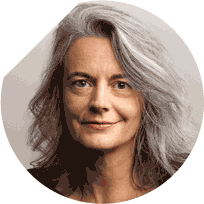
Etienne Klein is a French physicist, Director of Research at the CEA (Commissariat à l’énergie atomique et aux énergies alternatives – Alternative Energies and Atomic Energy Commission) and has a Ph.D. in philosophy of science. He teaches at the Ecole Centrale in Paris and is head of the Laboratoire de Recherche sur les Sciences de la Matière (LARSIM) at the CEA.

He has taken part in several major projects, such as developing a method of isotope separation involving the use of lasers, and the study of a particle accelerator with superconducting cavities. He was involved in the design of the Large Hadron Collider (LHC) at CERN.
He taught quantum physics and particle physics at Ecole Centrale in Paris for several years and currently teaches philosophy of science. He is a specialist on time in physics and is the author of a number of essays.
He is also a member of the OPECST (Conseil de l’Office parlementaire d’évaluation des choix scientifiques et technologiques – Parliamentary Office for the Evaluation of Scientific and Technological Choices), of the French Academy of Technologies, and of the Conseil d’Orientation (Advisory Board) of the Institut Diderot.
Until June 2014, he presented a weekly radio chronicle, Le Monde selon Etienne Klein, on the French national radio France Culture.

Photo by Philippe Matsas © Flammarion


Brigitte Kieffer, Campaigner for women in science

B. L. Kieffer is Professor at McGill University and at the Université de Strasbourg France. She is also Visiting Professor at UCLA (Los Angeles, USA). She develops her research activity at IGBMC, one of the leading European centres of biomedical research. She is recipient of the Jules Martin (French Academy of Science, 2001) and the Lounsbery (French and US Academies of Science, 2004) Awards, and has become an EMBO Member in 2009.
In 2012 she received the Lamonica Award of Neurology (French Academy of Science) and was nominated Chevalier de la Légion d’honneur. In December 2013 she was elected as a member of the French Academy of Sciences.
In March 2014, she received the International L’OREAL-UNESCO Award for Women in Science (European Laureate). She started as the Scientific Director of the Douglas Hospital Research Centre, affiliated to McGill University in January 2014, and remains Professor at the University of Strasbourg, France.

Photo by Julian Dufort

Here’s more about the conference at the heart of Science & You (from The Journées Hubert Curien International Conference webpage),

Following on the 2012 conference, this project will bring together all those interested in science communication: researchers, PhD students, science communicators, journalists, professionals from associations and museums, business leaders, politicians… A high-level scientific committee has been set up for this international conference, chaired by Professor Joëlle Le Marec, University of Paris 7, and counting among its members leading figures in science communication such as Bernard Schiele (Canada) or Hester du Plessis (South Africa).

The JHC Conference will take place from June 2nd to 6th at the Centre Prouvé, Nancy. These four days will be dedicated to a various programme of plenary conferences and workshops on the theme of science communication today and tomorrow.

You can find the Registration webpage here where you can get more information about the process and access the registration form.