A March 25, 2024 news item on phys.org announcds Canadian research into quantum communication, Note: Links have been removed,
Researchers at the University of Waterloo’s Institute for Quantum Computing (IQC) have brought together two Nobel prize-winning research concepts to advance the field of quantum communication.
Scientists can now efficiently produce nearly perfect entangled photon pairs from quantum dot sources. The research, “Oscillating photonic Bell state from a semiconductor quantum dot for quantum key distribution,” was published in Communications Physics
Entangled photons are particles of light that remain connected, even across large distances, and the 2022 Nobel Prize in Physics recognized experiments on this topic. Combining entanglement with quantum dots, a technology recognized with the Nobel Prize in Chemistry in 2023, the IQC research team aimed to optimize the process for creating entangled photons, which have a wide variety of applications, including secure communications.
“The combination of a high degree of entanglement and high efficiency is needed for exciting applications such as quantum key distribution or quantum repeaters, which are envisioned to extend the distance of secure quantum communication to a global scale or link remote quantum computers,” said Dr. Michael Reimer, professor at IQC and Waterloo’s Department of Electrical and Computer Engineering. “Previous experiments only measured either near-perfect entanglement or high efficiency, but we’re the first to achieve both requirements with a quantum dot.”
By embedding semiconductor quantum dots into a nanowire, the researchers created a source that creates near-perfect entangled photons 65 times more efficiently than previous work. This new source, developed in collaboration with the National Research Council of Canada in Ottawa, can be excited with lasers to generate entangled pairs on command. The researchers then used high-resolution single photon detectors provided by Single Quantum in The Netherlands to boost the degree of entanglement.
“Historically, quantum dot systems were plagued with a problem called fine structure splitting, which causes an entangled state to oscillate over time. This meant that measurements taken with a slow detection system would prevent the entanglement from being measured,” said Matteo Pennacchietti, a PhD student at IQC and Waterloo’s Department of Electrical and Computer Engineering. “We overcame this by combining our quantum dots with a very fast and precise detection system. We can basically take a timestamp of what the entangled state looks like at each point during the oscillations, and that’s where we have the perfect entanglement.”
To showcase future communications applications, Reimer and Pennacchietti worked with Dr. Norbert Lütkenhaus and Dr. Thomas Jennewein, both IQC faculty members and professors in Waterloo’s Department of Physics and Astronomy, and their teams. Using their new quantum dot entanglement source, the researchers simulated a secure communications method known as quantum key distribution, proving that the quantum dot source holds significant promise in the future of secure quantum communications.
Here’s a link to and a citation for the paper,
Oscillating photonic Bell state from a semiconductor quantum dot for quantum key distribution by Matteo Pennacchietti, Brady Cunard, Shlok Nahar, Mohd Zeeshan, Sayan Gangopadhyay, Philip J. Poole, Dan Dalacu, Andreas Fognini, Klaus D. Jöns, Val Zwiller, Thomas Jennewein, Norbert Lütkenhaus & Michael E. Reimer. Communications Physics volume 7, Article number: 62 (2024) DOI: https://doi.org/10.1038/s42005-024-01547-3 Published: 24 February 2024
De-extinction (also known as resurrection biology) has been mentioned here before (my January 18, 2019 posting). It’s essentially a ‘Jurassic Park’ fantasy that some people want to turn into reality and it seems they are now one step closer where woolly mammoths are concerned.
The breakthrough has to do with Asian elephant stem cells,
Caption: Asian elephant iPSC colonies stained for pluripotency factors OCT4 (Magenta) and SOX2(green), nuclear DNA Hoechst (blue) and cytoskeletal protein actin (red) Credit: Colossal Biosciences
Bob Yirka’s March 7, 2024 article for phys.org offers a succinct summary, Note: Links have been removed,
A team of bioengineers at de-extinction company Colossal Biosciences has announced that they created induced pluripotent stem cells (iPSC) from elephant skin cells. In speaking with the press, officials with the team reported that they are still in the process of writing a paper describing their efforts and plan to post it on the bioRxiv preprint server. Ewen Callaway has published a News article in Nature about the announcement.
Colossal Biosciences(“Colossal”), the world’s first de-extinction company, announces today that their Woolly Mammoth team has achieved a global-first iPSC (induced pluripotent stem cells) breakthrough. This milestone advancement was one of the primary early goals of the mammoth project, and supports the feasibility of future multiplex ex utero mammoth gestation.
iPSC cells represent a single cell source that can propagate indefinitely and give rise to every other type of cell in a body. As such, the progress with elephant iPSCs extends far beyond this de-extinction project holding tremendous potential for studying cell development, cell therapy, drug screening, synthetic embryos, in vitro gametogenesis, and the use of iPSCs for nuclear transfer across all species. Invaluable for Colossal’s Woolly Mammoths, these cells can be multiplex-edited and differentiated to study cold adaptation traits like woolly hair growth and fat storage in cellular and organoid models.
“In the past, a multitude of attempts to generate elephant iPSCs have not been fruitful. Elephants are a very special species, and we have only just begun to scratch the surface of their fundamental biology,” shared Eriona Hysolli, Head of Biological Sciences at Colossal Biosciences. “My early work in Dr. George Church’s laboratory had been partially successful with iPSC-like cells that led to the foundation of the cells we have currently developed. And now, using a multi-pronged approach to reprogramming we have the most successful efforts to date. The Colossal mammoth team persisted quite successfully as this progress is invaluable for the future of elephant assisted reproductive technologies, as well as advanced cellular modeling of mammoth phenotypes.”
The derivation of mouse iPSCs pioneered by Shinya Yamanaka in 2006 paved the way for using a 4-factor protocol to derive human, horse, pig, cattle, rabbit, monkey, ape, big cats, rhino and even avian species iPSCs among many more. While the medium where the cells grew required some tweaking depending on the species, it was surprising to observe how close to universal the reprogramming protocol was across species. Yet, elephant iPSCs still remained elusive.
“Elephants might get the “hardest to reprogram” prize, but learning how to do it anyway will help many other studies, especially on endangered species. This milestone gives us insights into developmental biology and the balance between senescence and cancer. It opens the door for obtaining gametes and other cell types without surgery on precious animals. It opens the door to establishing connections between genes and traits for both modern and extinct relatives – including resistance to environmental extremes and pathogens. This collaboration has been a true pleasure and a colossal accelerant for our challenging project,” shared Colossal co-founder and renowned Harvard geneticist Dr. George Church [emphasis mine].
Using chemical-based induction media first, followed by addition of transcription factors Oct4, Sox2, Klf4, Myc +/- Nanog and Lin28, and p53 pathway suppression, the team has achieved the most successful reprogramming of elephant iPSCs yet. The approach differs from other more standard reprogramming protocols for other species due in part to the complexities of the TP53 pathway in elephants as their genome contains up to 19 copies of TP53 retrogenes. TP53 is a core gene utilized by the cell to carefully regulate its growth so as not to become cancerous. Additionally, reprogramming, which in itself is quite long and inefficient for higher mammal species, takes longer for elephants. But, the successful iPSC cells now express multiple core pluripotency factors and are able to differentiate into the three germ layers that have the potential to give rise to each cell type in the body.
These newly reprogrammed iPSC cells have been validated through immunostaining, PCR of pluripotency and differentiation markers, transcriptomics analysis, embryoid bodies and teratoma formation. This work will be published in Bioarxiv with a peer-reviewed article in a scientific journal in progress. It is not the end of the elephant reprogramming journey, but this announcement marks the first successful steps. The mammoth stem cell team with team lead Evan Appleton are now focused on further maturing these cells, and pursuing additional iPSC generation strategies that have so far also been successful. This work will be shared in follow-up publications.
“We are most excited to use the cells we have developed to grow elephant gametes in a dish. While elephants have been a challenging species, this has been an incredibly unique opportunity with so much to learn and share now and in the near future,” shared team lead Evan Appleton.
“We knew when we set out on the Woolly Mammoth de-extinction project that it would be challenging but we’ve always had the best team on the planet focused on the task at hand,” stated co-founder and CEO of Colossal, Ben Lamm. “This is a momentous step, with numerous applications, that we are proud to share with the scientific community. Each step brings us closer to our long term goals of bringing back this iconic species.”
The team is also working to establish a mechanism that can explain why elephant cell reprogramming has been challenging. Doing so is critical to deriving iPSCs faster, achieving more advanced tri-lineage differentiation, particularly in vitro gametogenesis, which is crucial to test the full potential of the iPSCs. Once the iPSCs can be used to establish a model for synthetic elephant embryos, it will also be integral to understanding the long and complex elephant (and by association mammoth) development and gestation cycle. This will be critical to Colossals’ re-wilding efforts which rely heavily on leveraging ex utero development for species preservation and restoration. All of these scientific developments hold extension possibilities across the field of developmental biology which have ramifications far beyond the current Colossal projects.
ABOUT COLOSSAL
Colossal was founded by emerging technology and software entrepreneur Ben Lamm and world-renowned geneticist and serial biotech entrepreneur George Church, Ph.D., and is the first to apply CRISPR technology for the purposes of species de-extinction. Colossal creates innovative technologies for species restoration, critically endangered species protection and the repopulation of critical ecosystems that support the continuation of life on Earth. Colossal is accepting humanity’s duty to restore Earth to a healthier state, while also solving for the future economies and biological necessities of the human condition through cutting-edge science and technologies.
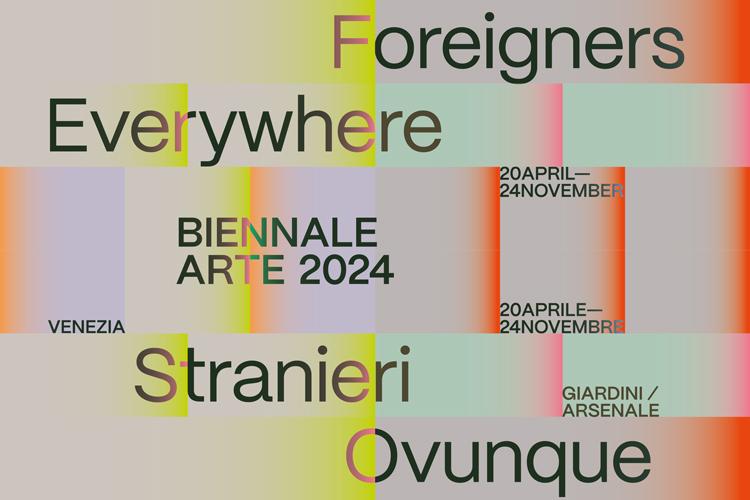
Every once in a while I get an email from a lawyer (Gale P. Eston) in New York City who specializes in the art and business communities. How I got on her list is a mystery to me but her missives are always interesting. The latest one was a little difficult to understand until I looked at the Venice Biennale website and saw the theme for this year’s exhibition,
Courtesy: Venice Biennale [downloaded from https://www.labiennale.org/en/news/biennale-arte-2024-stranieri-ovunque-foreigners-everywhere]
Biennale Arte 2024: Stranieri Ovunque – Foreigners Everywhere
The 60th International Art Exhibition, curated by Adriano Pedrosa, will be open from Saturday 20 April to Sunday 24 November at the Giardini and Arsenale venues.
The 60th International Art Exhibition, titled Stranieri Ovunque – Foreigners Everywhere, will open to the public from Saturday April 20 to Sunday November 24, 2024, at the Giardini and the Arsenale; it will be curated by Adriano Pedrosa and organised by La Biennale di Venezia. The pre-opening will take place on April 17, 18 and 19; the awards ceremony and inauguration will be held on 20 April 2024.
Since 2021, La Biennale di Venezia launched a plan to reconsider all of its activities in light of recognized and consolidated principles of environmental sustainability. For the year 2024, the goal is to extend the achievement of “carbon neutrality” certification, which was obtained in 2023 for La Biennale’s scheduled activities: the 80th Venice International Film Festival, the Theatre, Music and Dance Festivals and, in particular, the 18th International Architecture Exhibition which was the first major Exhibition in this discipline to test in the field a tangible process for achieving carbon neutrality – while furthermore itself reflecting upon the themes of decolonisation and decarbonisation
The Exhibition will take place in the Central Pavilion (Giardini) and in the Arsenale, and it will present two sections: the Nucleo Contemporaneo and the Nucleo Storico.
As a guiding principle, the Biennale Arte 2024 has favored artists who have never participated in the International Exhibition—though a number of them may have been featured in a National Pavilion, a Collateral Event, or in a past edition of the International Exhibition. Special attention is being given to outdoor projects, both in the Arsenale and in the Giardini, where a performance program is being planned with events during the pre-opening and closing weekend of the 60th Exhibition.
Stranieri Ovunque – Foreigners Everywhere, the title of the 60th International Art Exhibition of La Biennale di Venezia, is drawn from a series of works started in 2004 by the Paris-born and Palermo-based Claire Fontaine collective. The works consist of neon sculptures in different colours that render in a growing number of languages the words “Foreigners Everywhere”. The phrase comes, in turn, from the name of a Turin collective who fought racism and xenophobia in Italy in the early 2000s.
«The expression Stranieri Ovunque – explains Adriano Pedrosa – has several meanings. First of all, that wherever you go and wherever you are you will always encounter foreigners— they/we are everywhere. Secondly, that no matter where you find yourself, you are always truly, and deep down inside, a foreigner.»
«The Italian straniero, the Portuguese estrangeiro, the French étranger, and the Spanish extranjero, are all etymologically connected to the strano, the estranho, the étrange, the extraño, respectively, which is precisely the stranger. Sigmund Freud’s Das Unheimliche comes to mind—The Uncanny in English, which in Portuguese has indeed been translated as “o estranho”– the strange that is also familiar, within, deep down side. According to the American Heritage and the Oxford Dictionaries, the first meaning of the word “queer” is precisely “strange”, and thus the Exhibition unfolds and focuses on the production of other related subjects: the queer artist, who has moved within different sexualities and genders, often being persecuted or outlawed; the outsider artist, who is located at the margins of the art world, much like the self-taught artist, the folk artist and the artista popular; the indigenous artist, frequently treated as a foreigner in his or her own land. The productions of these four subjects are the interest of this Biennale, constituting the Nucleo Contemporaneo.»
«Indigenous artists have an emblematic presence and their work greets the public in the Central Pavilion, where the Mahku collective from Brazil will paint a monumental mural on the building’s façade, and in the Corderie, where the Maataho collective from Aotearoa/New Zealand will present a large-scale installation in the first room. Queer artists appear throughout the exhibition, and are also the subject of a large section in the Corderie, and one devoted to queer abstraction in the Central Pavilion.»
The Nucleo Contemporaneo will feature a special section in the Corderie devoted to the Disobedience Archive, a project by Marco Scotini, which since 2005 has been developing a video archive focusing on the relationships between artistic practices and activism. In the Exhibition, the presentation of the Disobedience Archive is designed by Juliana Ziebell, who also worked in the exhibition architecture of the entire International Exhibition. This section is divided into two main parts especially conceived for our framework: Diaspora activism and Gender Disobedience. The Disobedience Archive will include works by 39 artists and collectives made between 1975 and 2023.»
«The Nucleo Storico gathering works from 20th century Latin America, Africa, the Middle East and Asia. Much has been written about global modernisms and modernisms in the Global South, and a number of rooms will feature works from these territories, much like an essay, a draft, a speculative curatorial exercise that seeks to question the boundaries and definitions of modernism. We are all too familiar with the histories of modernism in Euroamerica, yet the modernisms in the Global South remain largely unknown. […]. European modernism itself travelled far beyond Europe throughout the 20th century, often intertwined with colonialism, and many artists in the Global South traveled to Europe to be exposed to it […].»
In the Central Pavilion three rooms are planned for the Nucleo Storico: one room is titled Portraits, one Abstractionsand the third one is devoted to the the worldwide Italian artistic diaspora in the 20thcentury.
«The double-room named Portraits, includes works from 112 artists, mostly paintings but also works on paper and sculpture, spanning the years of 1905 and 1990. […] The theme of the human figure has been explored in countless different ways by artists in the Global South, reflecting on the crisis of representation around the that very figure that marked much of the art in 20th century art. In the Global South, many artists were in touch with European modernism, through travels, studies or books, yet they bring in their own highly personal and powerful reflections and contributions to their works […]. The room devoted to Abstractions includes 37 artists: most of them are being exhibited together for the first time, and we will learn from these unforeseen juxtapositions in the flesh, which will then hopefully point towards new connections, associations, and parallels much beyond the rather straightforward categories that I have proposed. […]»
Artists from Singapore and Korea have been brought into this section, given that at the time they were part of the so-called Third World. In a similar manner, Selwyn Wilson and Sandy Adsett, from Aotearoa/New Zealand, have been brought into this Nucleo Storico as they are historical Maori artists.
«[…] A third room in the Nucleo Storico is dedicated to the worldwide Italian artistic diaspora in the 20thcentury: Italian artists who travelled and moved abroad developing their careers in Africa, Asia, Latin America, as well as in the rest of Europe and the United States, becoming embedded in local cultures—and who often played significant roles in the development of the narratives of modernism beyond Italy. This room will feature works by 40 artists who are first or second generations Italians, exhibited in Lina Bo Bardi’s glass easel display system (Bo Bardi herself an Italian who moved to Brazil, and who won the 2021 Biennale Architettura’s Special Golden Lion for Lifetime Achievement in Memoriam).»
«Two quite different but related elements have emerged – underlines Pedrosa – rather organically in the research and have been developed, appearing as leitmotivs throughout the International Exhibition. The first one is textiles, which have been explored by many artists in the show in multiple, from key historical figures in the Nucleo Storico, to many artists in the Nucleo Contemporaneo. […] These works reveal an interest in craft, tradition, and the handmade, and in techniques that were at times considered other or foreign, outsider or strange in the larger field of fine arts. […] A second motif is artists—artists related by blood, many of them Indigenous. […] Again tradition plays an important role here: the transmission of knowledge and practices from father or mother to son or daughter or among siblings and relatives.»
…
There’s a lot more about this huge art exhibition on the Venice Biennale website but this is enough to give you a sense of the size and scope and how the work Eston describes fits into the 2024 exhibition theme.
Gale P. Eston‘s April 12, 2024 email announced an exhibition she curated and which is being held on site during the 2024 Venice Biennale (Note 1: I’ve published too late for the opening reception but there’s more to Eston’s curation than a reception; Note 2: There is an art/science aspect to the work from artist China Blue),
Hospitality in the Pluriverse, curated by Gale Elston during the 60th edition of the Venice Biennial from April 16 to May 4, 2024.
The Opening Reception will be held April 16th, 2024 from 5-7 pm
HOSPITALITY IN THE PLURIVERSE
JEREMY DENNIS
ANITA GLESTA
ANN MCCOY
WARREN NEIDICH
ILONA RICH
Corte de Ca’ Sarasina, Castello 1199, Venezia, IT, 30122
April 16 to May 4, 2024
OPENING RECEPTION: April 16, 5 to 7 PM
Gallery hours: Tuesday-Saturday 10-6 PM
Performances by CHINA BLUE curated by Elga Wimmer
April 16, 18 and 19 at 6 PM
RAINER GANAHL, Requiem, performed April 17 at 6 PM
This exhibition includes five artists who explore the political, historical, aesthetical, physical, and epistemological dimensions of hospitality and its’ conflicts. Based upon the analysis of Jacques Derrida, in his Of Hospitality, this exhibition scrutinizes the reaction of the host to alterity or otherness.
Each artist examines various questions surrounding the encounter of a foreigner and their host sovereign using a variety of media such as painting, photography, sculpture, and animation.
In discussion with Adriano Pedrosa’s exhibition Foreigners Everywhere, the exhibition Hospitality in the Pluriverse understands the complexity of immigration and begs the question of what hospitality is and when and how should it be extended to the stranger, the foreigner, the “other”.
On the one hand the devastating effects of global inequality, climate change (climate refugees) and the political pressures created have led to mass migration and political and chaos. In opposition, the richness of the contributions of the other in the form of cultural and epistemological multiplicity is invaluable.
Jeremy Dennis, First Nation artist and Tribal Member of the Shinnecock Indian Nation in Southampton, NY, uses staging and computer assisted techniques to create unusual color photographs which portray indigenous identity, culture, and assimilation. His photographs challenge how indigenous people have been presented in film in America Westerns as well as empowering them through the use of a haunting Zombie trope establishing the power of ancestral knowledge as a means of resistance.
Ann McCoy, a New York-based sculptor, painter, and art critic, and Editor-at- Large for the Brooklyn Rail includes a new drawing from her recent Guggenheim Fellowship exploring the fairy tale of a wolf in her father’s silver, gold and tungsten mill. The fairy tale is based on an historic site of many Irish immigrant workers’ deaths and expresses the tragedy using Jungian and alchemical references.
Warren Neidich’s work Pluriverse* engages with the concept of cognitive justice. As Bonaventure de Sousa Santos has said there can be no social justice without cognitive justice. Cognitive which includes the right of different traditions of knowledge and the cultural practices they are engaged with to co-exist without duress. Especially relevant for us here are those forms of knowledge that have evolved in the so-called enlightened global North, Indigenous Knowledges and those in the subaltern global South and Asia. Pluriverse is an expression that is inclusive of these diverse epistemologies. We don’t want to live in a normative, homogeneous Universe but rather a heterogeneous and multiplicitous Pluriverse.*
Anita Glesta, depicts the non-human foreigner (a corona virus moving through the body like a bug or a butterfly) set to a soundtrack from Hildegard von Bingen, the abbess and composer from the medieval ages. Glesta’s video was developed on a Fellowship with The ARC Laureate Felt Experience & Empathy Lab to research how anxiety affects our nervous system. As an extension of the pandemic series her animations invite the viewer to experience how humans process fear and anxiety in their bodies.
Spanish artist Ilona Rich work continues the theme of what it is to be a foreigner on a psychological level. Her colorful sculptures describe a dystopian view of the commonplace and the everyday.
Her work shows us a person who feels like a stranger in their own skin, anxious, precarious, not normative. Her dogs have two heads and the many feet of a centipede. Her sculpture Wheel of Fortune will be displayed which posits that fate is contingent on chance and our roles as host or foreigner are subject to rapid unexpected change.
The exhibition offers a dizzying study of alterity, on the biological (Glesta), the social (Dennis), the historical (McCoy), cognitive (Neidich) and personal levels (Rich).The viewer will come away with an expanded and enriched view of what it means to be a foreigner and asks what contingencies, if any, should accompany hospitality.
— Gale Elston
China Blue, Saturn Walk: Embodying Listening during the 2024 Venice Biennial with (Re)Create [emphasis mine]
Project Space Venice, curated by Elga Wimmer.
US/Canadian artist China Blue creates art performances that give a physical expression to sound based on her interest in connecting through art and science.
For her 2024 Venice exhibition, Saturn Walk: Embodying Listening by China Blue, performers and visitors walk in a labyrinth to a composition created by her and Lance Massey. This is a work based on the sonics in Saturn’s rings that China Blue and Dr. Seth Horowitz discovered as a result of a grant from NASA to explore Saturn’s rings.
In Saturn Walk: Embodying Listening for the (Re)Create Project Space Venice, the artist invites viewers to experience the sound walk following the dance performance. The dancers include Andrea Nann and Jennifer Dahl, Canada, and Laura Coloman, UK. A trace of China Blue’s performance, an artwork, Celestial Pearls, based on 16 of Saturn’s 100+ moons, will remain on view at (Re)Create Project Space Venice.
Austrian artist Rainer Ganahl performs his work, Requiem in memoriam for Russian dissident Alexei Navalny.
It seems like you might need the full seven months to fully appreciate the work on display at the 2024 Venice Biennale.
I received an April 5, 2024 University of British Columbia notice (via email) about a public viewing of the upcoming solar eclipse,
UBC [University of British Columbia] department of physics and astronomy researchers will host a public solar eclipse viewing event outside the UBC Bookstore on April 8 [2024], weather permitting, or otherwise, in the UBC Robert H. Lee Alumni Centre lobby.
Members of the public can borrow eclipse-viewing glasses to safely view the eclipse. The event will also feature two solar telescopes, edible pin-hole cameras for children and a live feed of NASA’s eclipse coverage.
A solar eclipse occurs when the moon passes between the sun and Earth, completely blocking the face of the sun for viewers along a specific path, the path of totality.
Viewers in B.C. are not in the eclipse’s path of totality, which means it will not be safe at any point of the eclipse to look directly at the sun without special protective eyewear. People in B.C. are likely to see a crescent ‘cut out’ move across the sun, from about 10:40 a.m. PT, peaking at 11:40 a.m. and finishing about 12:20 p.m. The maximum ‘bite’ taken out of the sun will be 28 per cent of the solar disk.
…
Date/Time: Monday, Apr. 8 from 10 a.m. to 12:30 p.m.PT
Location: UBC Bookstore exterior, 6200 University Blvd., Vancouver, BC V6T 1Z4 (map) or if weather is inclement, Robert H. Lee Alumni Centre lobby, 6163 University Blvd, Vancouver, BC V6T 1Z1 (map)
Parking: University Boulevard Lot, 6131 University Blvd., Vancouver, BC V6T 2A1 (map)
An April 5, 2024 posting by Rebecca Bollwitt on the Miss604 blog mentions both the UBC public viewing and one at the H.R. MacMillan Space Centre, along with these viewing safety guidelines and other tips,
…
Safety is the number one priority when viewing a solar eclipse and NASA [US National Aeronautics and Space Administration] has issues these safety guidelines – eye protection being a top priority. Viewing any part of the bright Sun through a camera lens, binoculars, or a telescope without a special-purpose solar filter secured over the front of the optics will instantly cause severe eye injury.
* View the Sun through eclipse glasses or a handheld solar viewer during the partial eclipse phases before and after totality.
* You can view the eclipse directly without proper eye protection only when the Moon completely obscures the Sun’s bright face – during the brief and spectacular period known as totality. *NOTE we will not observe totality in Vancouver so do not do this!
* As soon as you see even a little bit of the bright Sun reappear after totality, immediately put your eclipse glasses back on or use a handheld solar viewer to look at the Sun.
While i don’t usually cover the topic of magnetic fields, this fascinating research required a combination of science and the humanities, a topic of some interest to me. First, there’s the news and then excerpts from Rae Hodge’s December 25, 2023 commentary “How 3,000-year-old Babylonian tablets help scientists unravel one of the weirdest mysteries in space” for Salon.
Ancient bricks inscribed with the names of Mesopotamian kings have yielded important insights into a mysterious anomaly in Earth’s magnetic field 3,000 years ago, according to a new study involving UCL researchers.
The research, published in the Proceedings of the National Academy of Sciences (PNAS), describes how changes in the Earth’s magnetic field imprinted on iron oxide grains within ancient clay bricks, and how scientists were able to reconstruct these changes from the names of the kings inscribed on the bricks.
The team hopes that using this “archaeomagnetism,” which looks for signatures of the Earth’s magnetic field in archaeological items, will improve the history of Earth’s magnetic field, and can help better date artefacts that they previously couldn’t.
Co-author Professor Mark Altaweel (UCL Institute of Archaeology) said: “We often depend on dating methods such as radiocarbon dates to get a sense of chronology in ancient Mesopotamia. However, some of the most common cultural remains, such as bricks and ceramics, cannot typically be easily dated because they don’t contain organic material. This work now helps create an important dating baseline that allows others to benefit from absolute dating using archaeomagnetism.”
The Earth’s magnetic field weakens and strengthens over time, changes which imprint a distinct signature on hot minerals that are sensitive to the magnetic field. The team analysed the latent magnetic signature in grains of iron oxide minerals embedded in 32 clay bricks originating from archaeological sites throughout Mesopotamia, which now overlaps with modern day Iraq. The strength of the planet’s magnetic field was imprinted upon the minerals when they were first fired by the brickmakers thousands of years ago.
At the time they were made, each brick was inscribed with the name of the reigning king which archaeologists have dated to a range of likely timespans. Together, the imprinted name and the measured magnetic strength of the iron oxide grains offered a historical map of the changes to the strength of the Earth’s magnetic field.
The researchers were able to confirm the existence of the “Levantine Iron Age geomagnetic Anomaly,” a period when Earth’s magnetic field was unusually strong around modern Iraq between about 1050 to 550 BCE for unclear reasons. Evidence of the anomaly has been detected as far away as China, Bulgaria and the Azores, but data from within the southern part of the Middle East itself had been sparse.
Lead author Professor Matthew Howland of Wichita State University said: “By comparing ancient artefacts to what we know about ancient conditions of the magnetic field, we can estimate the dates of any artifacts that were heated up in ancient times.”
To measure the iron oxide grains, the team carefully chipped tiny fragments from broken faces of the bricks and used a magnetometer to precisely measure the fragments.
By mapping out the changes in Earth’s magnetic field over time, this data also offers archaeologists a new tool to help date some ancient artefacts. The magnetic strength of iron oxide grains embedded within fired items can be measured and then matched up to the known strengths of Earth’s historic magnetic field. The reigns of kings lasted from years to decades, which offers better resolution than radiocarbon dating which only pinpoints an artefact’s date to within a few hundred years.
An additional benefit of the archaeomagnetic dating of the artefacts is it can help historians more precisely pinpoint the reigns of some of the ancient kings that have been somewhat ambiguous. Though the length and order of their reigns is well known, there has been disagreement within the archaeological community about the precise years they took the throne resulting from incomplete historical records. The researchers found that their technique lined up with an understanding of the kings’ reigns known to archaeologists as the “Low Chronology”.
The team also found that in five of their samples, taken during the reign of Nebuchadnezzar II from 604 to 562 BCE, the Earth’s magnetic field seemed to change dramatically over a relatively short period of time, adding evidence to the hypothesis that rapid spikes in intensity are possible.
Co-author Professor Lisa Tauxe of the Scripps Institution of Oceanography (US) said: “The geomagnetic field is one of the most enigmatic phenomena in earth sciences. The well-dated archaeological remains of the rich Mesopotamian cultures, especially bricks inscribed with names of specific kings, provide an unprecedented opportunity to study changes in the field strength in high time resolution, tracking changes that occurred over several decades or even less.”
The research was carried out with funding from the U.S.-Israel Binational Science Foundatio
The Humanities and their importance to STEM (science, technology, engineering, and mathematics)
Rae Hodge’s December 25, 2023 commentary explains why magnetic fields might be of interest to a member of the general public (that’s me) and more about the interdisciplinarity, which drove the project, Note 1: This is a US-centric view but the situation in Canada (and I suspect elsewhere) is similar. Note 2: Links have been removed,
Among the most enigmatic mysteries of modern science are the strange anomalies which appear from time to time in the earth’s geomagnetic field. It can seem like the laws of physics behave differently in some places, with unnerving and bizarre results — spacecraft become glitchy, the Hubble Space Telescope can’t capture observations and satellite communications go on the fritz. Some astronauts orbiting past the anomalies report blinding flashes of light and sudden silence. They call one of these massive, growing anomalies the Bermuda Triangle of space — and even NASA [US National Aeronautics and Space Administration] is now tracking it.
With all the precisely tuned prowess of modern tech turning its eye toward these geomagnetic oddities, you might not expect that some key scientific insights about them could be locked inside a batch of 3,000-year-old Babylonian cuneiform tablets. But that’s exactly what a recently published study in Proceedings of the National Academy of Sciences suggests.
…
This newly discovered connection between ancient Mesopotamian writing and modern physics is more than an amusing academic fluke. It highlights just how much is at stake for 21st-century scientific progress when budget-slashing lawmakers, university administrators and private industry investors shovel funding into STEM field development while neglecting — and in some case, actively destroying — the humanities.
…
… Despite advances in the past five years or so, archaeomagnetism is still methodologically complex and often tedious work, often cautious data sifting to arrive at accurate interpretations. The more accurate of which come from analyzing layers upon layers of strata.
But when combined with the expertise of the humanities — from historians and linguists, to religious scholars and anthropologists? Archaeomagnetism opens up new worlds of study across all disciplines.
In fact, the team’s results show that the strength of the magnetic field in Mesopotamia was more than one and a half times stronger than it is in the area today, with a massive spike happening sometimes between 604 B.C. and 562 B.C. By combining the results of archaeomagnetic tests and the transcriptions of ancient languages on the bricks, the team was able to confirm this spike likely occurred during the reign of Nebuchadnezzar II.
Hand in hand with the sciences, the LIAA [Levantine Iron Age Anomaly] trail was illuminated by historical accounts of descriptively similar events, recorded from ancient authors as far west as the Iberian peninsula and well into Asia. Archaeomagnetism has now allowed researchers to not only confirm the presence of the LIAA in ancient Mesopotamia from 1050 to 550 B.C. — itself a first for science — but offers cultural historians a new way to verify and apply context to a vast tide of early scientific information.
…
Hodge further explores the importance of interdisciplinary work, December 25, 2023 commentary, Note: Links have been removed,
The symbiotic interdependence between the humanities and sciences deepens further in the thicket of time when one considers that the original locations of the team’s fragments likely include the earliest known centers of astrology and mathematics in Sumeria, such as Nineveh near modern-day Mosul, Iraq. At the ancient city’s royal library of the Assyrian Empire, a site dating back to around 650 B.C., a trove of thousands of tablets were excavated in the mid-1800s containing precise astronomical data surpassing that found in any previous discovery.
Among those, the “The Plough Star” tablets bear inscriptions dating to 687 B.C. and are the first known instances of humans tracking lunar and planetary orbits through both the solar ecliptic and 17 constellations. The same trove yielded the awe-striking collection known as the Astronomical Diaries, currently held in the Ashmolean Museum at Oxford, originating from near modern-day Baghdad. The oldest of which dates to 652 B.C. The latest, 61 B.C.
Hermann Hunger and David Pingree, the foremost historians on their excavation, minced no words on their value to to modern science.
“That someone in the middle of the eighth century BC conceived of such a scientific program and obtained support for it is truly astonishing; that it was designed so well is incredible; and that it was faithfully carried out for 700 years is miraculous,” they wrote.
In his 2021 book, “A Scheme of Heaven,” data scientist Alexander Boxer cites the two historians and observes that the “enormity of this achievement” lay in the diaries’ preservation of a snapshot of celestial knowledge of the age which — paired with accounts of weather patterns, river water tables, grain prices and even political news — allow us to pinpoint historical events from thousands of years ago, in time-windows as narrow as just a day or two.
“Rivaled only by the extraordinary astronomical records from ancient China, the Babylonian Astronomical Diaries are one of, if not the longest continuous research program ever undertaken,” writes Boxer.
The cuneiform tablets studied by the UCL team extend this interdisciplinary legacy of the sciences and humanities beautifully by allowing us to read not only the celestially relevant data of geomagnetic history, but by reaffirming the importance of early cultural studies. One fragment, for instance, is dedicated by Nebuchadnezzar II to a temple in Larsa. The site was devoted to carrying out astrological divination traditions, and it’s where we get our earliest clue about the authorship of the Astronomical Diaries.
Charmingly, that clue appears in the court testimony of a temple official who gets scolded for sounding a false-alarm about an eclipse, embarrassing the temple scholars in front of the whole city.
…
These Neo-Assyrian and Old Babylonian astrologers gave us more than antics, though. In further records at Nineveh, they would ultimately help researchers at the University of Tsukuba [Japan] — some 2,700 years later — track what were likely massive solar magnetic storms in the area, enabled by geomagnetic disruptions that may be yet linked to the LIAA.
In their dutifully recorded daily observations, one astrologer records a “red cloud” while another tablet-writer observes that “red covers the sky” in Babylon.
“These were probably manifestations of what we call today stable auroral red arcs, consisting of light emitted by electrons in atmospheric oxygen atoms after being excited by intense magnetic fields,” the authors said. “These findings allow us to recreate the history of solar activity a century earlier than previously available records…This research can assist in our ability to predict future solar magnetic storms, which may damage satellites and other spacecraft.”
When universities short sell the arts and humanities, we humanities students might lose our poetry, but we can write more. The science folk, on the other hand, might cost themselves another 75 years of research and $70 billion in grants trying to re-invent the Babylonian wheel because the destruction of its historical blueprint was “an arts problem.”
Throughout the festive season, countless individuals delight in the enchantment of ballet spectacles such as “The Nutcracker.” Though the stories of timeless performances are widely known, general audiences often miss the subtle narratives and emotions dancers seek to convey through body movements—and they miss even more when the narratives are not based on well-known stories.
This prompts the question: how can dance performances become more accessible for people who are not specialists? [emphasis mine]
Researchers think they have the answer, which involves putting dancers in sensor suits.
…
Putting dancers into sensor suits would not have been my first answer to that question.
Loughborough University academics are working with the English National Ballet and the University of Bremen [Germany] to develop software that will allow people to understand the deeper meanings of performances by watching annotated CGI [computer-generated imagery] videos of different dances.
Leading this endeavour is former professional ballerina Dr Arianna Maiorani, an expert in ‘Kinesemiotics – the study of meaning conveyed through movement – and the creator of the ‘Functional Grammar of Dance’ (FGD), a model that deciphers meaning from dance movements.
Dr Maiorani believes the FGD – which is informed by linguistics and semiotics (the study of sign-based communication) theories – can help create visualisations of ‘projections’ happening during dance performances to help people understand what the dance means.
“Projections are like speech bubbles made by movement”, explains Dr Maiorani, “They are used by dancers to convey messages and involve extending body parts towards significant areas within the performance space.
“For example, a dancer is moving towards a lake, painted on the backdrop of a stage. They extend an arm forward towards the lake and a leg backwards towards a stage prop representing a shed. The extended arm means they are going to lake, while the leg means they are coming from shed.
“Using the Functional Grammar of Dance, we can annotate dances –filling the projection speech bubbles with meaning that people can understand without having background knowledge of dance.”
Dr Maiorani and a team of computer science and technology experts – including Loughborough’s Professor Massimiliano Zecca, Dr Russell Lock, and Dr Chun Liu – have been creating CGI videos of English National Ballet dancers to use with the FGD.
This involved getting dancers – including First Soloist Junor Souza and First Artist Rebecca Blenkinsop – to perform individual movements and phrases while wearing sensors on their head, torso, and limbs.
Using the FGD, they decoded the conveyed meanings behind different movements and annotated the CGI videos accordingly.
The researchers are now investigating how these videos can facilitate engagement for audiences with varying levels of dance familiarity, aiming to eventually transform this research into software for the general public.
Of the ultimate goal for the research, Dr Maiorani said: “We hope that our work will improve our understanding of how we all communicate with our body movement, and that this will bring more people closer to the art of ballet.”
The Loughborough team worked with expertsfrom the University of Bremen including Professor John Bateman and Ms Dayana Markhabayeva, and experts from English National Ballet. The research was funded by the AHRC-DFG and supported by the LU Institute of Advanced Studies.
They are also looking at how the FDG can be used in performance and circus studies, as well as analysing character movements within video games to determine any gender biases.
You can find the Kinesemiotic Body here, where you’ll find this academic project description, Note: Links have been removed,
The Kinesemiotic Body is a joint research project funded by Deutsche Forschungsgemeinschaft (DFG) and Arts & Humanities Research Council (AHRC) in cooperation with the English National Ballet (ENB). The project brings together an interdisciplinary group of researchers with the aim of evaluating whether a description of dance discourse informed by multimodal discourse analysis and visualised through enriched videos can capture the way dance communicates through a flow of choreographed sequences in space, and whether this description can support the interpretative process of nonexpert audiences. The theoretical framework of the research project is based on an extended dynamic theory called segmented discourse representation theory (SDRT) and on the Functional Grammar of Dance Movement created by Project Investigator Maiorani. Project’s long-term goal is to develop an interdisciplinary area of research focusing on movement-based communication that can extend beyond the study of dance to other movement-based forms of communication and performance and foster the creation of partnerships between the academia and the institutions that host and promote such disciplines.
It’s been a while since I’ve had a piece that touches on multimodal discourse.
*March 20, 2024 1630: Head changed from “How can ballet performances become more accessible? Put on a sensor suit on the dancers*” to “How can ballet performances become more accessible? Put a sensor suit on the dancers”
A researcher has just finished writing a scientific paper. She knows her work could benefit from another perspective. Did she overlook something? Or perhaps there’s an application of her research she hadn’t thought of. A second set of eyes would be great, but even the friendliest of collaborators might not be able to spare the time to read all the required background publications to catch up.
Kevin Yager—leader of the electronic nanomaterials group at the Center for Functional Nanomaterials (CFN), a U.S. Department of Energy (DOE) Office of Science User Facility at DOE’s Brookhaven National Laboratory—has imagined how recent advances in artificial intelligence (AI) and machine learning (ML) could aid scientific brainstorming and ideation. To accomplish this, he has developed a chatbot with knowledge in the kinds of science he’s been engaged in.
Rapid advances in AI and ML have given way to programs that can generate creative text and useful software code. These general-purpose chatbots have recently captured the public imagination. Existing chatbots—based on large, diverse language models—lack detailed knowledge of scientific sub-domains. By leveraging a document-retrieval method, Yager’s bot is knowledgeable in areas of nanomaterial science that other bots are not. The details of this project and how other scientists can leverage this AI colleague for their own work have recently been published in Digital Discovery.
Rise of the Robots
“CFN has been looking into new ways to leverage AI/ML to accelerate nanomaterial discovery for a long time. Currently, it’s helping us quickly identify, catalog, and choose samples, automate experiments, control equipment, and discover new materials. Esther Tsai, a scientist in the electronic nanomaterials group at CFN, is developing an AI companion to help speed up materials research experiments at the National Synchrotron Light Source II (NSLS-II).” NSLS-II is another DOE Office of Science User Facility at Brookhaven Lab.
At CFN, there has been a lot of work on AI/ML that can help drive experiments through the use of automation, controls, robotics, and analysis, but having a program that was adept with scientific text was something that researchers hadn’t explored as deeply. Being able to quickly document, understand, and convey information about an experiment can help in a number of ways—from breaking down language barriers to saving time by summarizing larger pieces of work.
Watching Your Language
To build a specialized chatbot, the program required domain-specific text—language taken from areas the bot is intended to focus on. In this case, the text is scientific publications. Domain-specific text helps the AI model understand new terminology and definitions and introduces it to frontier scientific concepts. Most importantly, this curated set of documents enables the AI model to ground its reasoning using trusted facts.
To emulate natural human language, AI models are trained on existing text, enabling them to learn the structure of language, memorize various facts, and develop a primitive sort of reasoning. Rather than laboriously retrain the AI model on nanoscience text, Yager gave it the ability to look up relevant information in a curated set of publications. Providing it with a library of relevant data was only half of the battle. To use this text accurately and effectively, the bot would need a way to decipher the correct context.
“A challenge that’s common with language models is that sometimes they ‘hallucinate’ plausible sounding but untrue things,” explained Yager. “This has been a core issue to resolve for a chatbot used in research as opposed to one doing something like writing poetry. We don’t want it to fabricate facts or citations. This needed to be addressed. The solution for this was something we call ‘embedding,’ a way of categorizing and linking information quickly behind the scenes.”
Embedding is a process that transforms words and phrases into numerical values. The resulting “embedding vector” quantifies the meaning of the text. When a user asks the chatbot a question, it’s also sent to the ML embedding model to calculate its vector value. This vector is used to search through a pre-computed database of text chunks from scientific papers that were similarly embedded. The bot then uses text snippets it finds that are semantically related to the question to get a more complete understanding of the context.
The user’s query and the text snippets are combined into a “prompt” that is sent to a large language model, an expansive program that creates text modeled on natural human language, that generates the final response. The embedding ensures that the text being pulled is relevant in the context of the user’s question. By providing text chunks from the body of trusted documents, the chatbot generates answers that are factual and sourced.
“The program needs to be like a reference librarian,” said Yager. “It needs to heavily rely on the documents to provide sourced answers. It needs to be able to accurately interpret what people are asking and be able to effectively piece together the context of those questions to retrieve the most relevant information. While the responses may not be perfect yet, it’s already able to answer challenging questions and trigger some interesting thoughts while planning new projects and research.”
Bots Empowering Humans
CFN is developing AI/ML systems as tools that can liberate human researchers to work on more challenging and interesting problems and to get more out of their limited time while computers automate repetitive tasks in the background. There are still many unknowns about this new way of working, but these questions are the start of important discussions scientists are having right now to ensure AI/ML use is safe and ethical.
“There are a number of tasks that a domain-specific chatbot like this could clear from a scientist’s workload. Classifying and organizing documents, summarizing publications, pointing out relevant info, and getting up to speed in a new topical area are just a few potential applications,” remarked Yager. “I’m excited to see where all of this will go, though. We never could have imagined where we are now three years ago, and I’m looking forward to where we’ll be three years from now.”
For researchers interested in trying this software out for themselves, the source code for CFN’s chatbot and associated tools can be found in this github repository.
Brookhaven National Laboratory is supported by the Office of Science of the U.S. Department of Energy. The Office of Science is the single largest supporter of basic research in the physical sciences in the United States and is working to address some of the most pressing challenges of our time. For more information, visit science.energy.gov.
The Broad Institute of MIT [Massachusetts Institute of Technology] and Harvard is now accepting applications for its 2024 Media Boot Camp.
This annual program connects health/science journalists and editors with faculty from the Broad Institute, Massachusetts Institute of Technology, Harvard University, and Harvard’s teaching hospitals for a two-day event exploring the latest advances in genomics and biomedicine. Journalists will explore possible future storylines, gain fundamental background knowledge, and build relationships with researchers. The program format includes presentations, discussions, and lab tours.
The 2024 Media Boot Camp will take place in person at the Broad Institute in Cambridge, MA on Thursday, May 16 and Friday, May 17 (with an evening welcome reception on Wednesday, May 15).
APPLICATION DEADLINE IS FRIDAY, MARCH 22 (5:00 PM US EASTERN TIME).
2024 Boot Camp topics include:
Gene editing
New approaches for therapeutic delivery
Cancer biology, drug development
Data sciences, machine learning
Neurobiology (stem cell models of psychiatric disorders)
This Media Boot Camp is an educational offering. All presentations are on-background.
Hotel accommodations and meals during the program will be provided by the Broad Institute. Attendees must cover travel costs to and from Boston.
Application Process
By Friday, March 22 [2024] (5:00 PM US Eastern time [2 pm PT]), please send at least one paragraph describing your interest in the program and how you hope it will benefit your reporting, as well as three recent news clips, to David Cameron, Director of External Communications, dcameron@broadinstitute.org
I’m starting with the older news about a survey finding that Canadian scientists are being muzzled before moving on to news about a recent survey where workers in the Canadian public services (and where most Canadian scientists are employed) criticizes the government’s values and ethics.
Muzzles, anyone?
It’s not exactly surprising to hear that Canadian scientists are still being muzzled for another recent story, (see my November 7, 2023 posting, “Money and its influence on Canada’s fisheries and oceans” for some specifics’ two of the authors are associated with Dalhousie University, Nova Scotia, Canada) .
This December 13, 2023 essay is by Alana Westwood, Manjulika E. Robertson and Samantha M. Chu (all of Dalhousie University but none were listed as authors on the ‘money, fisheries, and oceans paper) on The Conversation (h/t December 14, 2023 news item on phys.org). These authors describe some recent research into the Canadian situation, specifically since the 2015 election and the Liberals formed the government and ‘removed’ the muzzles placed on scientists by the previous Conservative government,
We recently surveyed 741 environmental researchers across Canada in two separate studies into interference. We circulated our survey through scientific societies related to environmental fields, as well as directly emailing Canadian authors of peer-reviewed research in environmental disciplines.
Researchers were asked (1) if they believed they had experienced interference in their work, (2) the sources and types of this interference, and (3) the subsequent effects on their career satisfaction and well-being.
We also asked demographic information to understand whether researchers’ perceptions of interference differed by career stage, research area or identity.
Although overall ability to communicate is improving, interference is a pervasive issue in Canada, including from government, private industry and academia. We found 92 per cent of the environmental researchers reported having experienced interference with their ability to communicate or conduct their research in some form.
Interference also manifested in different ways and already-marginalized researchers experienced worse outcomes.
…
The writers go on to offer a history of the interference (there’s also a more detailed history in this May 20, 2015 Canadian Broadcasting Corporation [CBC] online news article by Althea Manasan) before offering more information about results from the two recent surveys, Note: Links have been removed,
…
In our survey, respondents indicated that, overall, their ability to communicate with the public has improved in the recent years. Of the respondents aware of the government’s scientific integrity policies, roughly half of them attribute positive changes to them.
Others argued that the 2015 change in government [from Conservative to Liberal] had the biggest influence. In the first few months of their tenure, the Liberal government created a new cabinet position, the Minister of Science (this position was absorbed into the role of Minister of Innovation, Science, and Industry in 2019), and appointed a chief science advisor among other changes.
Though the ability to communicate has generally improved, many of the researchers argued interference still goes on in subtler ways. These included undue restriction on what kind of environmental research they can do, and funding to pursue them. Many respondents attributed those restrictions to the influence of private industry [emphasis mine].
Respondents identified the major sources of external interference as management, workplace policies, and external research partners. The chief motivations for interference, as the scientists saw it, included downplaying environmental risks, justifying an organization’s current position on an issue and avoiding contention.
Our most surprising finding was almost half of respondents said they limited their communications with the public and policymakers due to fears of negative backlash and reduced career opportunities.
In addition, interference had not been experienced equally. Early career and marginalized scientists — including those who identify as women, racialized, living with a disability and 2SLGBTQI+ — reported facing significantly more interference than their counterparts.
Scientists studying climate change, pollution, environmental impacted assessments and threatened species were also more likely to experience interference with their work than scientists in other disciplines.
…
The researchers used a single survey as the basis for two studies concerning interference in science,
The Canadian government’s public service: values and ethics
Before launching into the latest news, here’s a little background. In 2016 the newly elected Liberal government implemented a new payroll system for the Canadian civil/public service. it was a débacle, which continues to this day (for the latest news I could find, see this September 1, 2023 article by Sam Konnert for CBC online news).
It was preventable and both the Conservative and Liberal governments of the day are responsible. You can get more details from my December 27, 2019 posting; scroll down to “The Minister of Digital Government and a bureaucratic débacle” and read on from there. In short, elected officials of both the Liberal and Conservative governments refused to listen when employees (both from the government and from the contractor) expressed grave concerns about the proposed pay system.
Now for public service employee morale, from a February 7, 2024 article by Robyn Miller for CBC news online, Note: Links have been removed,
Unions representing federal public servants say the government needs to do more to address dissatisfaction among the workforce after a recent report found some employees are unable to feel pride in their work.
“It’s more difficult now to be proud to be a public servant because of people’s perceptions of the institution and because of Canada’s role on the global stage,” said one participant who testified as part of the Deputy Ministers’ Task Team on Values and Ethics Report.
The report was published in late December [2023] by members of a task force assembled by Privy Council Clerk John Hannaford.
It’s the first major values and ethics review since an earlier report titled A Strong Foundation was released nearly 30 years ago.
Alex Silas, a regional executive vice-president of the Public Service Alliance of Canada, said the union supports the recommendations in the report but wants to see action.
“What we’ve seen historically, unfortunately, is that the values and ethics proposed by the federal government are not implemented in the workplaces of the federal government,” Silas said.
According to the report, it drew its findings from more than 90 conversations with public servants and external stakeholders starting in September 2023.
…
The report notes “public servants must provide frank and professional advice, without partisan considerations or fear of criticism or political reprisals.” [emphasis mine]
…
“The higher up the food chain you go, the less accountability seems to exist,” said one participant.
…
So, either elected officials and/or higher ups don’t listen when you speak up or you’re afraid to speak up for fear of criticism and/or reprisals. Plus, there’s outright interference as noted in the survey of scientists.
I’m primarily interested in the VR and the ‘atoms’ of Swedish artist Hilma af Klint but first there are the NFT (non-fungible tokens). From an October 28, 2022 article by Louis Jebb for The Art Newspaper,
More than a century after she completed her chef d’oeuvre—193 abstract canvases known collectively as Paintings for the Temple (1906-15)—Hilma af Klint has emerged this year as a multimedia power player. Her work—graphic, colourful and deeply idiosyncratic—has demonstrated a Van Gogh-like power to generate footfall and has given rise to projects across multiple formats, from books and films to experiences in virtual and augmented reality (VR/AR).
Now, from 14 November [2022], digital versions of all 193 of her Paintings for the Temple, created by Acute Art, will be offered as NFTs in one edition, for sale on Goda (Gallery of Digital Assets), the platform launched earlier this year by the multi-Grammy award-winning philanthropist and recording artist Pharrell Williams. A second edition of the NFTs will remain with Bokförlaget Stolpe, the publishers of the Af Klint catalogue raisonée. The originals belong to the not-for-profit Hilma af Klint Foundation in Sweden.
“Hilma af Klint was an incredible pioneer!” says Pharrell Williams. “It took us a century to fully understand. Now that we do, we need to rewrite art history! Beautiful and meaningful art truly transcends time, and Hilma af Klint’s work is a perfect example of that. We’re honoured to show her work on this platform and to truly celebrate a remarkable woman.” For KAWS, who acts as an art adviser on the Goda platform, Af Klint was a visionary. “I find it great that she finally gets the attention she deserves,” KAWS says. “During her lifetime the audience wasn’t ready but today we are. She painted for the future. She painted for us!”
…
VR
Hilma af Klint dreamt of a spiral shaped building to house her most important work, but the idea never materialised. More than a century later, af Klint’s vision has been translated into a VR experience where some of her most important paintings come alive. Hilma af Klint – The Temple is produced in collaboration with [Bokförlaget Stolpe and] Acute Art and premiered at Koko Camden during the Frieze Art Fair 2022. The virtual reality work Hilma af Klint – The Temple is a 12-minute VR experience which includes 193 of Hilma af Klint’s paintings in a format that transcends time and space and makes a significant portion of her artistic output available to the public.
Hilma af Klint – The Temple VR was on tour since it first debuted in 2022 and Elissaveta M. Brandon wrote up her experience in New York City in a October 25, 2023 article for Fast Company, Note: Links have been removed,
It is noon on a Tuesday, and I am sitting in a cocktail bar. But instead of a Negroni on my table, there is a VR headset.
The reason for this anomaly dates back to 1915, when the Swedish artist Hilma af Klint completed a series of paintings titled, Paintings for the Temple. The artist died in 1944, but from the 124 notebooks she left behind, we know that she dreamed of housing these paintings in a spiral-shaped building known as the Temple.
That building never materialized in real life, but it has now—in virtual reality.
Af Klint, which The Art Newspaper has described as “the mystic Swedish mother of early-modern abstraction,” is having a bit of a moment. A museum dedicated solely to her work remains to be built, but over the past few years, the artist has been the subject of a sprawling exhibition at the Guggenheim, a biopic, a new biography, a catalogue raisonné (a comprehensive, annotated list of all known works by the artist), an augmented reality “art walk” in London’s Regent’s Park, and now, a virtual reality temple.
The VR experience—I lack the words to describe it in any other way—is titled, Hilma af Klint: The Temple and lasts 12 minutes. It was conceived by the London-based extended-reality studio Acute Art in collaboration with [Bokförlaget] Stolpe Publishing. After various stints at the Tate Modern in London, the Institut Suédois in Paris, and Bozar in Brussels, it has now arrived at the Fotografiska Museum in New York City, where it is on view until November 19 [2023], inside a cocktail bar, which is tucked away behind a door in the museum’s lobby, and fittingly called Chapel Bar.
The artist left behind a large body of abstract work inspired by her spiritual encounters. Her series, Paintings for the Temple, was, in fact, born out of a séance, during which she was asked to take on a more extensive project than her previous work. Paintings for the Temple took 9 years to complete; it took me 12 minutes to explore.
…
Atoms
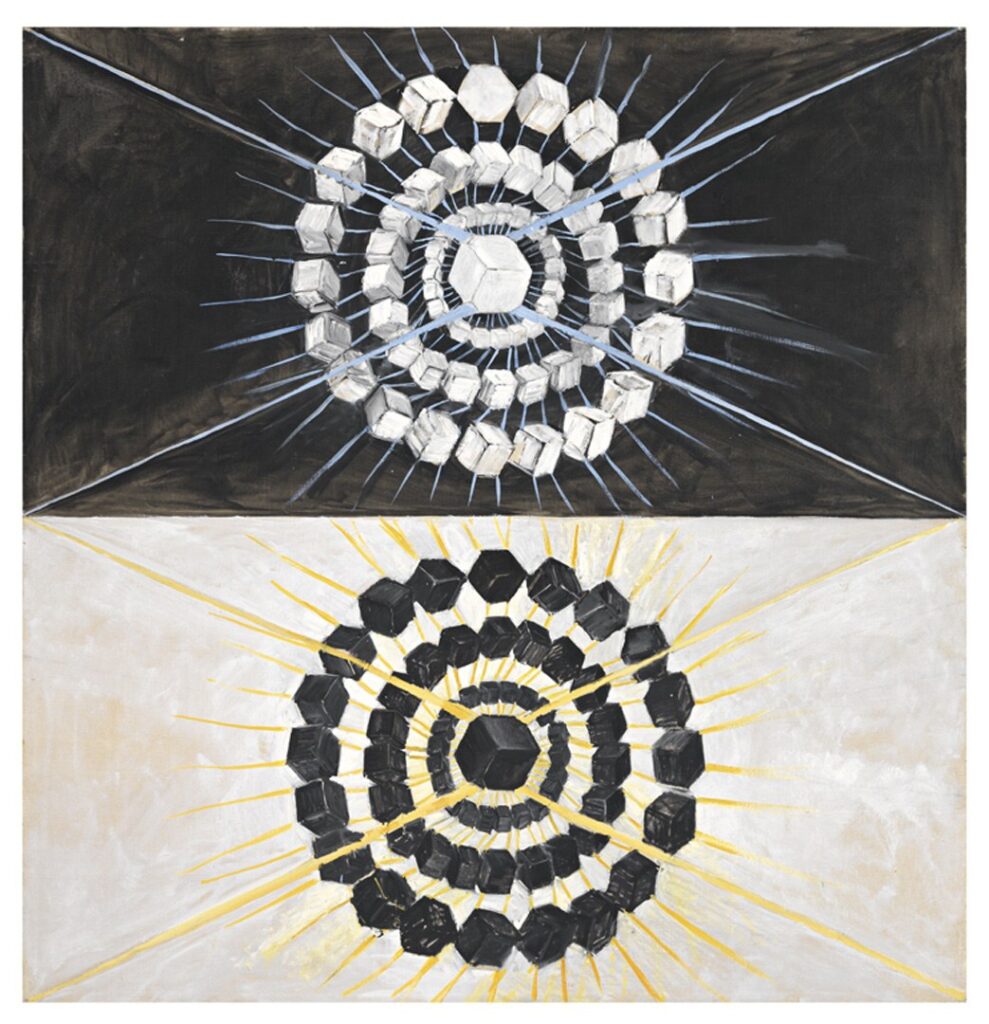
While the focus is usually on af Klint’s spirituality and her absence from art history, there’s also her interest in science, from Brandon’s October 25, 2023 article,
…, I wonder how af Klint would have felt about her paintings being presented in virtual reality. According to Birnbaum [Daniel Birnbaum, current director and curator of Acute Art], who is the former director of Moderna Museet, Sweden’s museum of modern art in Stockholm, af Klint had a scientific mind. “One wonders what she would have thought of computation and recent inventions, like the blockchain,” he says. Stolpe also points me to the artist’s Atom Series—the atom being a major theme during her lifetime.
Image: courtesy Acute Art/Stolpe Publishing [downloaded from https://www.fastcompany.com/90971644/take-a-trip-inside-the-secretive-mind-of-visionary-painter-hilma-af-klint?]
The Guggenheim Museum in New York still has material from its 2018 blockbuster Hilma af Klint show available online, including this October 24, 2018 combined audio/transcript article, which includes these tidbits in the transcript,
The Atom Series (1917) by Hilma af Klint
…
Tracey Bashkoff [Director of Collections and Senior Curator at the Guggenheim]: Hilma af Klint is working at a time where the most recent scientific discoveries show that there is a world beyond our observable world, and that things like atoms and sound waves and x-rays and particles exist, that we don’t observe with the naked eye. And so, the question of opening up an invisible world from our physical world, being able to make observations of another dimension of reality, becomes an issue of exploration for af Klint and for many of the thinkers of her time.
Narrator: These works are from TheAtom Series, which was executed in 1917. The atom was a major theme in science and society at large during the artist’s lifetime. In the last five years of the 19th century, the accepted understanding of atoms was overturned by the discovery of subatomic particles. At the same time, scientists were making numerous discoveries about electromagnetism, x-rays, radioactive decay, and other phenomena.
The audio file is about 2 mins. long and it’s a short transcript.