Tag Archives: NASA (US National Aeronautics and Space Administration)

Science community celebrates Project Hail Mary (movie) for its ‘hard science’

Project Hail Mary (movie) opened today, March 20, 2026 and it has caused a stir in the science community. Concurrently, the Artemis II rocket has begun its slow journey to the launch pad in preparation for its April 1, 2026 launch, from a March 20, 2026 Canadian Press news item on CTV news,

NASA says rollout operations at the Kennedy Space Center in Florida began early Friday after being briefly delayed by high winds.

Officials say the trek to the pad is expected to take up to 12 hours.

The mission has been delayed a few times since February due to hydrogen fuel leaks and helium flow problems, but is scheduled to launch April 1.

You can find out more about the Artemis II mission here on the US National Aeronautics and Space Administration (NASA) website. Meanwhile, Jennifer M. Dooren’s March 20, 2026 article on the NASA website brings movie and Artemis II together, Note: Links have been removed,

Real-life space exploration and big-screen science fiction will converge on Friday. As NASA prepares to launch Artemis II, the first crewed mission under the agency’s Artemis program and another step toward sending the first astronauts – Americans – to Mars, the fictional film “Project Hail Mary” premiere will take audiences on a journey into deep space.

The agency provided guidance throughout filming, and also is participating in activities related to the release of the film to connect the agency’s missions, innovations, and discoveries to the public through pop culture.

“Space exploration captures the public’s imagination, and collaboration between science and storytelling brings that sense of discovery to a wider audience,” said Will Boyington, associate administrator for the Office of Communications at NASA Headquarters in Washington. “Inspiring the next generation, whether through rocket launches or sci-fi movies, helps build the talent and support that underpin American leadership in space.”

NASA’s communications personnel provided informal consultation about human spaceflight and science during the making of the movie, and experts from the agency in astrobiology and astrophysics, which are major themes in “Project Hail Mary,” answered questions about these topics during the making of the film. Agency advisors are listed in the credits.

On the movie set, the agency provided an in-person consultation between NASA astronaut Kjell Lindgren and actor Ryan Gosling, who plays an astronaut in the movie. NASA also facilitated brand use guidance and clearance for the agency’s “meatball” and “worm” logos featured in the film. 

NASA’s activities related to the movie even reached beyond Earth. In between conducting research and demonstrating new technologies, Expedition 74 crew members living and working aboard the International Space Station, including NASA astronauts Chris Williams, Jessica Meir, and Jack Hathaway, screened “Project Hail Mary” while in orbit.

Artemis II crew members, NASA astronauts Reid Wiseman, Victor Glover, and Christina Koch, and CSA (Canadian Space Agency) astronaut Jeremy Hansen, who will help make what once was science fiction a reality through their upcoming deep space launch, are expected to have an opportunity to view “Project Hail Mary” while in quarantine. They are preparing to explore more of the Moon for scientific discovery, economic benefits, and to build on our foundation for the first crewed missions to Mars.

Sara Webb (Course Director, Centre for Astrophysics and Supercomputing at Swinburne University of Technology in Australia) wrote a March 18, 2026 essay “Project Hail Mary is packed with hard science. An astrophysicist breaks it down” that focuses on what the filmmakers got right and notes some of the areas where fiction held sway, Note: Links have been removed,

As an astrophysicist, my world revolves around the wonders of space and the mysteries of the universe. This means I can be a tough critic of science fiction books and films that explore these topics.

But when I walked out of a recent preview screening of the film adaptation of Andy Weir’s 2021 science fiction novel Project Hail Mary, I had tears of joy in my eyes. The filmmakers had done justice not just to the original story, but also to the science at the heart of it.

The story revolves around Ryland Grace, played by Ryan Gosling, who awakes from a coma with no memory and no idea why he’s on a space ship 11.9 light years away from Earth. As his memories slowly start to return, the truth becomes clear. The Sun is dying, and he is our only saving grace.

A dying sun

In Project Hail Mary the Sun is dying due to an alien organism that has spread around our part of the Milky Way.

Firstly, could an organism spread from one solar system to another? According to some scientists, yes. It’s a theory called panspermia.

We have no hard evidence to prove it right now. But the theory isn’t completely wild. We know material from solar systems can be transported great distances – we ourselves have witnessed as least three interstellar visitors enter and fly through our Solar System.

If life forms could survive the harshness of space and live on such rocky bodies, it’s possible this is how life could spread. But that life would likely be basic organisms.

As for the organism at the centre of this movie, astrophage, its mechanics and behaviour sit rightly in the wonderful world of science fiction [emphasis mine].

The size of space

The idea of humans travelling between stars feels like an almost impossible challenge.

In our galaxy alone there are more than 400 billion stars, but only roughly 100 of them are within 20 light years of Earth.

Project Hail Mary focuses it’s attention on one of those systems, known as Tau Ceti, sitting 11.9 light years away.

If we were to travel to this star with the fastest spacecraft humans have ever flown in, the Apollo 10 module, travelling at more than 39,900 kilometres per hour, it would take us 320,000 years. In a story where the Sun is dying now, there is no time for that. So how does Project Hail Mary overcome this problem?

Enter special relativity.

Special relativity is one of the most paradigm-shifting theories of modern history. Developed by Albert Einstein in 1905, it equated mass and energy as one and the same. It best known by the famous E = mc2 formula.

What Einstein was able to work our mathematically, and we’ve later proved observationally, is that the closer to the speed of light something travels, the slower the time it experiences in its reference frame.

It’s called a Lorentz transformation – and it allows us to determine the time experienced in a reference frame different to our own, say travelling close to the speed of light.

The movie doesn’t give a full physics lesson on this, but rather uses visual cues, including correct mathematics worked out by Grace on a whiteboard to demonstrate this time change.

What Grace determines is that he’s only been in a coma for four years due to the effects of time dilation on a ship travelling that fast. Which is scientifically spot on.

We have to talk about the aliens

As you can see Webb’s March 18, 2026 essay is engaging and accessible to those of us who don’t have physics degrees.

Both Science magazine and Nature magazine have Project Hail Mary articles.Perri Thaler’s March 19, 2026 article for Science magazine presents a Q&A (question and answer) with Wendy Freedman, University of Chicago astronomer who studies the evolution of the universe,

Q: How scientifically accurate is the movie?

A: What really struck me was how well it represented how science is done and how a scientist approaches problems. You have a leading actor, Ryan Gosling, playing an actual scientist, not an evil man with a white lab coat. He’s a human being. He’s thoughtful and he’s confronted with real challenges that he has to solve. He collaborates, and science is a very collaborative enterprise, so I really like the way science was portrayed in the movie. Lots of speculative ideas, but also lots of real science and a real approach to science.

Q: If you were Ryland Grace, would you approach the problem differently?

A: He approaches things very thoughtfully, methodically. Here’s an idea, a hypothesis, and let’s test it. If it doesn’t work out, well, what went wrong? What else can we do? In terms of basic approach, I’d be very similar, I think.

Q: Was there a specific concept that you noticed in a scene that made you nerd out because the filmmakers got it right or got it wrong?

A:  I love that relativity was part of the plot, and that the equipment he had for trying to understand the basis of the life form was a very realistic portrayal of science. The microbiology, chemistry, physics, and astrophysics were all great.

Q: How do you feel about the idea of non–water-based life?

I was able to access Thaler’s March 19, 2026 article but it was one of those ‘you have x articles for free’ deals.

Alexandra Witze’s March 19, 2026 article for Nature magazine includes insights from a scientist who consulted on the film, Note: Links have been removed,

The film Project Hail Mary — which opens widely on Friday — has one of the best opening scenes on the silver screen in recent years. A man wakes up, disoriented and with a fuzzy memory, next to two dead bodies. We find out that he’s a scientist-turned-astronaut on a spaceship headed for a star beyond our Solar System, and those dead bodies are his crewmates. He’s all alone, and it’s now up to him to save life on Earth.

The gripping sci-fi plot comes from the mind of Andy Weir, the author of the 2021 book [Project Hail Mary] of the same name. Weir has become known for stories like this, in which quick-witted loners have to ‘science’ the heck out of situations to save the day. He made his career with the 2011 book The Martian, in which protagonist Mark Watney (played by Matt Damon in the film version) survives being stranded on Mars by, among other things, learning to grow potatoes in the red planet’s soil.

Weir famously steeps his books in science, going so far as to do calculations on orbital mechanics and stellar astrophysics to ensure that the stories are as realistic as they can be while still being fiction. That all-out nerdery has earned him many fans, says Andy Howell, an astronomer at the University of California, Santa Barbara, who advised Weir on the science in Project Hail Mary. “I’ve talked to so many scientists who are like, ‘this is great’”, Howell says, but also engineers, physics students and others.

Realistic fiction

Without giving away too much of the plot, Project Hail Mary is about a man, Ryland Grace (played by Ryan Gosling), who embarks on interstellar travel to understand why the Sun is dying. Like Watney in The Martian, he has to summon knowledge from a raft of different types of science — molecular biology, neutrino physics and more — to solve his crisis.

“It’s a great blend of some ideas that have been around, but a fresh take on them — and then some completely new ideas,” says Howell, who also runs a YouTube channel called Science vs. Cinema.

Take astrophage, a fictional space microorganism that underpins much of the plot. Weir conceived of it as ‘black matter’ that can absorb huge amounts of stellar radiation and then re-emit the energy to enable interstellar travel. Astrophage doesn’t exist in our world, but Weir made sure it had biology and chemistry that could exist in the Galaxy.

In the film, Grace grapples with the nature of astrophage, which is devouring the Sun, and how it does or doesn’t meet scientists’ notions of extraterrestrial life. It’s reminiscent of debates over how to recognize the signatures of life beyond Earth — for instance, gases in planets’ atmospheres that might have been generated by living organisms.

Building worlds

How astronomers in the film (and book) discover that the Sun is dimming is also grounded in reality. On Howell’s advice, Project Hail Mary gives a shout-out to the amateur astronomers who regularly monitor fluctuations in stars’ brightnesses. In 2019, astronomy enthusiasts spotted the mysterious dimming of the red-giant star Betelgeuse; fortunately, it turned out to be caused by the star belching dust, rather than an astrophage attack.

In order to access the entire article you will need to login or create an account.

Astrophysicist Jacqueline McCleary presents a (slightly) more skeptical approach to the science while retaining enthusiasm for the film in Cody Mello-Klein’s March 19, 2026 article for Northeastern (University) News.

Josh Weiss’ March 20, 2026 article (‘Project Hail Mary’ Author Andy Weir On Changes From Book, That [SPOILER] Cameo, And What He’s Writing Next) for Forbes magazine (which I found on Yahoo! News), focuses on some of the filmmaking choices, as well as, the science and the author’s future plans.

One small fun fact (for those who live in British Columbia). From a University of British Columbia May 26, 2023 – July 26, 2023 online book club notice

An astronaut awakens to find he’s the only survivor on a small spaceship that’s light years away from any humans. Unfortunately, he can’t remember a thing, including his assignment. Yet if he fails, the Earth and humanity are doomed. A story of survival, Project Hail Mary by author Andy Weir is an enthralling thriller replete with science and speculation — and even a UBC character in the mix [emphasis mine].

Enjoy the movie!

Elegant art/science: boron nitride nanotubes (BNNTs) — touted for their strength, thermal stability and insulating properties — coaxed into visually striking images

This is the only ‘art’ boron nitride nanotube i could find,

Langmuir 2025, 41, 24, 15270–15282

A June 24, 2025 Rice University news release (also on EurekAlert) makes an art/science announcement, Note: Links have been removed,

In an elegant fusion of art and science, researchers at Rice University have achieved a major milestone in nanomaterials engineering by uncovering how boron nitride nanotubes (BNNTs) — touted for their strength, thermal stability and insulating properties — can be coaxed into forming ordered liquid crystalline phases in water. Their work, published in Langmuir, the premier American Chemical Society journal in colloid and surface chemistry, was so visually striking it graced the journal’s cover.

That vibrant image, however, represents more than just the beauty of science at the nanoscale. It captures the essence of a new, scalable method to align BNNTs in aqueous solutions using a common bile-salt surfactant — sodium deoxycholate (SDC) — opening the door to next-generation materials for aerospace, electronics and beyond.

“This work is very interesting from the fundamental point of view because it shows that BNNTs can be used as model systems to study novel nanorod liquid crystals,” said Matteo Pasquali, the A.J. Hartsook Professor of Chemical and Biomolecular Engineering, professor of chemistry, materials science and nanoengineering and corresponding author on the study. “The main advantage is that BNNTs are relatively transparent and easily studied via visible light unlike carbon nanotubes, which form dark liquid crystals that are hard to examine via light microscopy.”

For first author Joe Khoury, the study was more than routine science. Trained as an architect in Syria, he transitioned to chemical engineering after moving to the U.S., but his background in visual design may have helped him see something others might have missed. During a routine purification step, he noticed that as water was filtered from the dispersion, the leftover material became thick and glowed under polarized light — a hallmark of liquid crystal formation. Inspired by this observation, the team hypothesized that increasing the SDC concentration would drive BNNTs to self-assemble into ordered nematic phases.

To test their hypothesis, the researchers conducted a meticulous series of experiments, preparing BNNT-SDC dispersions at varying concentrations. They used polarized light microscopy to observe the transition from disordered states to partially ordered and then fully ordered liquid crystalline phases. Cryogenic electron microscopy provided high-resolution confirmation of BNNT alignment.

Crucially, they produced the first comprehensive phase diagram for BNNTs in surfactant solutions — a predictive map that allows scientists to anticipate how BNNTs will behave at different concentration ratios.

“No one had done this before,” Khoury said. “Previous studies either worked at low BNNT concentrations or used too little surfactant. We showed that if you increase both in the right proportion, you can trigger liquid crystalline ordering without using harsh chemicals or complicated procedures.”

In addition to mapping phase behavior, the team followed a simple, reproducible method to turn these dispersions into thin, well-aligned BNNT films. Using a specialized blade to shear the material onto a glass slide, they fabricated transparent, robust films ideal for thermal management and structural reinforcement applications (think lighter, stronger and more heat-tolerant components in tech devices or aircraft). Using X-ray diffraction and electron microscopy, the team confirmed the alignment at the nanoscale level.

“We demonstrated that nematic alignment in solution can be preserved and translated into solid films,” Khoury said. “That makes this a highly scalable platform for next-gen materials.”

The study lays the groundwork for new research into lyotropic liquid crystals formed from nanorods. Its simplicity — no strong acids, no harsh conditions — makes it accessible to labs worldwide. And its implications stretch from theoretical physics to commercial materials engineering.

“This is just the beginning,” Pasquali said. “With this road map, we can now explore how to fine-tune BNNT alignment for specific applications. It’s not just about making films; it’s about understanding a whole new class of functional nanomaterials.”

Pasquali added that the beauty of the images was mesmerizing.

“When Joe sent me candidate images for the cover, I felt like I was looking at paintings by Dali or Van Gogh,” Pasquali said. “The cover image could be the tower of Barad-dur from ‘The Lord of the Rings’ painted by a surrealist artist.”

Khoury added that this research would not have been possible without the guidance and mentorship from his team and co-authors, including Pasquali; Angel Martí, professor and chair of chemistry and professor of bioengineering and materials science and nanoengineering at Rice; Cheol Park of NASA Langley Research Center; Lyndsey Scammell from BNNT LLC; and Yeshayahu Talmon at the Technion-Israel Institute of Technology, among others.

This research was supported by the Welch Foundation, BNNT LLC, the Technion Russell Berrie Nanotechnology Institute and Rice’s Electron Microscopy Center and its Shared Equipment Authority.

Caption: Matteo Pasquali, the A.J. Hartsook Professor of Chemical and Biomolecular Engineering, professor of chemistry, materials science and nanoengineering, and first author Joe Khoury. Credit: Rice University.

Here’s a link to and a citation for the paper,

Lyotropic Liquid Crystalline Phase Behavior of Boron Nitride Nanotube Aqueous Dispersions by Joe F. Khoury, Asia Matatyaho Ya’akobi, Alina Chow, Eldar Khabushev, Irina Davidovich, Davide Cavuto, Mingrui Gong, Lyndsey R. Scammell, Cheol Park, Yeshayahu Talmon, Angel A. Martí, Matteo Pasquali. Langmuir 2025, 41, 24, 15270–15282 DOI: https://doi.org/10.1021/acs.langmuir.5c00563 Published May 5, 2025 Copyright © 2025 American Chemical Society

This paper is behind a paywall.

Electronics repairs in space made possible with nanoink and 3D printing?

Researchers — as well as a toy Cy the Cyclone — test their nanoink and printer technologies during a NASA microgravity flight. Pictured, left to right, are: Fei Liu, Yanhua Huang, Matthew Marander, Xuepeng Jiang and Pavithra Premaratne. Photo courtesy of Shan Jiang.

They’re not making any promises but there are possibilities according to a November 21, 2024 news item on phys.org,

An Iowa State University engineer floats in the air while other researchers hang tight to a metal frame surrounding and supporting their special printer. [A Cy the Cyclone toy mascot all dressed up as an astronaut also floats above the busy researchers hunched over their experiment.] It’s not the usual photo you see in a research paper. Tests aboard microgravity flights aren’t your typical materials experiments, either.

A November 20, 2024 Iowa State University news release (also on EurekAlert but published November 21, 2024), which originated the news item, shows where curiosity can take you,

The flight path to these experiments began when a research team led by Iowa State’s Shan Jiang, an associate professor of materials science and engineering, and Hantang Qin, formerly of Iowa State who’s now an assistant professor of industrial and systems engineering at the University of Wisconsin-Madison, wondered if their ink and printer technologies would work in the zero gravity of space.

The ink features silver nanoparticles synthesized with biobased polymers. After a heat treatment, the ink can conduct electricity and can therefore print electric circuits. The printer uses electrohydrodynamic printing, or 3D printing that jets ink under an electric field at resolutions of millionths of a meter. The electric field could eliminate the need for gravity to help deposit ink.

If the technologies work together in zero gravity, astronauts could use them to make electric circuits for spacecraft or equipment repairs. And astronauts might manufacture high-value electronic components in the special, zero-gravity environment of space.

NASA [(US) National Space and Aeronautics Agency] wondered if it would work, too.

Diving into microgravity

Researchers bolted the printer to the floor of a jet and prepared for a “roller coaster, basically,” Jiang said.

The NASA plane would continuously climb and dive, going in cycles from about 24,000 feet over Florida to 32,000 feet then back to 24,000. The dive phase produced about 10 seconds of pure zero gravity.

“It was exciting and new,” Jiang said.

Motion sickness was a problem for some. Others enjoyed the thrill of it. Jiang felt “frozen” the first time he experienced microgravity. “I was blank.”

But that didn’t last: “There was so much time and investment in this project. We wanted to achieve good results.”

But printing for a few seconds at a time on a microgravity flight “is a very challenging experiment,” Jiang said. “It’s so easy on the ground where everything is stable. But if anything gets loose during the flight, you lose your printing.”

The first microgravity flight was a good example. The printer wasn’t adequately secured against the plane’s shakes and vibrations.

“These are very intense experiments that require a lot of teamwork and preparation,” Jiang said.

So, the team went back to work, made some changes, made more test flights and produced better results.

“This proof-of-concept microgravity experiment proves the unique capability of (electrohydrodynamic) printing under zero-gravity conditions and opens a new venue for future on-demand manufacturing in space,” the researchers wrote in a paper published by the journal American Chemical Society Applied Materials & Interfaces. (…)

Making a new nanoink

The key innovation by Jiang’s research group was developing a new laboratory method to synthesize the ink with its silver nanoparticles.

“This is a new combination of materials and so we needed a new recipe to make the ink,” Jiang said.

Grants from the NASA Iowa Space Grant Consortium and the NASA Iowa Established Program to Stimulate Competitive Research supported the project.

Both programs “strive to support innovative and leading research in Iowa,” said Sara Nelson, director of the programs and an Iowa State adjunct assistant professor of aerospace engineering. “We are thrilled to have supported Dr. Jiang’s research. His work has helped to build Iowa’s research infrastructure and is an important part of NASA’s strategic mission.”

The project also makes use of an abundant Iowa resource, plant biomass.

The ink includes a biobased polymer called 2-hydroxyethyl cellulose, which is typically used as a thickening agent. But it is also a cost-effective, biocompatible, versatile and stable material for the inks necessary for high-resolution ink jet printing under an electric field.

“There is a lot of biomass in Iowa,” Jiang said. “So, we’re always trying to use these biobased molecules. They make a wonderful polymer that does all the tricks for us.”

Jiang called that “the biggest surprise of this research. We didn’t know that before. Now we know what we can do with these biobased polymers.”

The Iowa State University Research Foundation has filed a patent on the new nanoink and the technology is currently available for licensing.

“This success is really just the beginning,” Jiang said. “As humanity ventures deeper into space, the need for on-demand manufacturing of electronics in orbit is no longer science fiction; it is a necessity.”

Next up for the researchers could be development of 3D space printing for other electronic components such as semiconductors.

After all, Jiang said, “You can’t just make one component and assemble an electronic device.”

Here’s a link to and a citation for the paper,

Silver Nano-Inks Synthesized with Biobased Polymers for High-Resolution Electrohydrodynamic Printing Toward In-Space Manufacturing by Tyler Kirscht, Liangkui Jiang, Fei Liu, Xuepeng Jiang, Matthew Marander, Ricardo Ortega, Hantang Qin, Shan Jiang. ACS Appl. Mater. Interfaces 2024, 16, 33, 44225–44235 DOI: https://doi.org/10.1021/acsami.4c07592 Published: July 30, 2024 Copyright © 2024 American Chemical Society

This paper is behind a paywall.

Association for Advancing Participatory Sciences (AAPS; formerly the Citizen Science Association) January 2025 newsletter highlights

Here are a few excerpts from the Association for Advancing Participatory Sciences (AAPS; formerly the Citizen Science Association) January 2025 newsletter (received via email),

AI and the Future of Citizen Science: event and special collection

WEBINAR: Thursday, February 6 [2025], 12pm US Eastern Time

A conversation with editors and leaders

In December we announced a new special collection on the Future of Artificial Intelligence and Citizen Science. This open-access special collection of 12 papers explores the potential of AI coupled with citizen science in accelerating data processing, expanding project reach, enhancing data quality, and broadening engagement opportunities.

To help orient you to the themes covered in the special collection, issue editors Lucy Fortson, Kevin Crowston, Laure Kloetzer, and Marisa Ponti will join us for a special conversation with Marc Kuchner, Citizen Science Officer, NASA, February 6, 12pm ET. This event will go beyond a recap of papers presented in the special collection, and invite panelists to share their thoughts and perspectives on ethical considerations, challenges, and future directions. 

>>Register here for this conversation on AI 

Interested in Citizen Science: Theory & Practice

Call for Abstracts (closing soon): Galleries, Libraries, Archives, and Museums

A call for abstracts is open for a forthcoming Special Collection in Citizen Science: Theory and Practice which will explore galleries, libraries, archives, and museums (GLAM) participatory science efforts in order to support and empower the global field of participatory sciences. By sharing innovative practices and advancing theories, this collection will contribute to the continued refinement of best practices in these vital ‘third spaces’ and beyond. Issue overview and submission deadlines and logistics are available on the AAPS website. Abstracts accepted through 28 February 2025.

>> Share this call for papers with the GLAM organizations in your network 

More events from the AAPS-partnered 2025 NASA Cit Sci Leaders Series: 

Artificial Intelligence, Open Data, Funding, and more

The NASA Citizen Science Leaders Series is a professional learning service for those leading, hoping to lead, or wanting to learn more about NASA Citizen Science. The following events are open to the public. 

  • Artificial Intelligence: This event, in collaboration with AAPS, features the issue editors from the new Special Collection sharing their key takeaways and hot takes on the topic.  Register here. [February 6, 2025] Noon ET start.
  • Artificial Intelligence in practice: On February 20 [2025] the Zooniverse’s Dr. Laura Trouille will join us to share new functionality of the Zooniverse platform, including ways that Zooniverse projects are adjusting to work with new Artificial Intelligence/ machine learning tools. Register here. Noon ET start.
  • Open Data Management plans and long-term archives of citizen science project data: On March 6 [2025] Dr. Steven Crawford who leads NASA’s Open Science work will discuss these issues and more. Register here.3 pm ET start.
  • Funding: On March 13 [2025] explore landscape of different NASA proposal calls and hear insights on how solicitations are written, how proposals are reviewed, and how funding is handled. Register here. 3 pm ET start.

Members in AAPS Connect can get instant notices when opportunities are posted, often directly from the source. Interested in direct networking with field leaders and being the first to hear of important jobs, grants, and more?  Become a member of AAPS (tiered pricing costs as little as $0).

Jobs:

  • iNaturalist is hiring a Senior Communications Manager responsible for delivering engaging, visual communications about iNaturalist to reach and engage new audiences. Full details here.
  • Reef Environmental Education Foundation (REEF) is hiring an Education coordinator to support activities related to REEF Ocean Explorers and Discovery programming, including K-12 and lifelong learning education and public outreach programs. Full details available here.
  • Cornell Lab of Ornithology is hiring an Extension Associate to as the thought leader and team leader for Youth and Community Engagement for the Lab both nationally and in international settings, with key responsibilities in strategic planning, partnership development, implementation, and evaluation of impact. Full details available here. 

Should you be interested in received AAPS newsletters, visit the organization’s homepage.

Transformative potential of Martian nanomaterials

Yes, nanomaterials from Mars! A December 21, 2023 news item on Nanowerk makes the proposition, Note: A link has been removed,

Researchers at the University of Sussex have discovered the transformative potential of Martian nanomaterials, potentially opening the door to sustainable habitation on the red planet. They published their findings in (“Quasi–1D Anhydrite Nanobelts from the Sustainable Liquid Exfoliation of Terrestrial Gypsum for Future Martian-Based Electronics”).

Using resources and techniques currently applied on the International Space Station [ISS] and by NASA [US National Aeronautics and Space Administration], Dr Conor Boland, a Lecturer in Materials Physics at the University of Sussex, led a research group that investigated the potential of nanomaterials – incredibly tiny components thousands of times smaller than a human hair – for clean energy production and building materials on Mars.

Taking what was considered a waste product by NASA and applying only sustainable production methods, including water-based chemistry and low-energy processes, the researchers have successfully identified electrical properties within gypsum nanomaterials – opening the door to potential clean energy and sustainable technology production on Mars.

A December 21, 2023 University of Sussex press release (also on EurekAlert) by Stephanie Allen, which originated the news item, features the lead researcher’s hopes for the discovery, Note: A link has been removed,

Dr Conor Boland, said: 

“This study shows that the potential is quite literally out of this world for nanomaterials. Our study builds off recent research performed by NASA and takes what was considered waste, essentially lumps of rock, and turns it into transformative nanomaterials for a range of applications from creating clean hydrogen fuel to developing an electronic device similar to a transistor, to creating an additive to textiles to increase their robustness.

“This opens avenues for sustainable technology – and building – on Mars but also highlights the broader potential for eco-friendly breakthroughs here on Earth.”

To make the breakthrough the researchers used NASA’s innovative method for extracting water from Martian gypsum, which is dehydrated by the agency to get water for human consumption. This produces a byproduct called anhydrite—considered waste material by NASA, but now shown to be hugely valuable.

The Sussex researchers processed anhydrite into nanobelts –  essentially tagliatelle-shaped materials – demonstrating their potential to provide clean energy and sustainable electronics. Furthermore, at every step of their process, water could be continuously collected and recycled.

Dr Boland added: 

“We are optimistic of the feasibility of this process on Mars, as it requires only naturally occurring materials – everything we used could, in theory, be replicated on the red planet. Arguably this is the most important goal in making the Martian colony sustainable from the outset.”

While full-scale electronics production may be impractical on Mars due to the lack of clean rooms and sterile conditions, the anhydrite nanobelts hold promise for clean energy production on Earth, and could, later down the line, still have a profound effect on sustainable energy production on Mars.

Here’s what a Martian nanomaterial looks like,
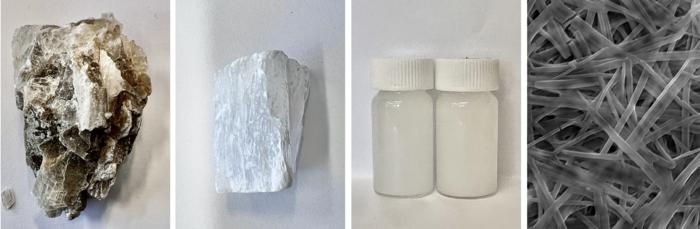
Caption: Two raw rocks used by the researchers (left). Vials show the nanobelts in water, with a close up of the actual nanobelts (right). Credit: University of Sussex

Here’s a link to and a citation for the paper,

Quasi–1D Anhydrite Nanobelts from the Sustainable Liquid Exfoliation of Terrestrial Gypsum for Future Martian-Based Electronics by Cencen Wei, Abhijit Roy, Adel K. A. Aljarid, Yi Hu, S. Mark Roe, Dimitrios G. Papageorgiou, Raul Arenal, Conor S. Boland. Advanced Functional Materials DOI: https://doi.org/10.1002/adfm.202310600 First published: 14 December 2023

This paper is open access.

Anti-dust technology paves way for self-cleaning windows and more

I’m always interested in a ‘self-cleaning window’ story’. From a February 22, 2023 news item on phys.org,

Dust is a common fact of life, and it’s more than just a daily nuisance—it can get into machinery and equipment, causing loss of efficiency or breakdowns.

Researchers at The University of Texas at Austin partnered with North Carolina-based company Smart Material Solutions Inc. to develop a new method to keep dust from sticking to surfaces. The result is the ability to make many types of materials dust resistant, from spacecraft to solar panels to household windows.

A February 22, 2023 University of Texas at Austin news release (also on EurekAlert), which originated the news item, describe the research in more detail,

“What we’ve demonstrated here is a surface that can clean itself,” said Chih-Hao Chang, an associate professor in the Cockrell School of Engineering’s Walker Department of Mechanical Engineering and a lead author of the study. “Particulates aren’t able to stick to the surface, so they come off using just the force of gravity.”

In tests, the researchers piled lunar dust on top of their engineered surfaces and then turned each surface on its side. The result: Only about 2% of the surface remained dusty, compared with more than 35% of a similarly smooth surface.

The researchers said the discovery boils down to things the human eye can’t detect. In the experiments, the team altered the geometry of flat surfaces to create a tightly packed nanoscale network of pyramid-shaped structures. These sharp, angular structures make it difficult for the dust particles to stick to the material, instead sticking to one another and rolling off the material via gravity.

These structures provide a passive solution, meaning they don’t require any extra energy or materials to remove dust. Compare that with more active solutions such as a car windshield that requires the use of windshield wipers and wiper fluid to clean off dust.

The research was funded via a grant from NASA’s [US National Aeronautics and Space Administration] Small Business Innovation Research program, so the first applications focus on space technology. Space dust is especially pesky because of how high-risk everything becomes in that environment, and the conditions make cleaning off dust challenging. Dust wreaked havoc on the Apollo missions and has caused Mars rovers to fail.

“There’s not much you can do about lunar dust in space – it sticks to everything and there’s no real way to wipe it off or spray it off,” said Samuel Lee, a lead author who was an undergraduate researcher in Chang’s group. “Dust on solar panels of Mars rovers can cause them to fail.”

This technology also could have tremendous impact on Earth. It could prevent solar panels from collecting dust and losing efficiency over time. It could protect glass windows and someday even digital screens such as phones and TVs.

Anti-dust technology has been around for decades, but it has not gained much traction outside of the lab because of scaling challenges. The researchers used fabrication concepts called nanocoining and nanoimprinting, which prints patterns on objects in a modernized version of the way newspapers and photographs were mass produced during the 1800s.

Chang and Lee led the work for UT Austin, along with Stephen Furst, founder and CEO of Smart Material Solutions, which is working to commercial the technology. Other members of the team are Andrew Tunell, Kun-Chieh Chien and Saurav Mohanty of UT Austin; and Lauren Micklow and Nichole Cates of Smart Material Solutions.

There’s no indication this self-cleaning glass is coming to a window near me or you soon but we can always dream about this video,

Here’s a link to and a citation for the paper,

Engineering Large-Area Antidust Surfaces by Harnessing Interparticle Forces by Samuel S. Lee, Lauren Micklow, Andrew Tunell, Kun-Chieh Chien, Saurav Mohanty, Nichole Cates, Stephen Furst, and Chih-Hao Chang. CS Appl. Mater. Interfaces 2023, 15, 10, 13678–13688 SOI: https://doi.org/10.1021/acsami.2c19211 Publication Date:February 22, 2023 Copyright © 2023 American Chemical Society

This paper is behind a paywall.

You can find the North Carolina company mentioned in the news item, Smart Material Solutions, here.

A Café Scientifique Vancouver (Canada) May 28, 2019 talk ‘Getting to the heart of Mars with insight’ and an update on Baba Brinkman (former Vancouverite) and his science raps

It’s been a while since I’ve received any notices about upcoming talks from the local Café Scientifique crowd but on May 22, 2019 there was this announcement in an email,

Dear Café Scientifiquers,

Our next café will happen on TUESDAY, MAY 28TH [2019] at 7:30PM in the back room at YAGGER’S DOWNTOWN (433 W Pender). Our speaker for the evening will be DR. CATHERINE JOHNSON from the Department of Earth, Ocean and Atmospheric Sciences at UBC [University of British Columbia] .

GETTING TO THE HEART OF MARS WITH INSIGHT

Catherine Johnson is a professor of geophysics in the Dept of Earth, Ocean and Atmospheric Sciences at UBC Vancouver [campus], and a senior scientist at the Planetary Science Institute, Tucson.  She is a Co-Investigator on the InSight mission to Mars, the OSIRIS-REx mission to asteroid Bennu and was previously a Participating Scientist on the MESSENGER mission to Mercury.

We hope to see you there!

I did some digging and found two articles about Johnson, the InSight mission, and Mars. The first one is an October 21, 2012 article by James Keller on the Huffington Post Canada website,

As NASA’s Curiosity rover beams back photos of the rocky surface of Mars, another group of scientists, including one from British Columbia, is preparing the next mission to uncover what’s underneath.

Prof. Catherine Johnson, of the University of British Columbia, is among the scientists whose project, named Insight, was selected by NASA this week as part of the U.S. space agency’s Discovery program, which invites proposals from within the scientific community.

Insight will send a stationary robotic lander to Mars in 2016, drilling down several metres into the surface as it uses a combination of temperature readings and seismic measurements to help scientists on this planet learn more about the Martian core.

The second one is a May 6, 2018 article (I gather it took them longer to get to Mars than they anticipated in 2012) by Ivan Semeniuk for the Globe and Mail newspaper website,

Thanks to a thick bank of predawn fog, Catherine Johnson couldn’t see the rocket when it blasted off early Saturday morning at the Vandenberg Air Force Base in California – but she could hear the roar as NASA’s InSight mission set off on its 6½-month journey to Mars.

“It was really impressive,” said Dr. Johnson, a planetary scientist at the University of British Columbia and a member of the mission’s science team. Describing the mood at the launch as a mixture of relief and joy, Dr. Johnson added that “the spacecraft is finally en route to do what we have worked toward for many years.”

But while InSight’s mission is just getting under way, it also marks the last stage in a particularly fruitful period for the U.S. space agency’s Mars program. In the past two decades, multiple, complementary spacecraft tackled different aspects of Mars science.

Unlike the Curiosity rover, which landed on Mars nearly six years ago and is in the process of climbing a mountain in the middle of an ancient crater, InSight is designed to stay in one place after it touches down Nov. 26 [2018]. Its purpose is to open a new direction in Mars exploration – one that leads straight down as the spacecraft deploys a unique set of instruments to spy on the planet’s interior.

“What we will learn … will help us understand the earliest history of rocky planets, including Earth,” Dr. Johnson said.

It has been a prolonged voyage to the red planet. In 2015, technical problems forced program managers to postpone InSight’s launch for 2½ years. Now, scientists are hoping for smooth sailing to Mars and an uneventful landing a few hundred kilometres north of Curiosity, at a site that Dr. Johnson cheerfully describes as “boring.”

Does the timing of this talk mean you’ll be getting the latest news since InSight landed on Mars roughly six months ago? One can only hope. Finally, Johnson’s UBC bio webpage is here.

Baba Brinkman brings us up-to-date

Here’s most of a May 22, 2019 newsletter update (received via email) from former Vancouverite and current rapper, playwright, and science communicator, Baba Brinkman,

… Over the past five years I have been collaborating frequently with a company in California called SpectorDance, after the artistic director Fran Spector Atkins invited me to write and perform a rap soundtrack to one of her dance productions. Well, a few weeks ago we played our biggest venue yet with our latest collaborative show, Ocean Trilogy, which is all about the impact of human activities including climate change on marine ecosystems. The show was developed in collaboration with scientists at the Monterey Bay Aquarium Research Institute, and for the first time there’s now a full video of the production online. Have you ever seen scientifically-informed eco rap music combined in live performance with ballet and modern dance? Enjoy.

Speaking of “Science is Everywhere”, about a year ago I got to perform my song “Can’t Stop” about the neurobiology of free will for a sold-out crowd at the Brooklyn Academy of Music alongside physicist Brian Greene, comedian Chuck Nice, and Neil deGrasse Tyson. The song is half scripted and half freestyle (can you tell which part is which?) They just released the video.

Over the past few months I’ve been performing Rap Guide to Evolution, Consciousness, and Climate Chaos off-Broadway 2-3 times per week, which has been a roller coaster. Some nights I have 80 people and it’s rocking, other nights I step on stage and play to 15 people and it takes effort to keep it lively. But since this is New York, occasionally when there’s only 15 people one of them will turn out to be a former Obama Administration Energy Advisor or will publish a five star review, which keeps it exciting.

Tonight I fly to the UK where I’ll be performing all next week, including the premiere of my newest show Rap Guide to Culture, with upcoming shows in Brighton, followed by off-Broadway previews in June, followed by a full run at the Edinburgh Fringe in August (plus encores of my other shows), followed by… well I can’t really see any further than August at the moment, but the next few months promise to be action-packed.

What’s Rap Guide to Culture about? Cultural evolution and the psychology of norms of course. I recently attended a conference at the National Institute for Mathematical and Biological Synthesis in Knoxville, TN where I performed a sneak preview and did a “Rap Up” of the various conference talks, summarizing the scientific content at the end of the day, check out the video.

Okay, time to get back to packing and hit the road. More to come soon, and wish me luck continuing to dominate my lonely genre.

Brinkman has been featured here many times (just use his name as the term in the blog’s search engine). While he lives in New York City these days, he does retain a connection to Vancouver in that his mother Joyce Murray is the Member of Parliament for Vancouver Quadra and, currently, the president of the Treasury Board.

Turn yourself into a robot

Turning yourself into a robot is a little easier than I would have thought,

William Weir’s September 19, 2018 Yale University news release (also on EurekAlert) covers some of the same ground and fills in a few details,

When you think of robotics, you likely think of something rigid, heavy, and built for a specific purpose. New “Robotic Skins” technology developed by Yale researchers flips that notion on its head, allowing users to animate the inanimate and turn everyday objects into robots.

Developed in the lab of Rebecca Kramer-Bottiglio, assistant professor of mechanical engineering & materials science, robotic skins enable users to design their own robotic systems. Although the skins are designed with no specific task in mind, Kramer-Bottiglio said, they could be used for everything from search-and-rescue robots to wearable technologies. The results of the team’s work are published today in Science Robotics.

The skins are made from elastic sheets embedded with sensors and actuators developed in Kramer-Bottiglio’s lab. Placed on a deformable object — a stuffed animal or a foam tube, for instance — the skins animate these objects from their surfaces. The makeshift robots can perform different tasks depending on the properties of the soft objects and how the skins are applied.

We can take the skins and wrap them around one object to perform a task — locomotion, for example — and then take them off and put them on a different object to perform a different task, such as grasping and moving an object,” she said. “We can then take those same skins off that object and put them on a shirt to make an active wearable device.”

Robots are typically built with a single purpose in mind. The robotic skins, however, allow users to create multi-functional robots on the fly. That means they can be used in settings that hadn’t even been considered when they were designed, said Kramer-Bottiglio.

Additionally, using more than one skin at a time allows for more complex movements. For instance, Kramer-Bottiglio said, you can layer the skins to get different types of motion. “Now we can get combined modes of actuation — for example, simultaneous compression and bending.”

To demonstrate the robotic skins in action, the researchers created a handful of prototypes. These include foam cylinders that move like an inchworm, a shirt-like wearable device designed to correct poor posture, and a device with a gripper that can grasp and move objects.

Kramer-Bottiglio said she came up with the idea for the devices a few years ago when NASA  [US National Aeronautics and Space Administration] put out a call for soft robotic systems. The technology was designed in partnership with NASA, and its multifunctional and reusable nature would allow astronauts to accomplish an array of tasks with the same reconfigurable material. The same skins used to make a robotic arm out of a piece of foam could be removed and applied to create a soft Mars rover that can roll over rough terrain. With the robotic skins on board, the Yale scientist said, anything from balloons to balls of crumpled paper could potentially be made into a robot with a purpose.

One of the main things I considered was the importance of multifunctionality, especially for deep space exploration where the environment is unpredictable,” she said. “The question is: How do you prepare for the unknown unknowns?”

For the same line of research, Kramer-Bottiglio was recently awarded a $2 million grant from the National Science Foundation, as part of its Emerging Frontiers in Research and Innovation program.

Next, she said, the lab will work on streamlining the devices and explore the possibility of 3D printing the components.

Just in case the link to the paper becomes obsolete, here’s a citation for the paper,

OmniSkins: Robotic skins that turn inanimate objects into multifunctional robots by Joran W. Booth, Dylan Shah, Jennifer C. Case, Edward L. White, Michelle C. Yuen, Olivier Cyr-Choiniere, and Rebecca Kramer-Bottiglio. Science Robotics 19 Sep 2018: Vol. 3, Issue 22, eaat1853 DOI: 10.1126/scirobotics.aat1853

This paper is behind a paywall.

Testing ‘smart’ antibacterial surfaces and eating haute cuisine in space

Housekeeping in space, eh? This seems to be a French initiative. From a Nov. 15, 2016 news item on Nanowerk,

Leti [Laboratoire d’électronique des technologies de l’information (LETI)], an institute of CEA [French Alternative Energies and Atomic Energy Commission or Commissariat a l’Energie Atomique (CEA)] Tech, and three French partners are collaborating in a “house-cleaning” project aboard the International Space Station that will investigate antibacterial properties of new materials in a zero-gravity environment to see if they can improve and simplify cleaning inside spacecraft.

The Matiss experiment, as part of the Proxima Mission sponsored by France’s CNES space agency [Centre national d’études spatiales (CNES); National Centre for Space Studies (CNES)], is based on four identical plaques that European Space Agency (ESA) astronaut Thomas Pesquet, the 10th French citizen to go into space, will take with him and install when he joins the space station in November for a six-month mission. The plaques will be in the European Columbus laboratory in the space station for at least three months, and Pesquet will bring them back to earth for analysis at the conclusion of his mission.

A November 15, 2016 CEA-LETI press release on Business Wire (you may also download it from here), which originated the news item, describes the proposed experiments in more detail,

Leti, in collaboration with the ENS de Lyon, CNRS, the French company Saint Gobain and CNES, selected five advanced materials that could stop bacteria from settling and growing on “smart” surfaces. A sixth material, made of glass, will be used as control material.

The experiment will test the new smart surfaces in a gravity-free, enclosed environment. These surfaces are called “smart” because of their ability to provide an appropriate response to a given stimulus. For example, they may repel bacteria, prevent them from growing on the surface, or create their own biofilms that protect them from the bacteria.

The materials are a mix of advanced technology – from self-assembly monolayers and green polymers to ceramic polymers and water-repellent hybrid silica. By responding protectively to air-borne bacteria they become easier to clean and more hygienic. The experiment will determine which one is most effective and could lead to antibacterial surfaces on elevator buttons and bars in mass-transit cars, for example.

“Leveraging its unique chemistry platform, Leti has been developing gas, liquid and supercritical-phase-collective processes of surface functionalization for more than 10 years,” said Guillaume Nonglaton, Leti’s project manager for surface chemistry for biology and health-care applications. “Three Leti-developed surfaces will be part of the space-station experiment: a fluorinated thin layer, an organic silica and a biocompatible polymer. They were chosen for their hydrophobicity, or lack of attraction properties, their level of reproducibility and their rapid integration within Pesquet’s six-month mission.”

Now, for Haute Cusine

Pesquet is bringing meals from top French chefs Alain Ducasse and Thierry Marx for delectation. The menu includes beef tongue with truffled foie gras and duck breast confit. Here’s more from a Nov. 17, 2016 article by Thibault Marchand (Agence France Presse) ong phys.org,

“We will have food prepared by a Michelin-starred chef at the station. We have food for the big feasts: for Christmas, New Year’s and birthdays. We’ll have two birthdays, mine and Peggy’s,” said the Frenchman, who is also taking a saxophone up with him.

French space rookie Thomas Pesquet, 38, will lift off from the Baikonur cosmodrome in Kazakhstan with veteran US and Russian colleagues Peggy Whitson and Oleg Novitsky, for a six-month mission to the ISS.

Bon appétit! By the way, this is not the first time astronauts have been treated to haute cuisine (see a Dec. 2, 2006 article on the BBC [British Broadcasting Corporation] website.)

The launch

Mark Garcia’s Nov. 17, 2016 posting on one of the NASA (US National Aeronautics and Space Administration) blogs describes this latest launch into space,

The Soyuz MS-03 launched from the Baikonur Cosmodrome in Kazakhstan to the International Space Station at 3:20 p.m. EST Thursday, Nov. 17 (2:20 a.m. Baikonur time, Nov. 18). At the time of launch, the space station was flying about 250 miles over the south Atlantic east of Argentina. NASA astronaut Peggy Whitson, Oleg Novitskiy of Roscosmos and Thomas Pesquet of ESA (European Space Agency) are now safely in orbit.

Over the next two days, the trio will orbit the Earth for approximately two days before docking to the space station’s Rassvet module, at 5:01 p.m. on Saturday, Nov. 19. NASA TV coverage of the docking will begin at 4:15 p.m. Saturday.

Garcia’s post gives you details about how to access more information about the mission. The European Space Agency also offers more information as does Thomas Pesquet on his website.

US Los Alamos National Laboratory catches the D-Wave (buys a 1000+ Qubit quantum computer from D-Wave)

It can be euphoric experience making a major technical breakthrough (June 2015), selling to a new large customer (Nov. 2015) and impressing your important customers so they upgrade to the new system (Oct. 2015) within a few short months.* D-Wave Systems (a Vancouver-based quantum computer company) certainly has cause to experience it given the events of the last six weeks or so. Yesterday, in a Nov. 11, 2015, D-Wave news release, the company trumpeted its sale of a 1000+ Qubit system (Note: Links have been removed),

D-Wave Systems Inc., the world’s first quantum computing company, announced that Los Alamos National Laboratory will acquire and install the latest D-Wave quantum computer, the 1000+ qubit D-Wave 2X™ system. Los Alamos, a multidisciplinary research institution engaged in strategic science on behalf of national security, will lead a collaboration within the Department of Energy and with select university partners to explore the capabilities and applications of quantum annealing technology, consistent with the goals of the government-wide National Strategic Computing Initiative. The National Strategic Computing Initiative, created by executive order of President Obama in late July [2015], is intended “to maximize [the] benefits of high-performance computing (HPC) research, development, and deployment.”

“Los Alamos is a global leader in high performance computing and a pioneer in the application of new architectures to solve critical problems related to national security, energy, the environment, materials, health and earth science,” said Robert “Bo” Ewald, president of D-Wave U.S. “As we work jointly with scientists and engineers at Los Alamos we expect to be able to accelerate the pace of quantum software development to advance the state of algorithms, applications and software tools for quantum computing.”

A Nov. 11, 2015 news item on Nanotechnology Now is written from the company’s venture capitalist’s perspective,

Harris & Harris Group, Inc. (NASDAQ:TINY), an investor in transformative companies enabled by disruptive science, notes that its portfolio company, D-Wave Systems, Inc., announced that Los Alamos National Laboratory will acquire and install the latest D-Wave quantum computer, the 1000+ qubit D-Wave 2X™ system.

The news about the Los Alamos sale comes only weeks after D-Wave announced renewed agreements with Google, NASA (US National Aeronautics and Space Administration), and the Universities Space Research Association (USRA) in the aftermath of a technical breakthrough. See my Oct. 5, 2015 posting for more details about the agreements, the type of quantum computer D-Wave sells, and news of interesting and related research in Australia. Cracking the 512 qubit barrier also occasioned a posting here (June 26, 2015) where I described the breakthrough, the company, and included excerpts from an Economist article which mentioned D-Wave in its review of research in the field of quantum computing.

Congratulations to D-Wave!

*’It can be euphoric selling to your first large and/or important customers and D-Wave Systems (a Vancouver-based quantum computer company) certainly has cause to experience it. ‘ changed to more accurately express my thoughts to ‘It can be euphoric experience making a major technical breakthrough (June 2015), selling to a new large customer (Nov. 2015) and impressing your important customers so they upgrade to the new system (Oct. 2015) within a few short months.’ on Nov. 12, 2015 at 1025 hours PST.